
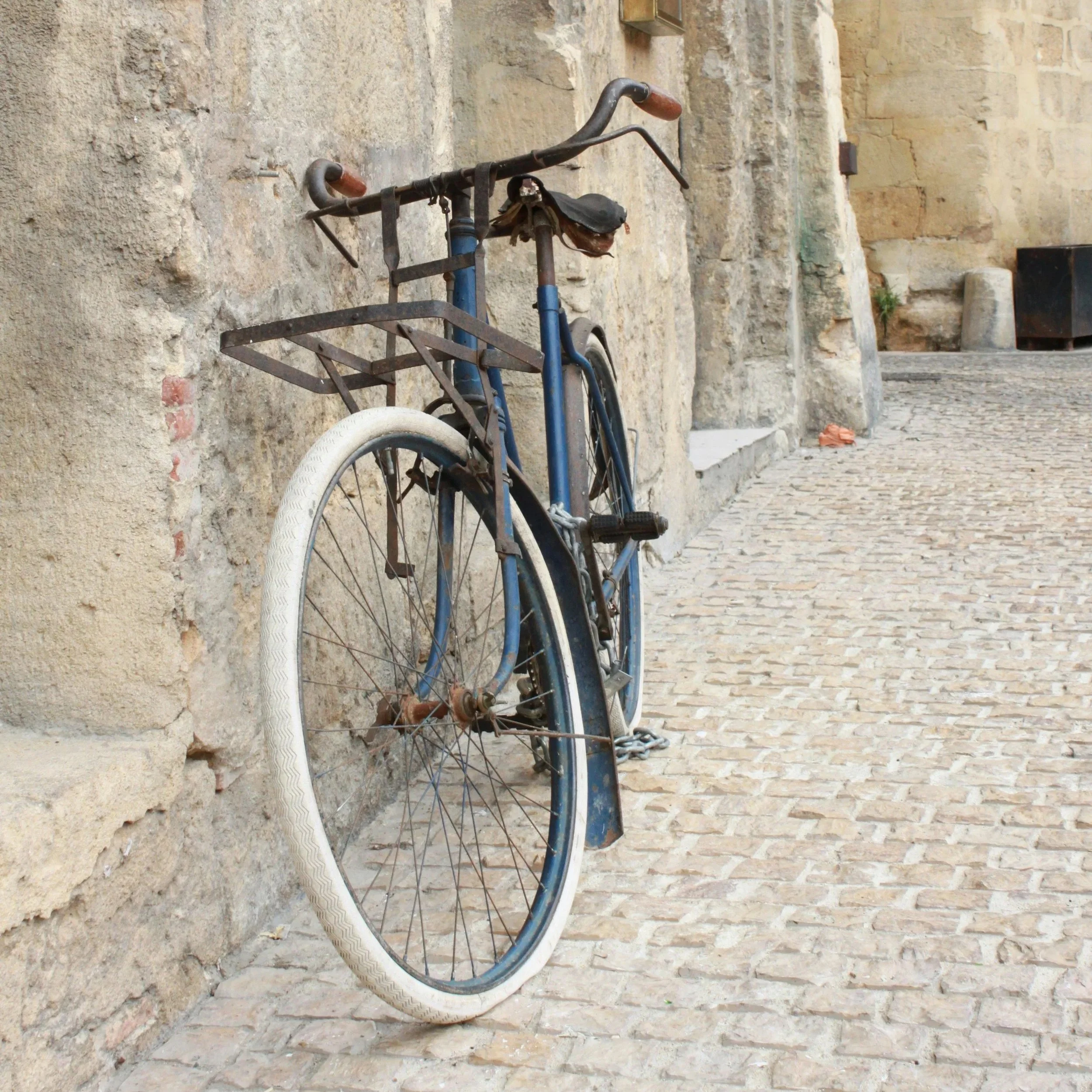
Handlebars and Habit: A Season on Two Wheels in Île-de-France
From a village corner to Rue de Rivoli, learning why the French don't bike for fun — they bike because they have somewhere to be.
The French don't ride bikes for fun. They ride because they have somewhere to be
Where It Starts
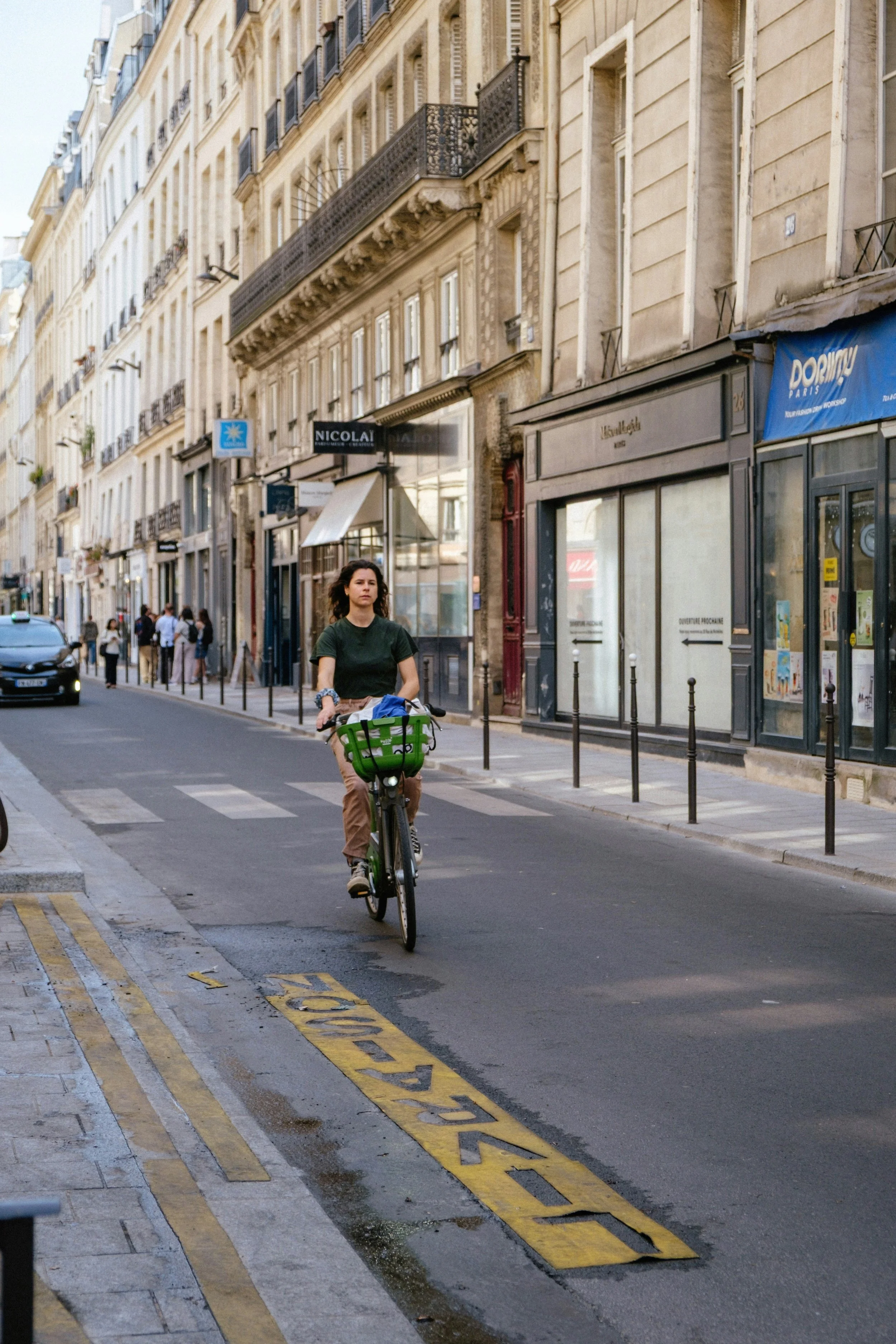
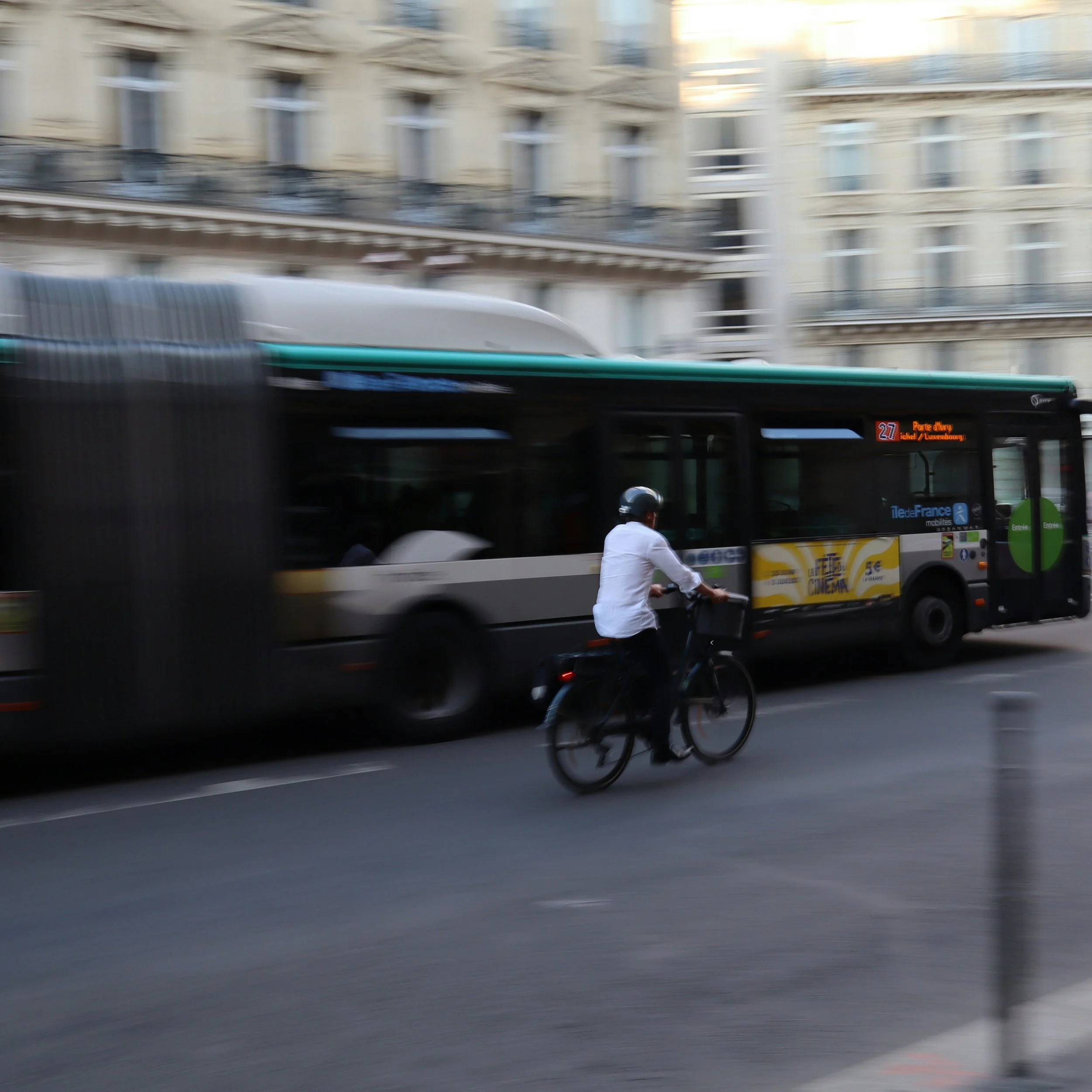
I didn't expect biking to be the thing that told me I'd actually moved to France. But standing at a corner in my village, waiting for traffic to clear, that's exactly what did it. A man in a suit rolled past on an upright city bike, briefcase balanced in the front basket, tie tucked neatly into his shirt. Right behind him was a mother speeding along on a longtail cargo bike with three small, chatty children on back, rolling through traffic, confident and natural. No one was wearing spandex or a helmet cam. They just looked like folks with someplace to be, who happened to be on a bike instead of in a car.
In many places, particularly in the U.S. or Canada, biking is something you schedule. You put on the right shoes, you drive to a trail, you track your mileage on an app, and afterward you feel virtuous enough to order fries. Here, biking is just how you get somewhere else. It's how the baker in my village gets his ovens started before sunrise, how the woman two doors down gets to the market with a basket already half full, how a teenager gets to school without waiting for a bus that may or may not show up on time. Nobody stretches first. Nobody checks the weather app for a "good biking day." They just go, rain or shine, because there's bread to buy and a train to catch and a friend expecting you by noon.
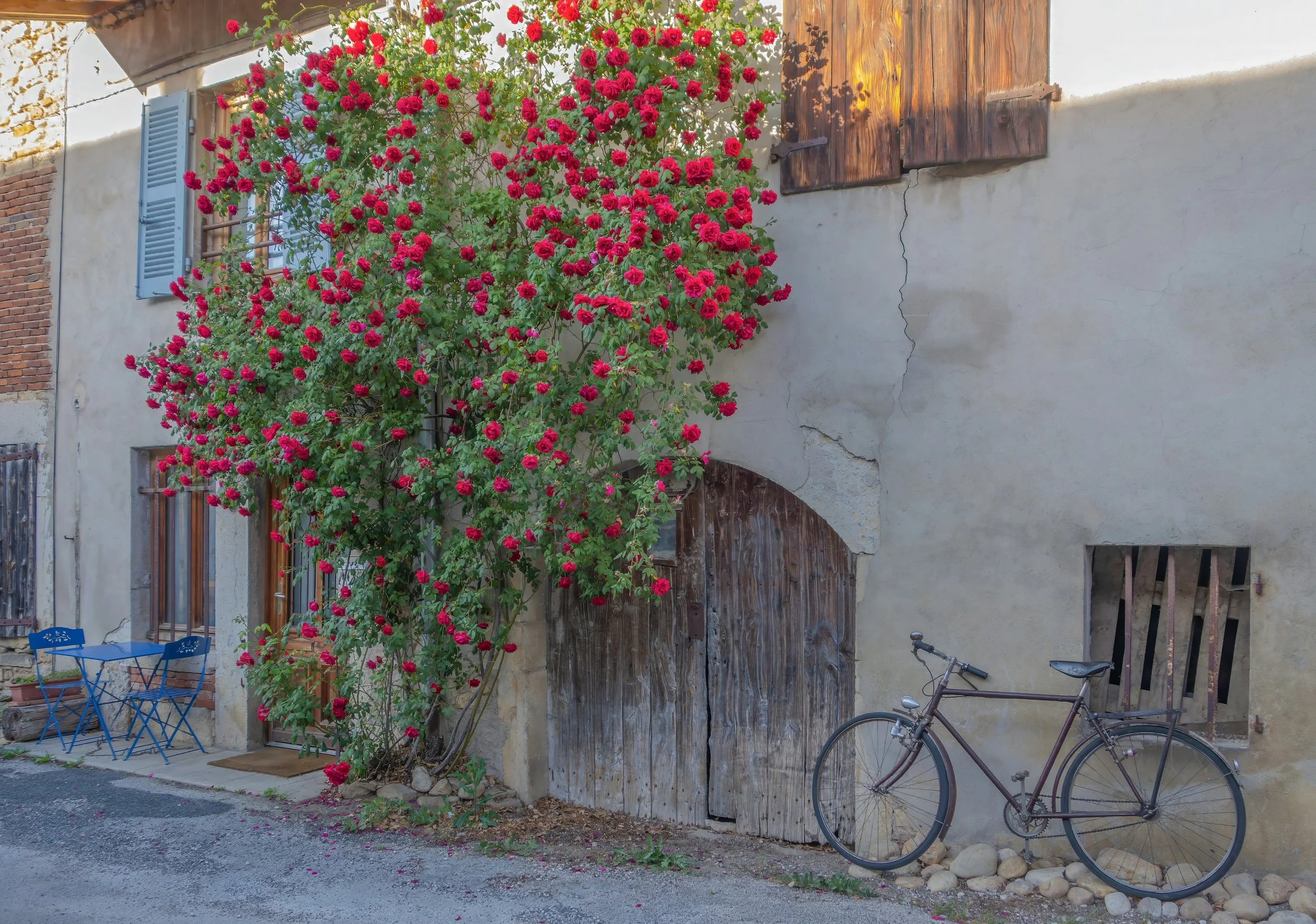
Prior to moving to France, I was that guy who bought used bikes during the pandemic, invested in the right car carrier and equipment, and drove to the controlled greenway to have a biking experience. This was partly out of necessity (there was not any safe bike infrastructure in the city that I lived in) and expectation that is what all the “cool kids” of a certain age did. Don’t get me wrong. I always enjoyed my rides. It was the genuine hassle of making the ride that was a bit unpleasant. While I enjoyed riding my bike, I could never just get it from the garage and go. My city just wasn’t built that way.
A Habit Older Than It Looks
Bicycles have been part of daily life here in France for a long time. The French were early and eager adopters, back in the 1800s, and the bicycle settled into the culture the way certain foods or holidays do, so deeply that nobody thinks to question it. For a stretch of the twentieth century, cars pushed bikes to the side, and pedaling to work started to feel like something you did because you had no other choice. That's changed. If you're curious about how that shift happened, Freewheeling France has a good rundown of the campaigns and city officials who pushed to bring bikes back into everyday life. But you don't need the history to feel it. You just need to stand on a street corner for ten minutes.
The Small Skills Nobody Teaches You
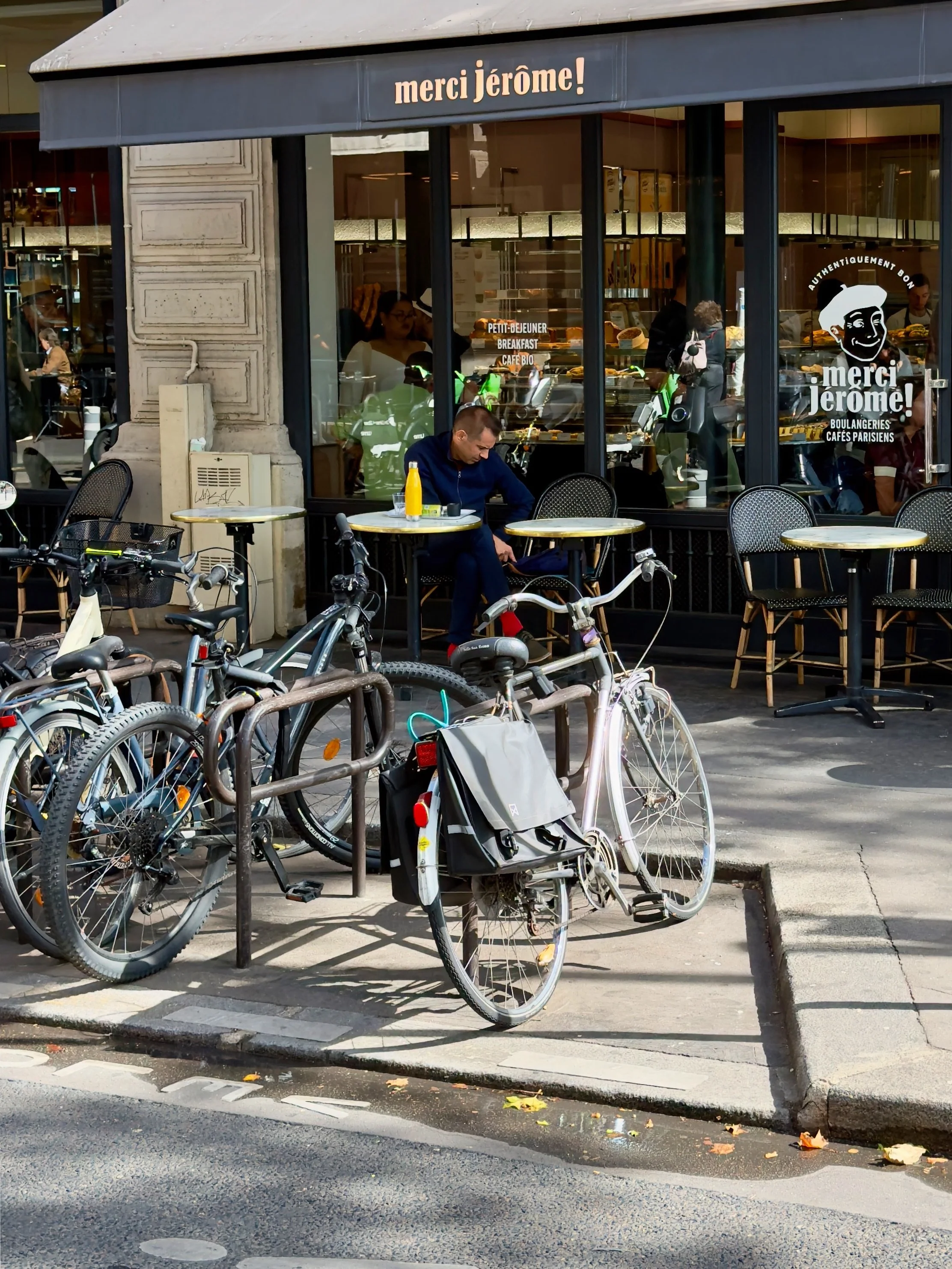
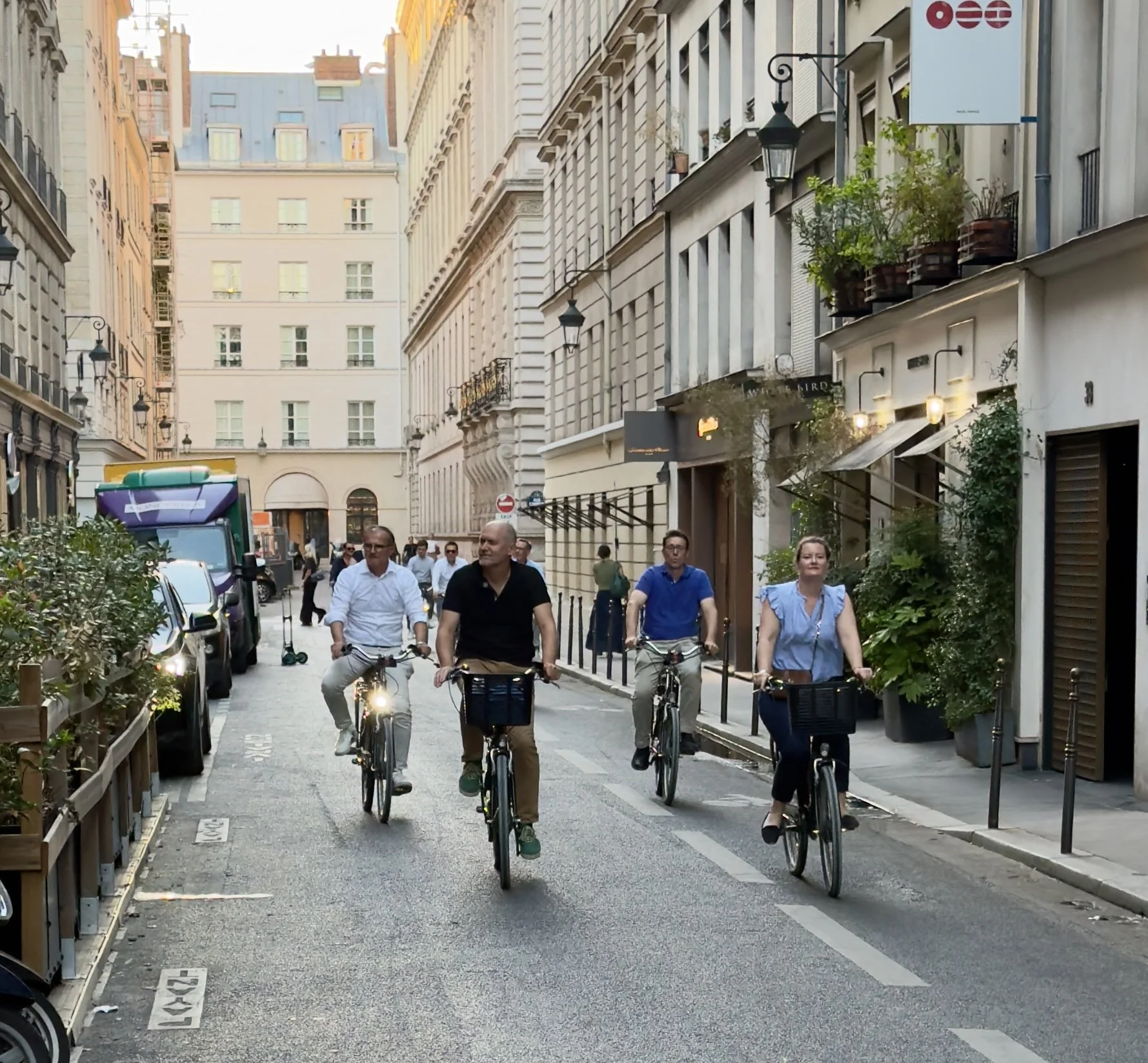
What you notice first is how little fuss is involved. Nobody here treats a bike ride like an event. I've watched a woman balance her groceries, a bottle of wine, and a small dog in her front basket, all at once, while chatting with the person riding beside her. Cyclists ring their little bells instead of shouting - somehow, it works. A polite ding replacing what would be a horn anywhere else. Kissing hello on both cheeks while straddling a bike, without ever quite dismounting, is its own small skill that I never fully mastered (still working on the kissing both cheeks too – lol).
Rivoli and the Rise of Vélib'
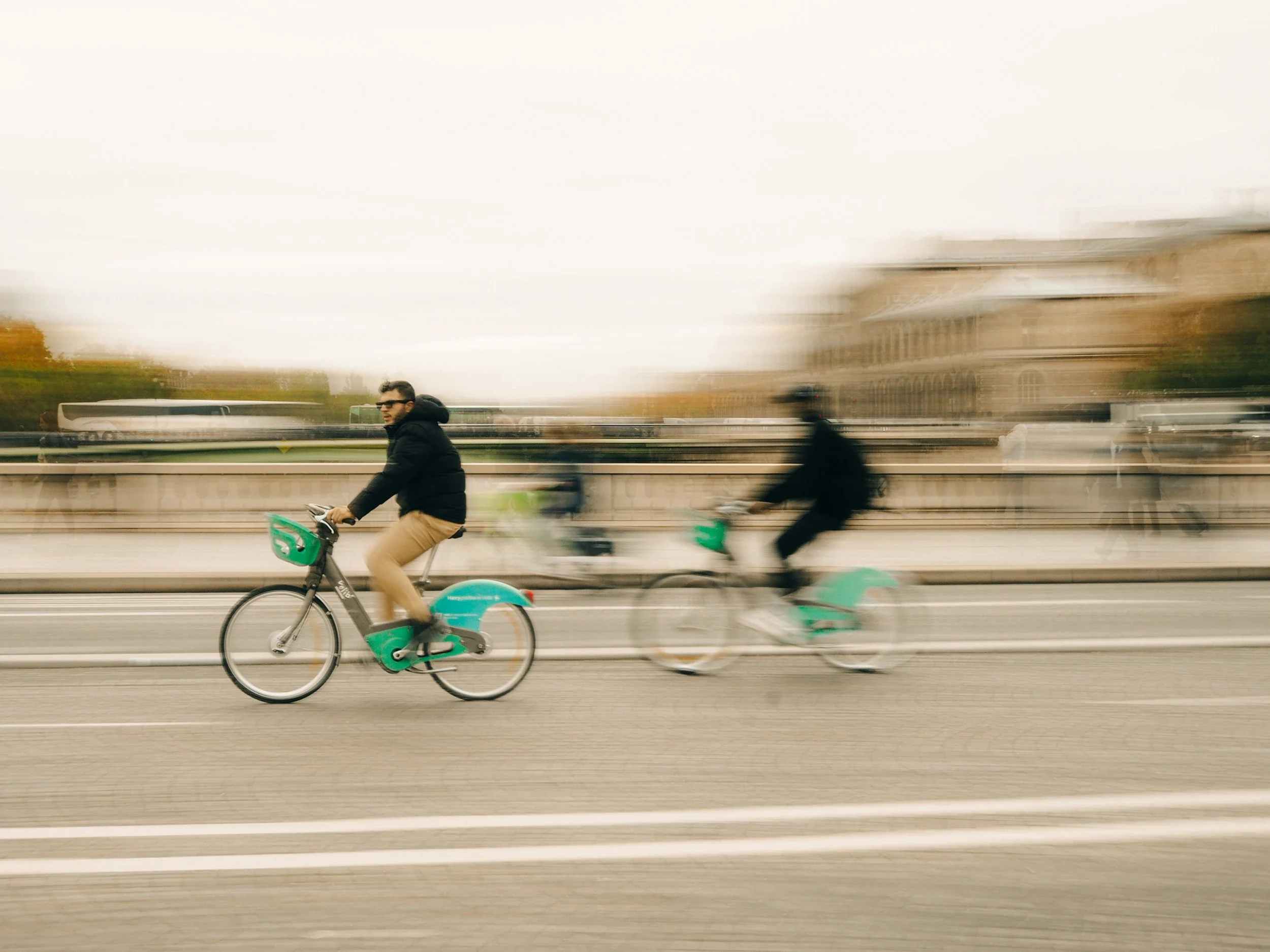
A lot of that ease comes down to Vélib', the city's bike-share system, which by now feels less like a program and more like part of the furniture. Grab a sturdy grey bike, ride it where you need to go, drop it at another station, done. Nowhere is that more visible than along Rivoli, where it runs past the Tuileries toward Place de la Concorde. The arcades stay busy almost any hour, and tucked among the tourists posing for photos, there's a steady stream of people docking or grabbing a bike without breaking stride, the way you'd grab a shopping cart. If you want the full story of how Vélib' grew from a shaky pilot program into a citywide habit, Wikipedia's entry has the details.
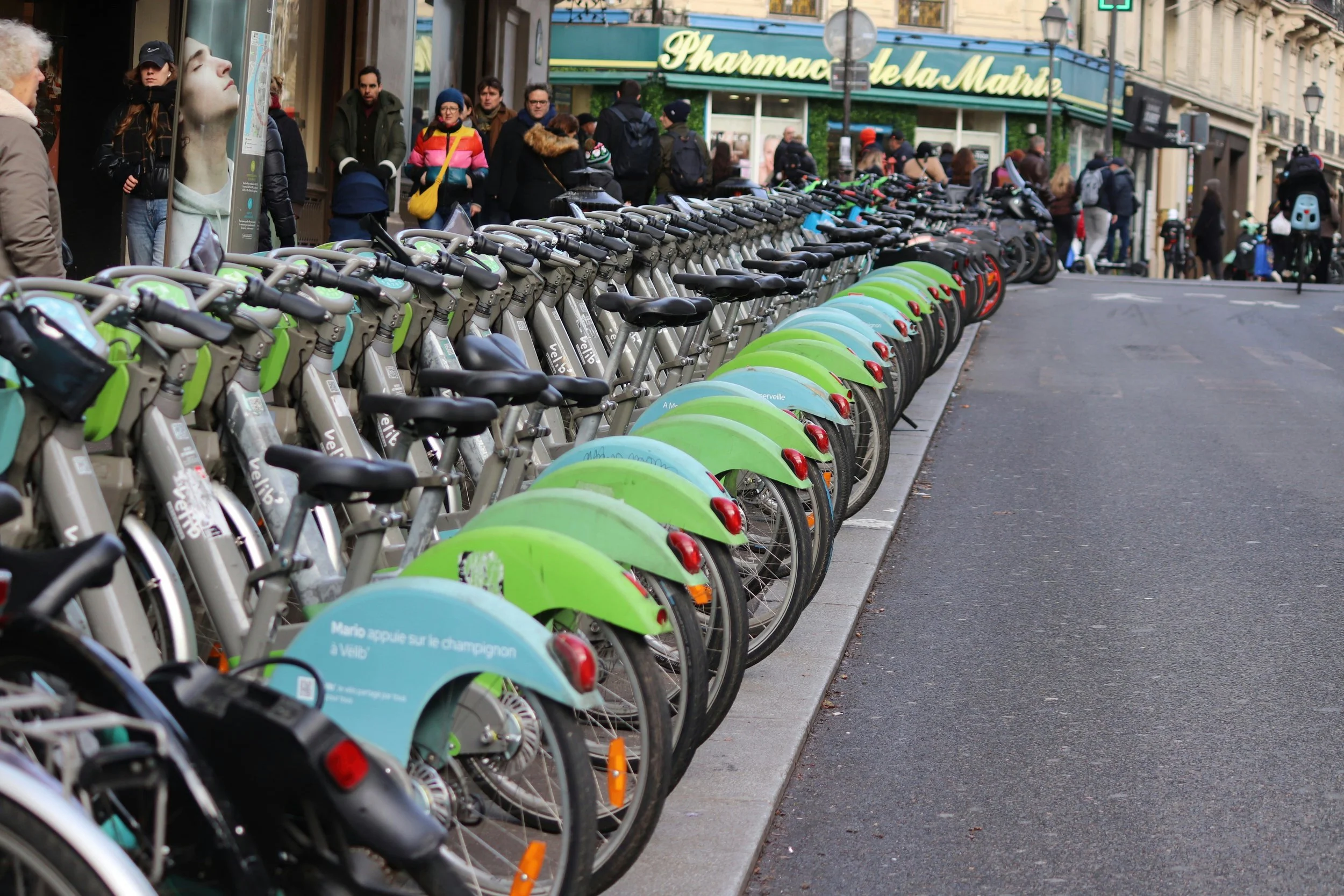
I saw this up close once, outside a ramen spot on a side street. Directly outside was a cluster of bike-share bikes, all crowded there, mish-mashed together. Folks were bringing bikes and parking, while others were walking up, phones in hand, to rent one. One young woman, I remember, looking like she’d just left a Pilates class or something, walked up, checked out a bike, pulled her hair back, strapped her stuff down and pedaled away in a hurry. She knew how it worked and was on her way.
Room to Ride Near the Opéra
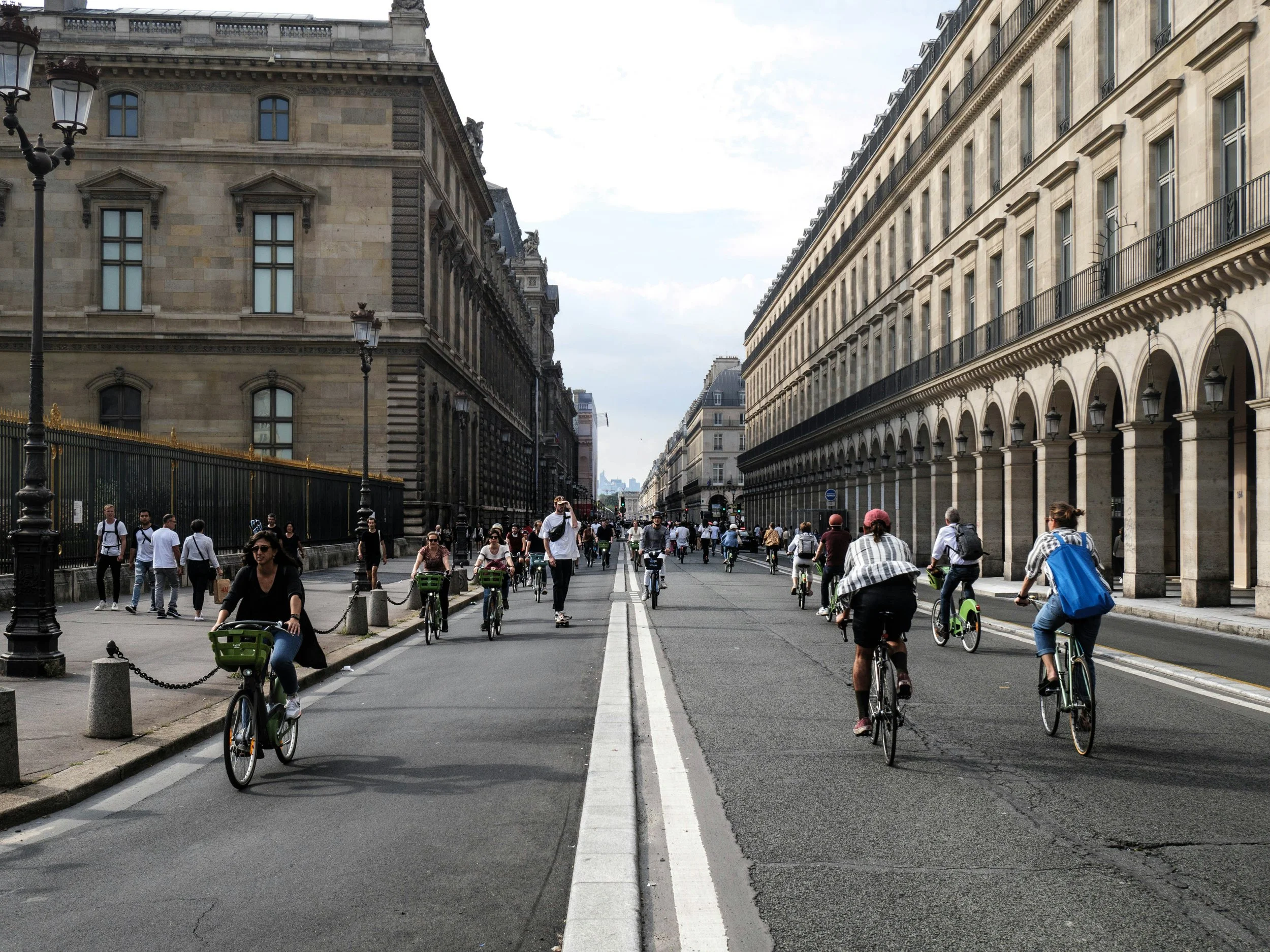
None of this ease happens by accident. The city has spent real money and real political capital carving out space for bikes, not just painting a line and calling it a day. Boulevard Haussmann, built wide enough for carriages back when that was the point, now carries a proper two-way bike lane running past the department store windows, cyclists moving down it in a steady current while buses and taxis stay penned into their own lanes beside them. You can feel the difference in how relaxed people look while riding there. Nobody's white-knuckling the handlebars. If you're the type who likes a little context with your coffee,ECF's coverage of Paris's push to become a 100% cycling city by 2026 wrote a solid piece on how far the city has committed to going with this.
Who's Actually Riding
What gets me every time, though, isn't the lane or the paint. It's who's riding. This isn't a city of people logging personal records. It's a city of people in work clothes, school uniforms, church shoes, moving at a pace that has nothing to do with fitness. I watched a woman in heels and a wool coat pedal down the bike lane near the Opéra one gray afternoon, unbothered, sipping what I can only assume was coffee from a to-go cup balanced against the handlebar. As if biking in heels, one-handed, were the most obvious thing in the world. Which, apparently, it is. She certainly made it look easy.
Back Home
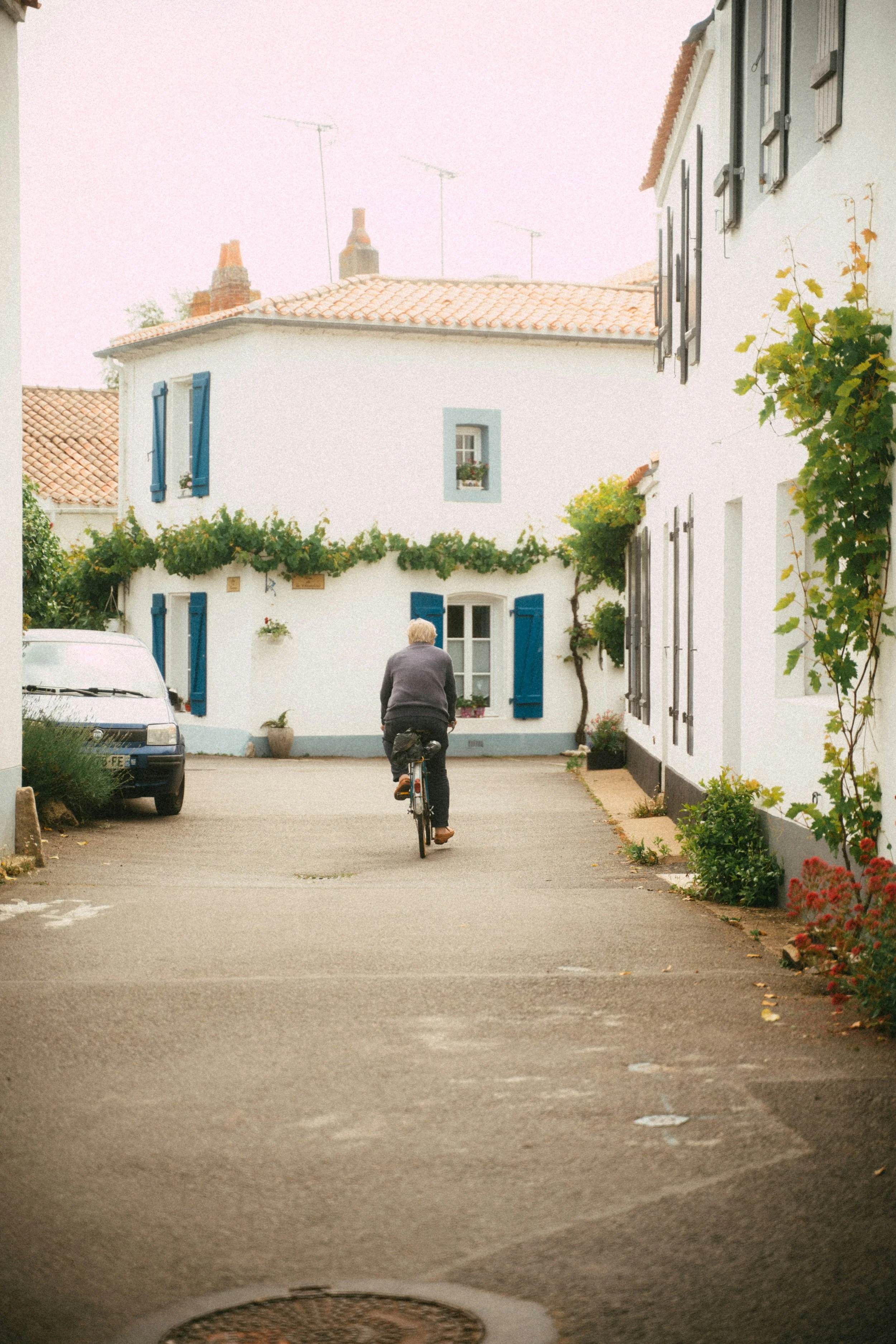
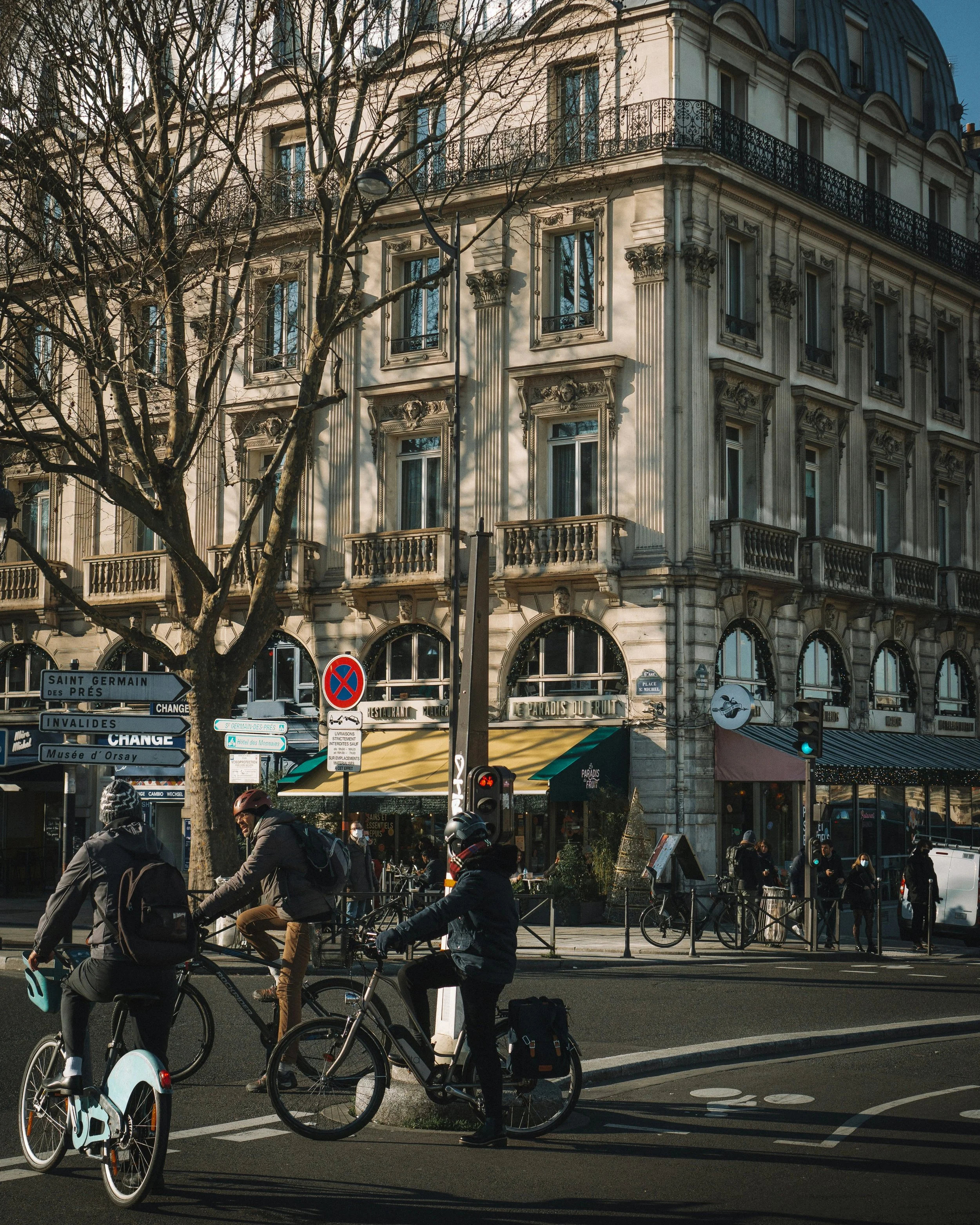
Back in my village, the rhythm is smaller but no less steady. Kids ride to school the way American kids ride to a friend's house, except this destination comes with homework. Retired neighbors pedal to the church square at a pace that would frustrate any serious athlete, stopping to chat wherever they please, because nobody's in a hurry. On Sundays, a few of them ride out past the edge of town just for the pleasure of it, which is the closest thing I've seen here to biking as a hobby. Even then, it looks less like exercise and more like an excuse to be outside.
I, myself, am still not the confident bike rider. I'm still getting used to riding in traffic and learning the rules and nuances of French cycling culture. I have not ventured into Paris proper on a bicycle — unlike the extremely confident (and sometimes oblivious) riders I see in the city, I still need to work up some nerve before I tackle that beast. What I am getting better at is my own village: there's a general respect for bicycles here, and I ride around for practice whenever I can. My new adventure is riding to the grocery store, doing my shopping, and loading up my side bags for the scenic ride home. For someone who lives here, that's probably nothing. For me, it's one more step toward riding with the "cool kids."
What I'm Taking With Me
By the time I got back to my own corner, none of it surprised me anymore. The suits near the Opéra, the tourists dodging Vélib' riders along Rivoli, the parents on cargo bikes, all of it had settled into something closer to normal, the way a new word in a foreign language eventually stops sounding foreign at all. Nobody here is trying to make a statement by riding a bike. They're just trying to get to work, or the market, or church, or a friend's kitchen table, and the bike happens to be the easiest way there. Watching a whole region quietly agree on that, one ordinary commute at a time, felt like something worth bringing home with me.
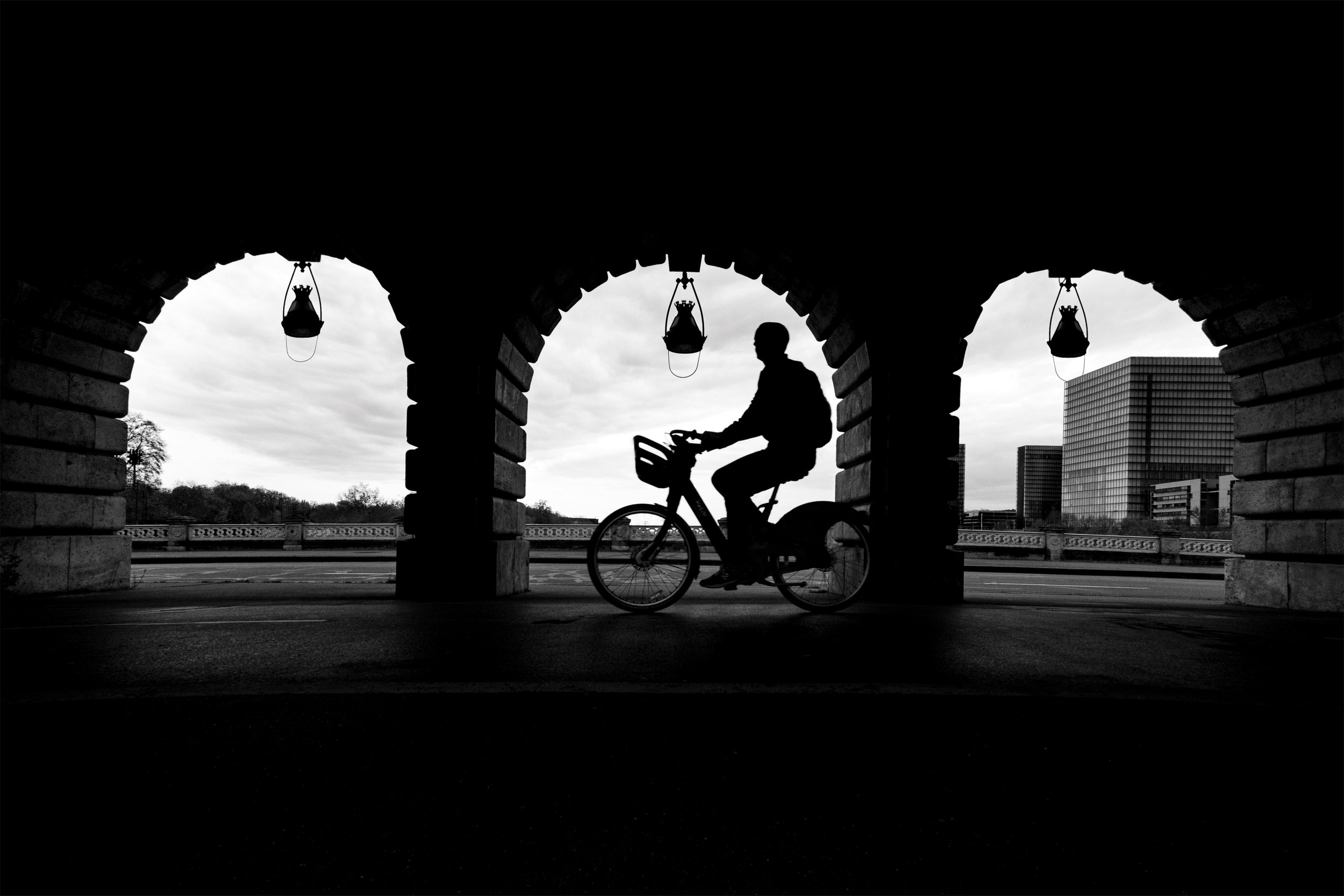
I'm still working on the ride in traffic near the Opéra, and Paris proper is still a beast I haven't worked up the nerve for. But the panniers are packed, the village roads are getting familiar, and somewhere between the bakery and the church square, I think I'm starting to get it. Ask me again once I've survived Rivoli.
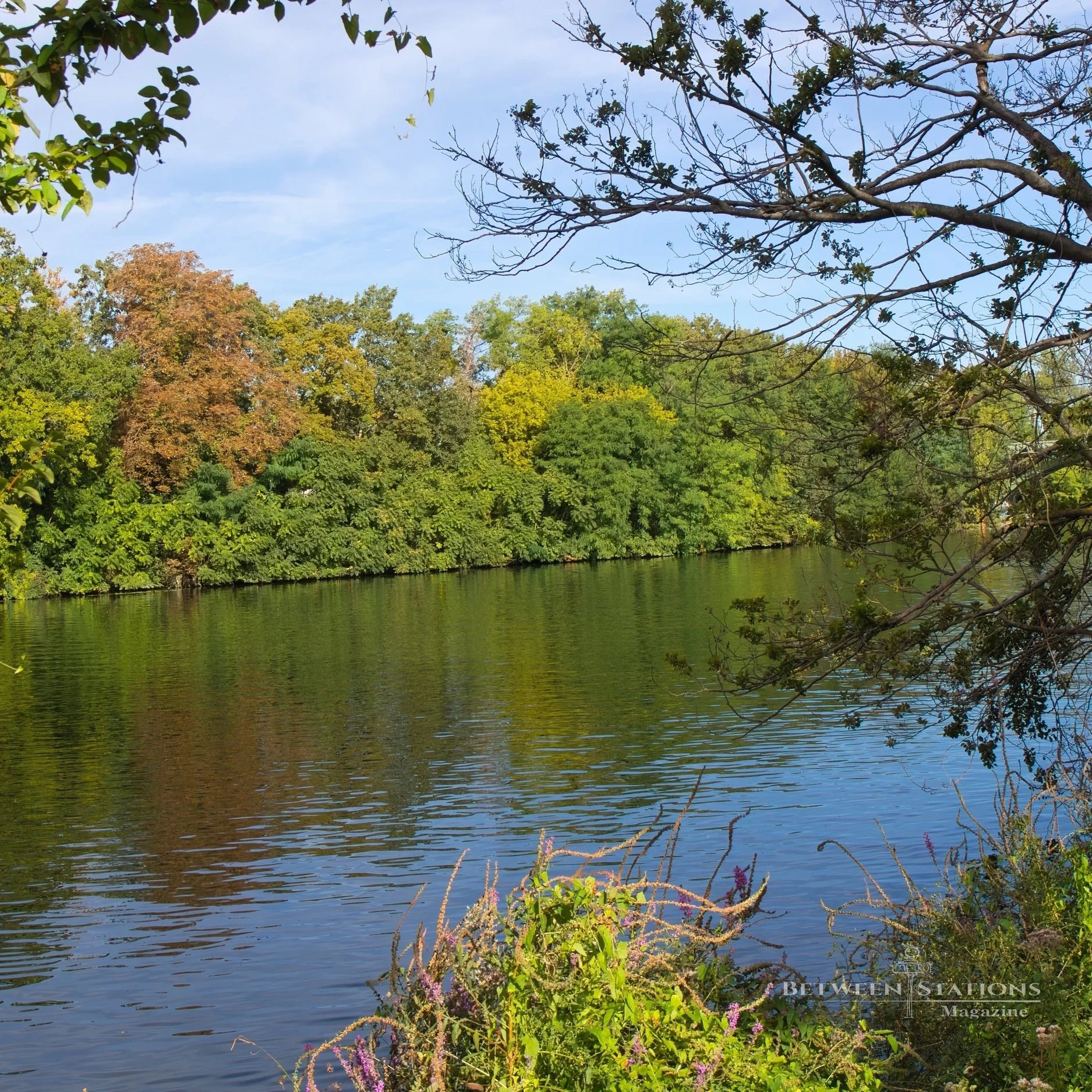
October Random Walk: A Wooded Stroll Along the Seine
This month's random walk isn't really a walk at all — it's a stroll, the kind where you let your pace slow down and just take in the view.
A quiet, unhurried walk through Rueil-Malmaison's riverside neighborhoods.
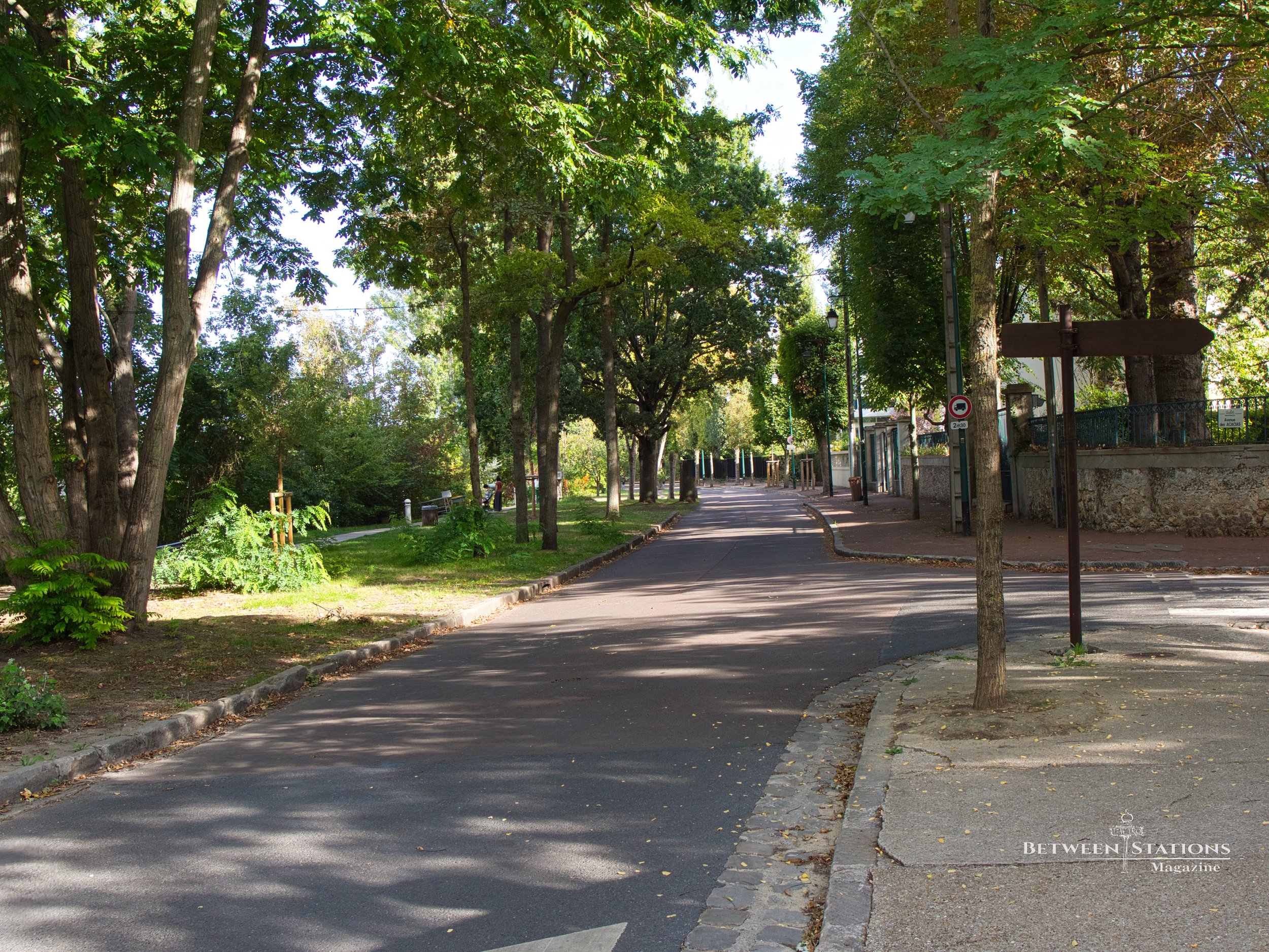
This month's random walk isn't really a walk at all — it's a stroll, the kind where you let your pace slow down and just take in the view. Our backdrop is a quiet, tree-lined stretch of Rueil-Malmaison that hugs the banks of the Seine, and honestly, it might be one of the most peaceful little corners we've featured yet.
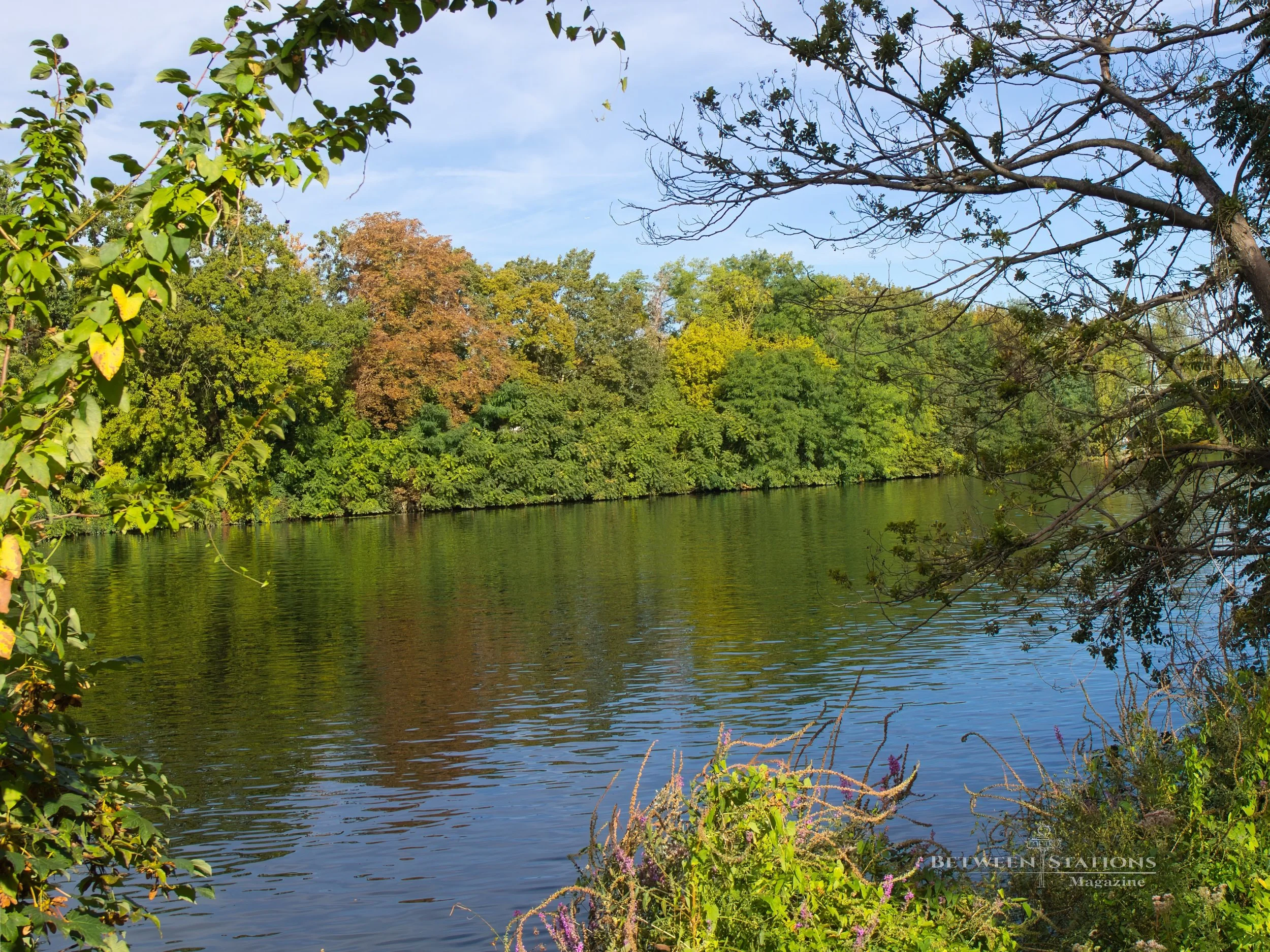
Getting Started
We begin at the Rueil-Malmaison RER A station, a quick ride from central Paris if you're coming from the city. Leave the station through the Avenue de Colmar exit, cross the street, and turn right. Keep an eye out for the first street on your left — it comes right before the rail overpass — and that's Avenue de Seine. From there, it's a straight shot down to the river, no turns, no guesswork.
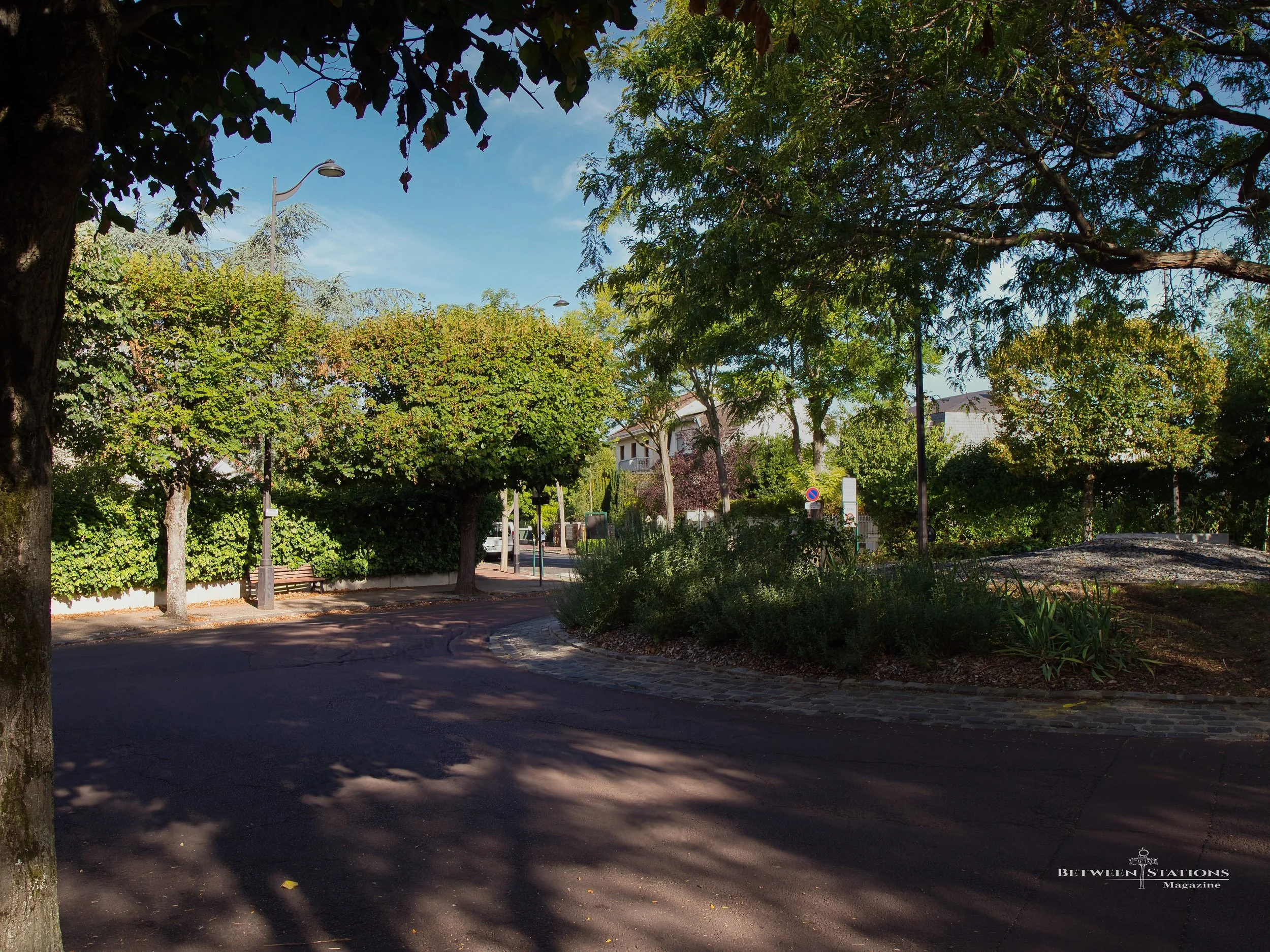
Avenue de Seine itself is worth slowing down for even before you reach the water. It's a quaint, tree-lined street with lovely homes lining one side, the kind of quiet residential charm you don't always expect to find just a few stops outside Paris. Keep walking until you reach the corner of Boulevard Bellerive — that's when the river comes into view, and that's also when the real tranquility of this walk begins.
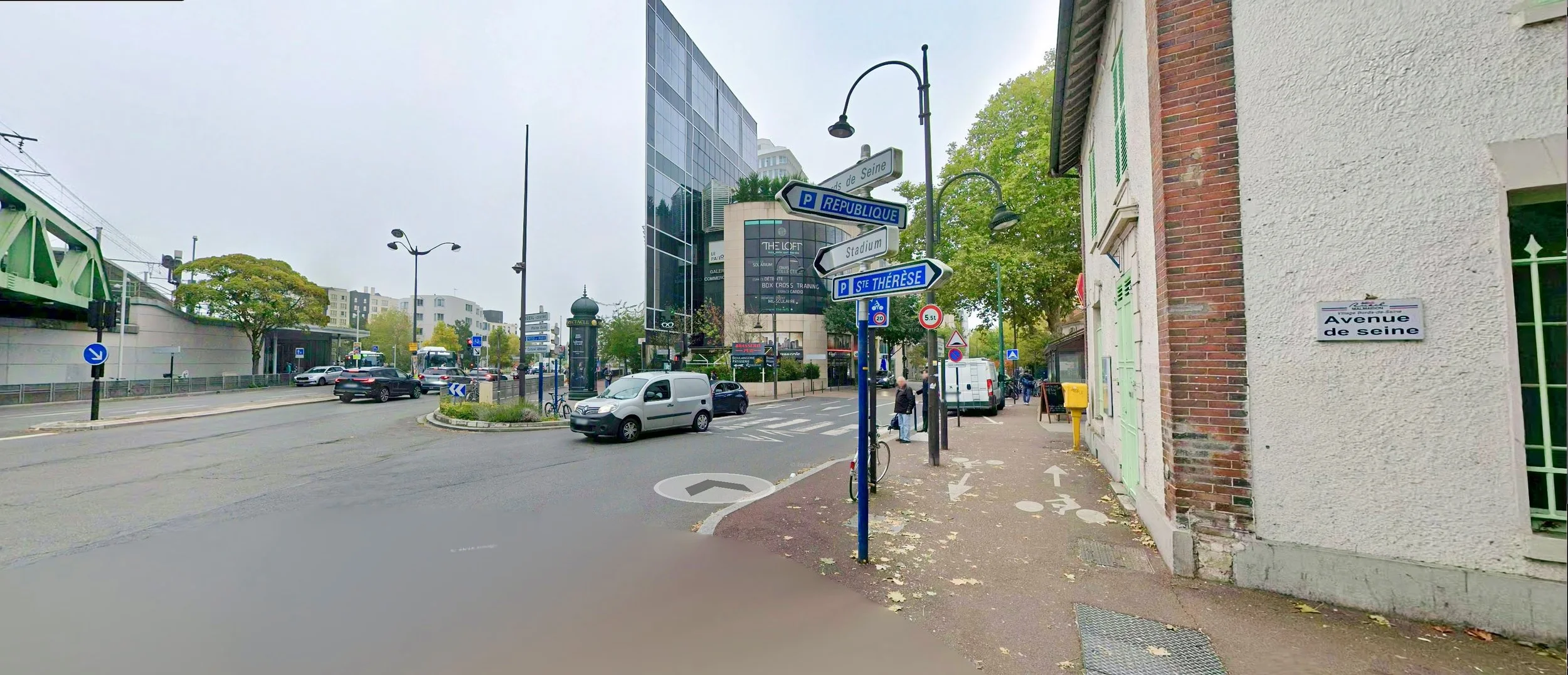
Avenue de Seine itself is worth slowing down for even before you reach the water. It's a quaint, tree-lined street with lovely homes lining one side, the kind of quiet residential charm you don't always expect to find just a few stops outside Paris. Keep walking until you reach the corner of Boulevard Bellerive — that's when the river comes into view, and that's also when the real tranquility of this walk begins.
Along the River
Turn left onto Boulevard Bellerive and settle in — this is the heart of the walk. It's a beautiful, tree-lined street bordered by gated homes on one side and the Seine on the other, and what makes it special is simply how calm it feels. Aside from the occasional electric car gliding past, the area is remarkably quiet, a real contrast to the bustle you just left behind on Avenue de Colmar. There isn't much more to say about this stretch, honestly — it's less about narration and more about noticing. Let your shoulders drop a little. Take in the sights and sounds. Watch the light move across the water.
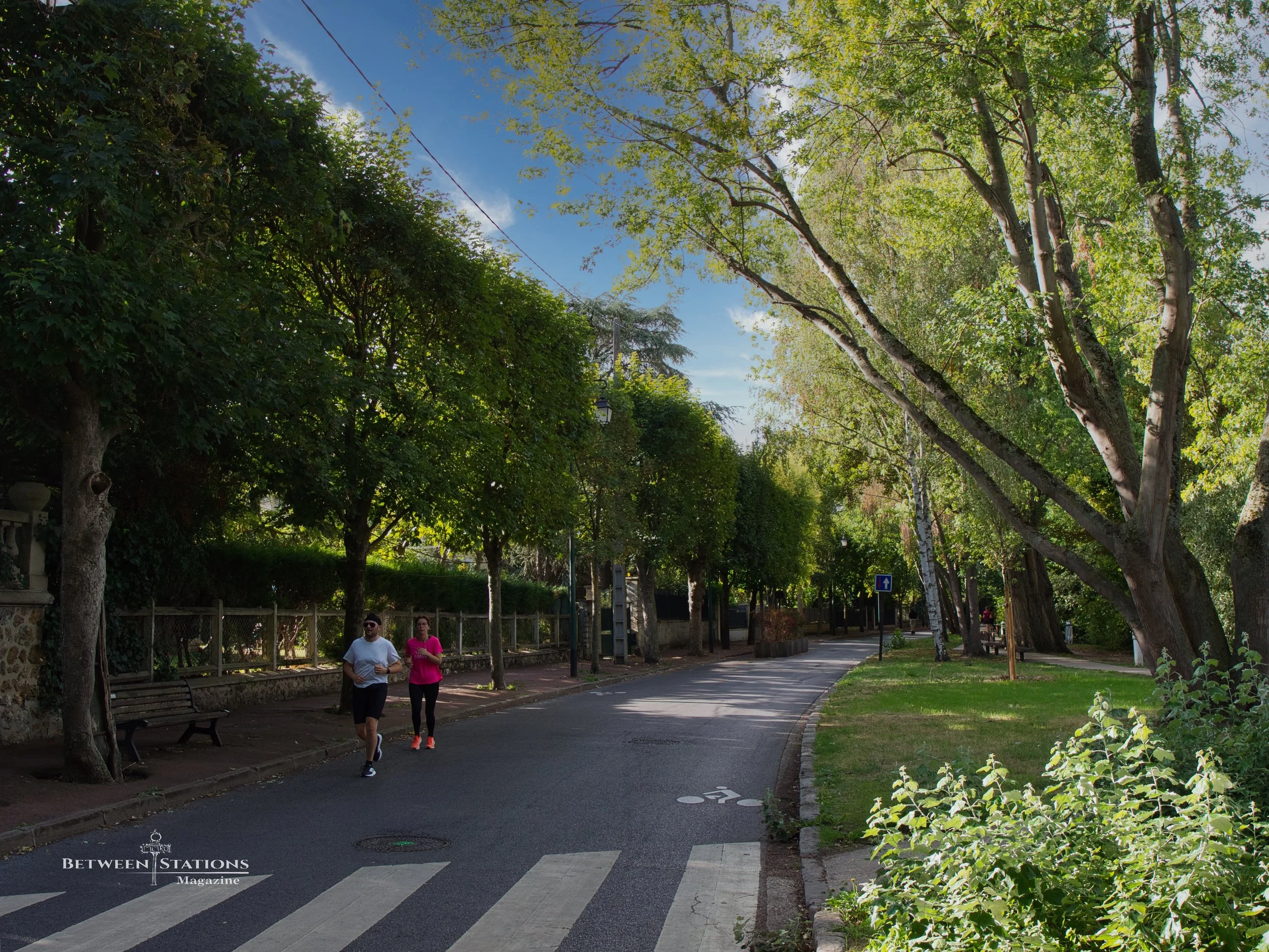
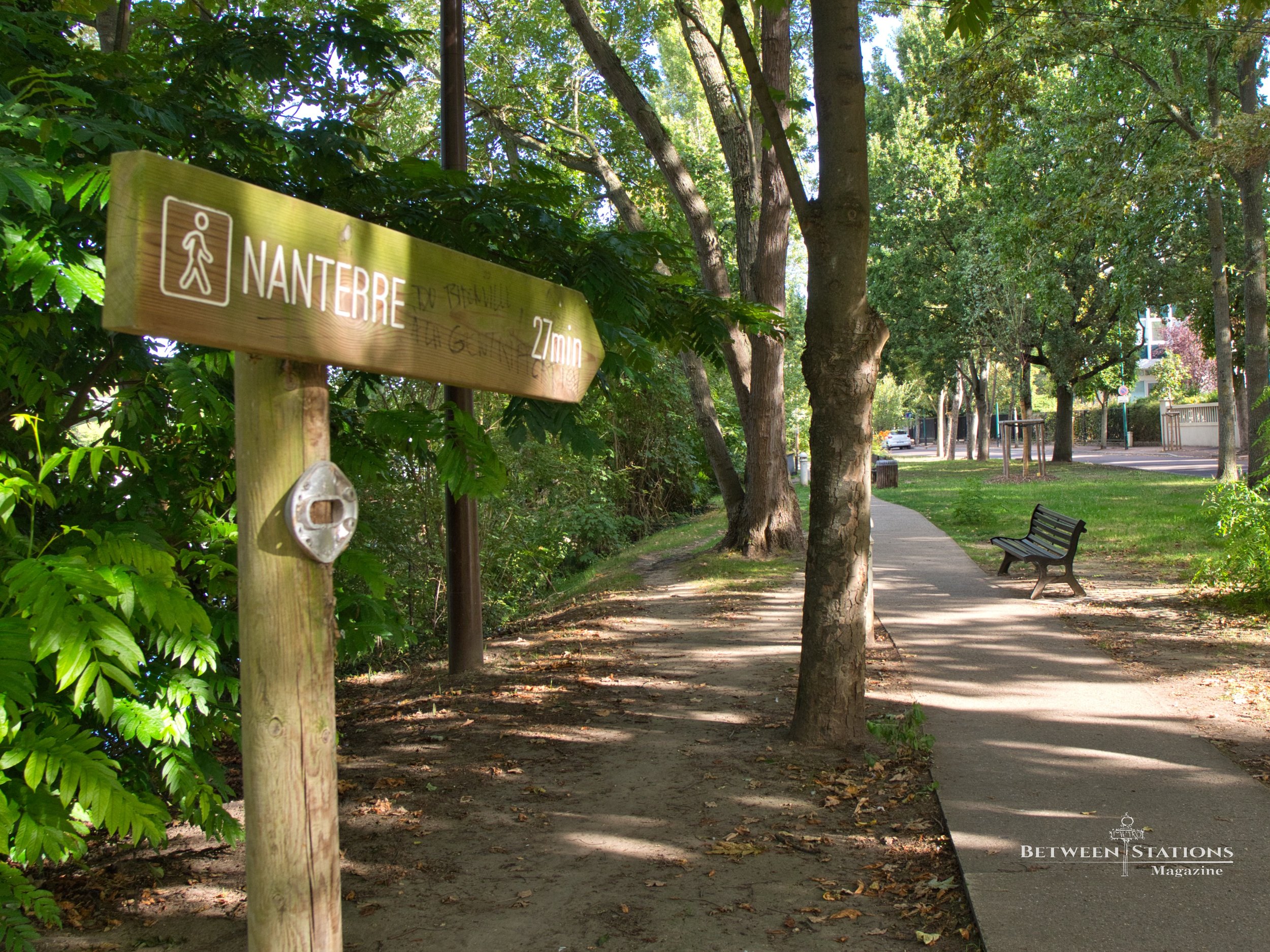
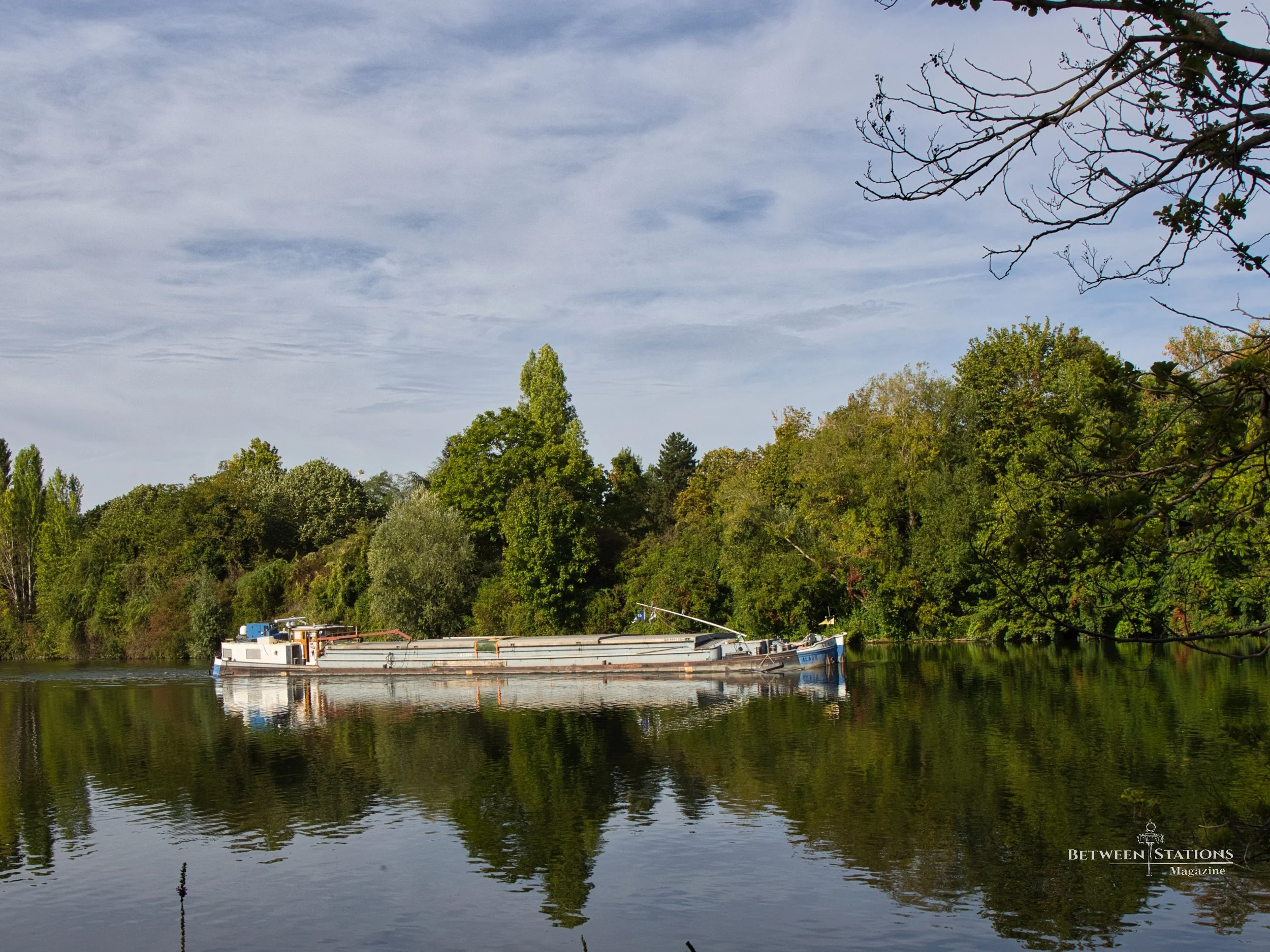
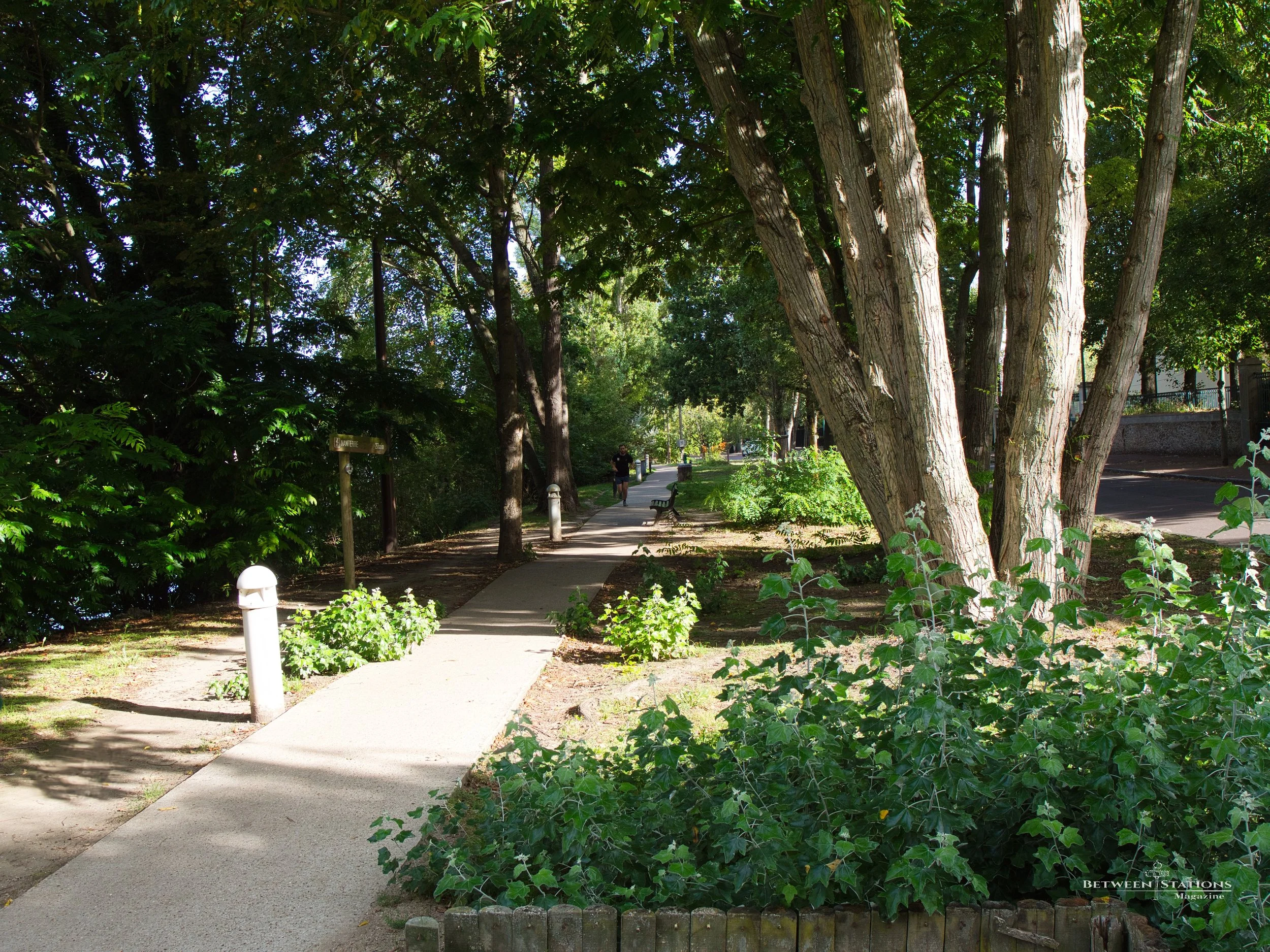
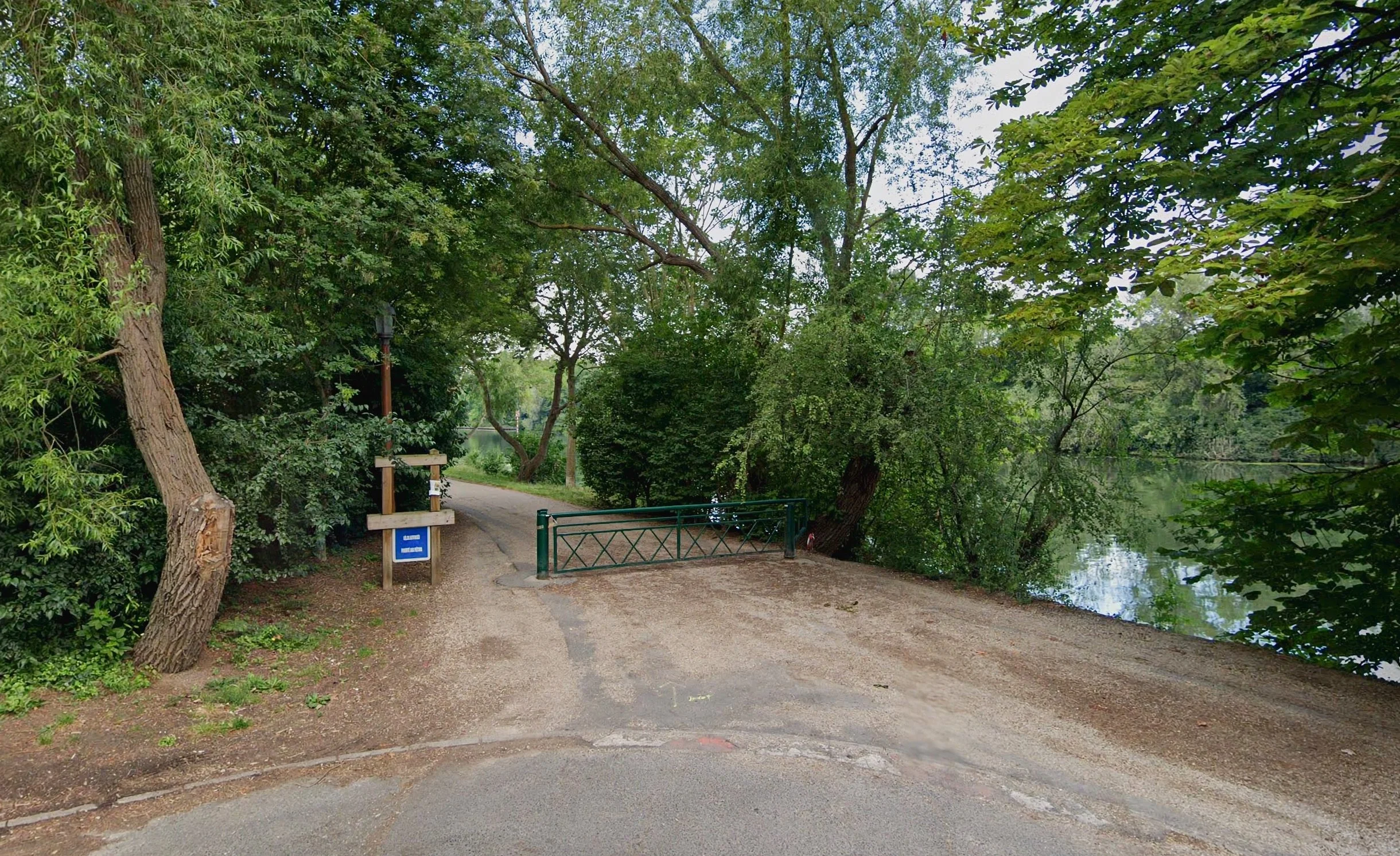
Eventually the paved street gives way to a semi-paved walkway, closed off from car traffic by a small barricade. This section belongs to walkers, runners, and cyclists, still tracing the curve of the Seine the whole way. You'll find benches scattered along the path if you'd like to sit for a while — and I'd encourage you to. This part of the walk is just as beautiful as what came before, maybe even more so with the water so close at hand.
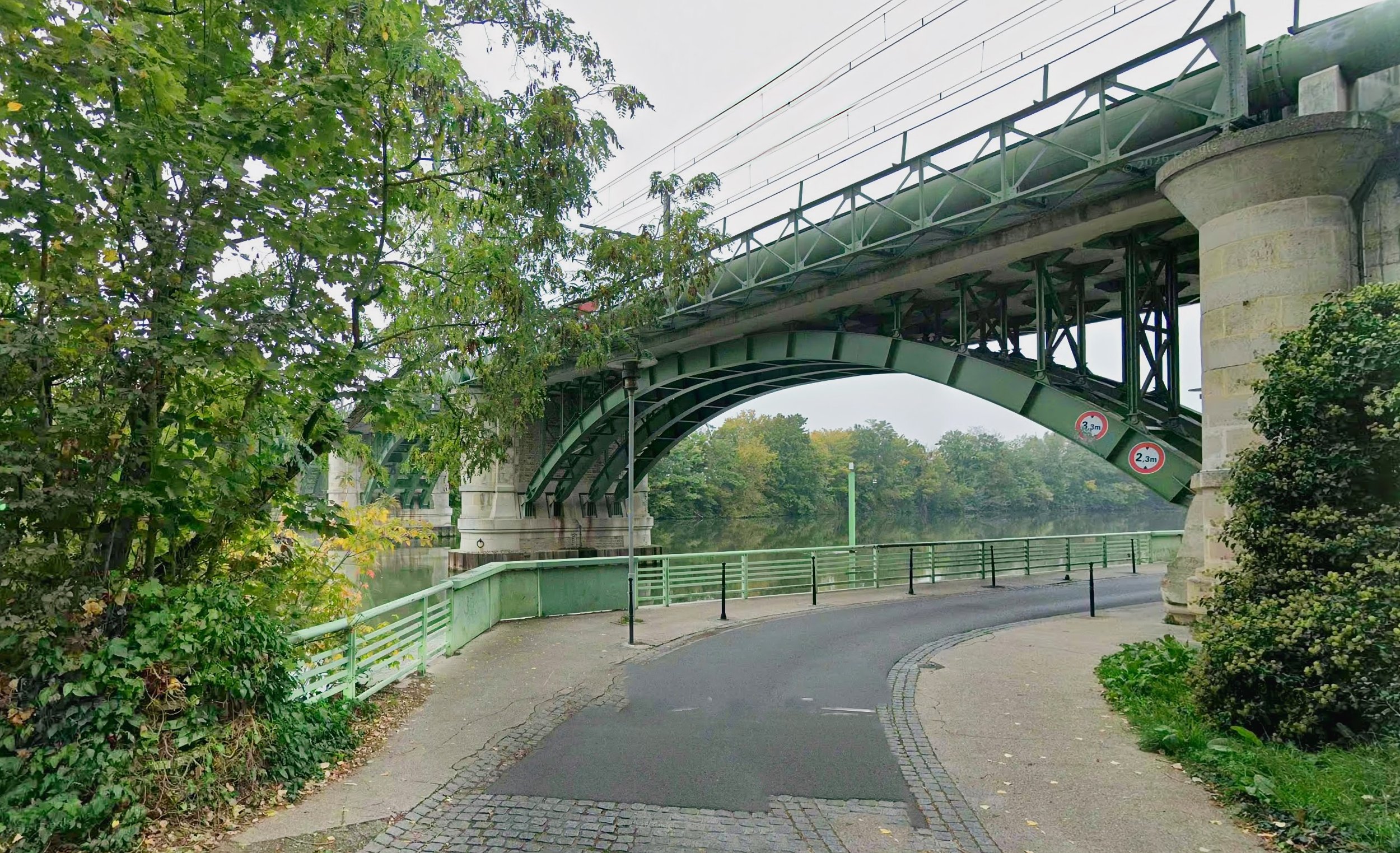
When you're ready to head back, the simplest option is to retrace your steps the way you came. But if you're up for a bit more exploring, here's a nice option: once you're back at Avenue de Seine, keep walking past it along the river, ducking under the rail overpass. This carries you into a few neighboring pockets of Rueil-Malmaison, each just as charming as the last. Follow that route and you'll eventually land back on Avenue de Colmar, a little further up from where the RER A station sits — a nice loop if you'd rather not backtrack.
A Few Practical Notes
If you're planning your visit, it's worth checking the RATP journey planner ahead of time to confirm RER A schedules from central Paris, since weekend service can shift. Rueil-Malmaison itself has plenty of history beyond this walk too — the town is home to the Château de Malmaison, Napoleon and Joséphine's former residence, which makes for a lovely add-on if you want to turn this into a fuller day out. And for those curious about the Seine's path through the wider region, the official Seine tourism site has some nice background on the river's role in the towns it winds through.
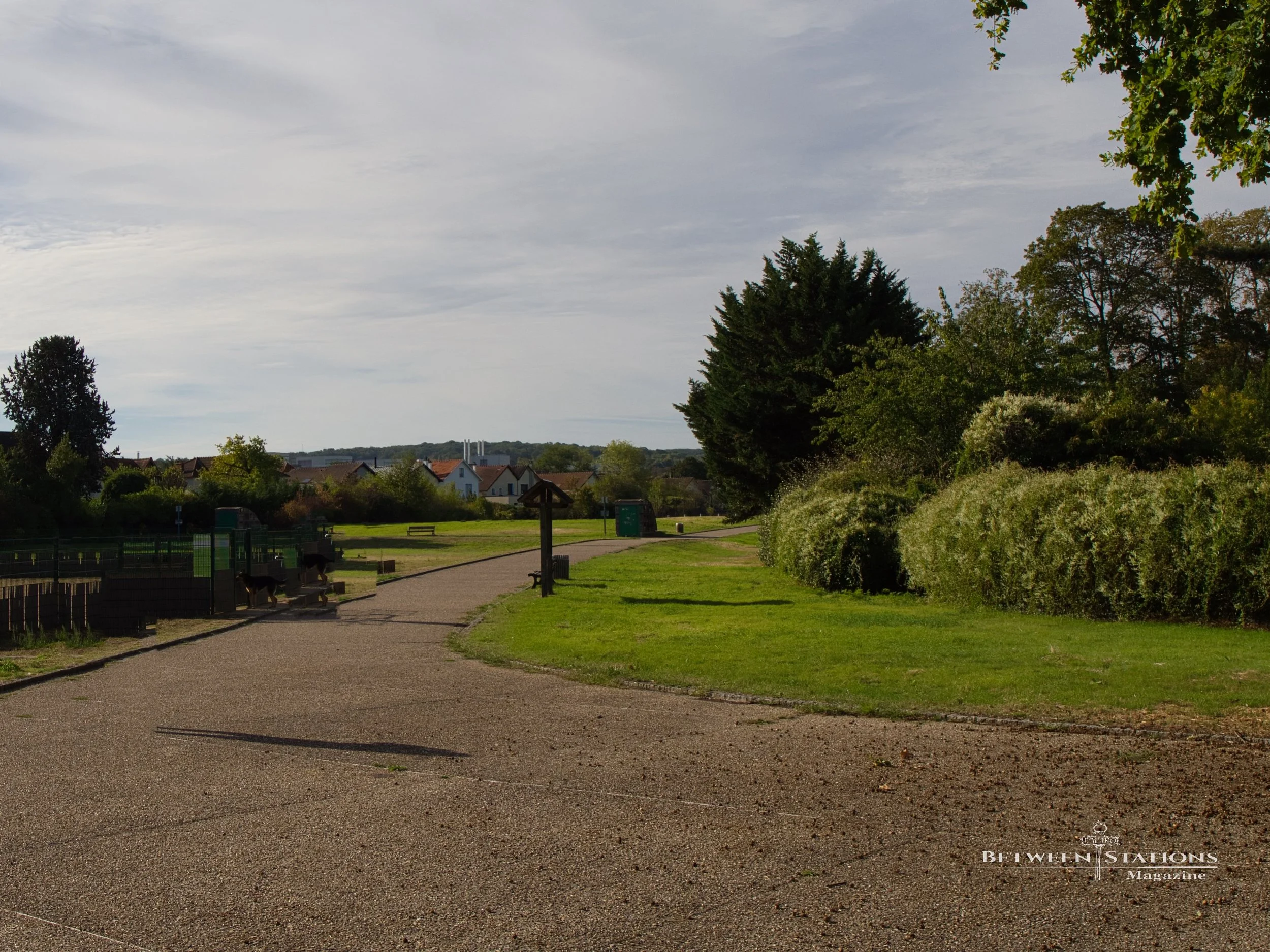
This is a completely unstructured walk, built entirely around the experience of the environment rather than any checklist of sights. It isn't fussy, and it doesn't ask much of you beyond showing up. Bring a coffee, bring a friend, bring nothing at all — just come ready to slow down for an hour and let the river do the rest. Autumn light on the water has a way of making even a short stroll feel like a small escape, and this one delivers that in spades. Once you've done it, don't be surprised if it becomes a habit — some walks are made for revisiting, and this quiet stretch of the Seine is exactly that kind.
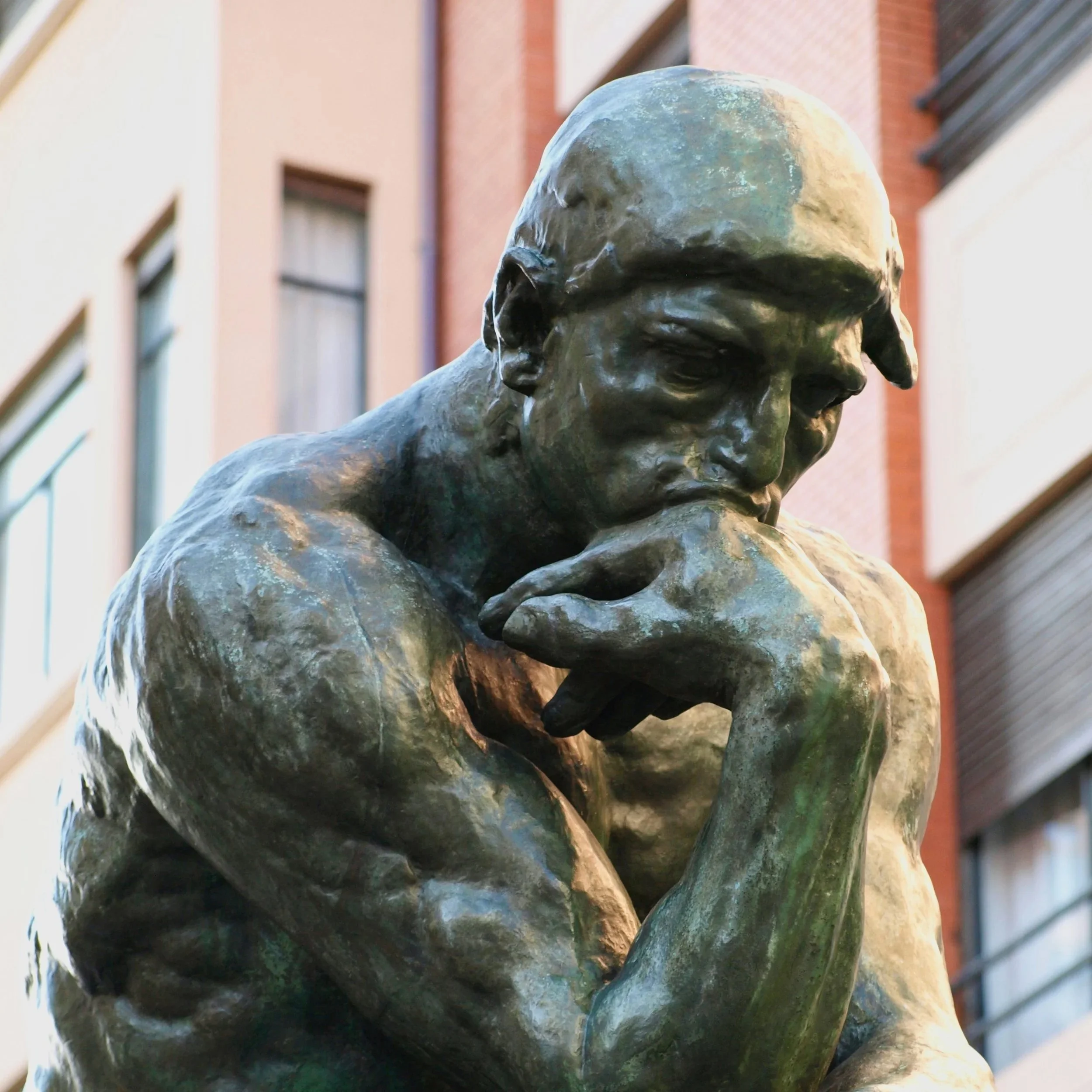
The Last Stop - A Closing Thought From Between Stations Magazine
Bend A Little
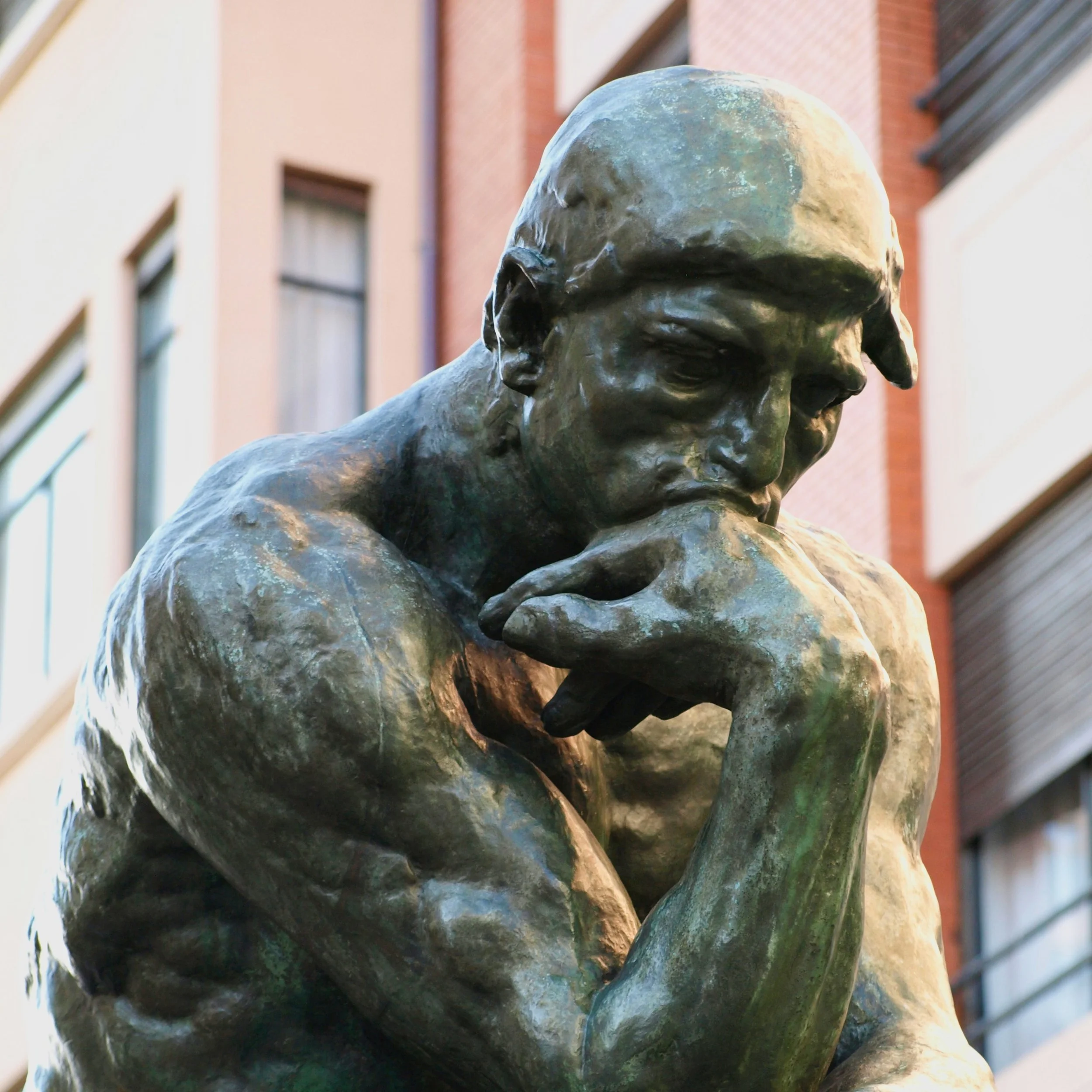
Bend a Little: The Skill That Makes Life Easier to Live
You don't need the perfect plan — you just need to know how to roll with the one you've got
When I was growing up, I loved the cartoon where Wile E. Coyote would shoot an Acme cannonball at the Road Runner. He was certain this was the time he'd finally get him. Wile E. gets Road Runner in his sights and lets the cannonball fly. Road Runner, running down the road just having fun (at full speed, mind you), sees this and... adjusts. He stops. He ducks. He steps aside. In short, he alters his plan. Without fail, the cannonball finds its way into a big, curved cutout and gets flung right back at Wile E. Mr. Coyote, stunned that his "certain" plan didn't work, makes no adjustment whatsoever and is soon seeing stars. When will that coyote ever learn?
And guess what? We're all a little bit Wile E. Coyote sometimes. We build a plan, get completely certain about it, and then act shocked when life sends it flying back at us. Here's something that happens to almost everyone at some point: you build a plan, and the plan doesn't stick. Maybe you had a timeline for when things "should" happen, or a picture in your head of how a certain year was going to go. Then something shifts, and suddenly the picture in your head doesn't match what's happening.
You've got two ways to handle that moment. You can hold on tight to the original plan and get frustrated every time life doesn't match it. Or you can loosen your grip a little and figure out what to do with what's in front of you. That second option is what flexibility looks like, and it might be one of the most useful skills you can build for yourself.
Why It's So Hard to Let Go of the Plan
A clear plan feels safe. It gives you something solid to hold onto, so when life pushes back against it, the first instinct is usually to push back harder and work extra hard to force things back on track.
I knew that I wanted to live in Europe, and my heart was set on Spain. I was fully in a "Spain or Bust" state of mind. That was my certain plan, and I started working toward it. But while doing my research, I started noticing things that made me think a little differently. I checked, and double-checked, and eventually realized Spain — while still a great country — wasn't going to be the best fit for me. I stepped back, widened my search, dug in a little more, and landed on France instead. That pivot turned out to be one of the best moves I've made, and France has been amazing.
Holding onto a plan that's already changed shape takes a lot of energy, and it can keep you stuck fighting for something instead of dealing with what's actually going on. Kevin Cronin, the guy who wrote "Roll with the Changes" for REO Speedwagon, put it best — the song's basically an anthem for embracing life's curveballs and moving forward anyway. So being flexible isn't the "giving up" move. It's the move that tends to work out better in the long run.
What Being Flexible Really Means
Being flexible doesn't mean you stop having goals or direction. It means you hold your goals a little more loosely, so they can bend without breaking. Instead of giving up on the goal completely when the timeline doesn't happen, you ask yourself what you want in the first place. Once you know that, you can find other paths that get you there, even if they look nothing like the one you first imagined.
It shows up in small, everyday ways too. Your weekend plans fall apart, so you come up with a new plan instead of writing the whole day off. You try something new even though it wasn't part of "the plan." A friendship changes over time, and instead of holding onto how it used to be, you let it grow into something different. None of this looks like a big deal on its own. But over time, it adds up to someone who can handle change without falling apart every time something shifts.
Why This Makes Life Better, Not Just Easier
Here's the part we sometimes miss: being flexible isn't just a way to survive hard times. It's a way to end up somewhere better than you planned. When you stay open to a different path, you sometimes find things you never would have found by sticking to the original one — like an entire country you weren't even considering.
A good life usually isn't the result of one perfect plan followed step by step. It's more like a bunch of small adjustments along the way — noticing when something isn't working, staying curious about what else could work, and trusting yourself enough to follow that new direction, even when it wasn't part of the original map.
How to Get Better at Bending
You don't need a big crisis to start practicing this. It can be as simple as asking "what else could I try?" instead of "why isn't this working?" the next time a plan falls apart. (I can tell you firsthand — my initial plan falling apart led to something even better.) Do that enough times, and it turns into a habit. And that habit builds a kind of steadiness — not the kind where nothing ever goes wrong, but the kind where you know you can land on your feet no matter what happens.
My "Spain or Bust" plan is probably still out there, filed in some drawer marked Certain at the Time. But I ducked when the research told me to duck, I stepped aside when the timeline stopped making sense, and I ended up in France — which, it turns out, was the big, curved wall I needed the whole time. Plans are going to fall apart. That part's non-negotiable. The only real question is whether you're the guy watching his cannonball come back around, or the one who saw it coming and moved.
So, here's to being the Road Runner and not the Coyote. Somewhere out there, ol' Wile E. is still waiting on his next Acme delivery, fully convinced this cannonball is the one that finally works. He never adjusts. He never learns. He just keeps getting launched into a canyon, dusting himself off, and ordering the same doomed contraption from the same catalog. Meep Meep, buddy — some of us have places to be.
As always, slow down, look around, and enjoy the journey…between stations.
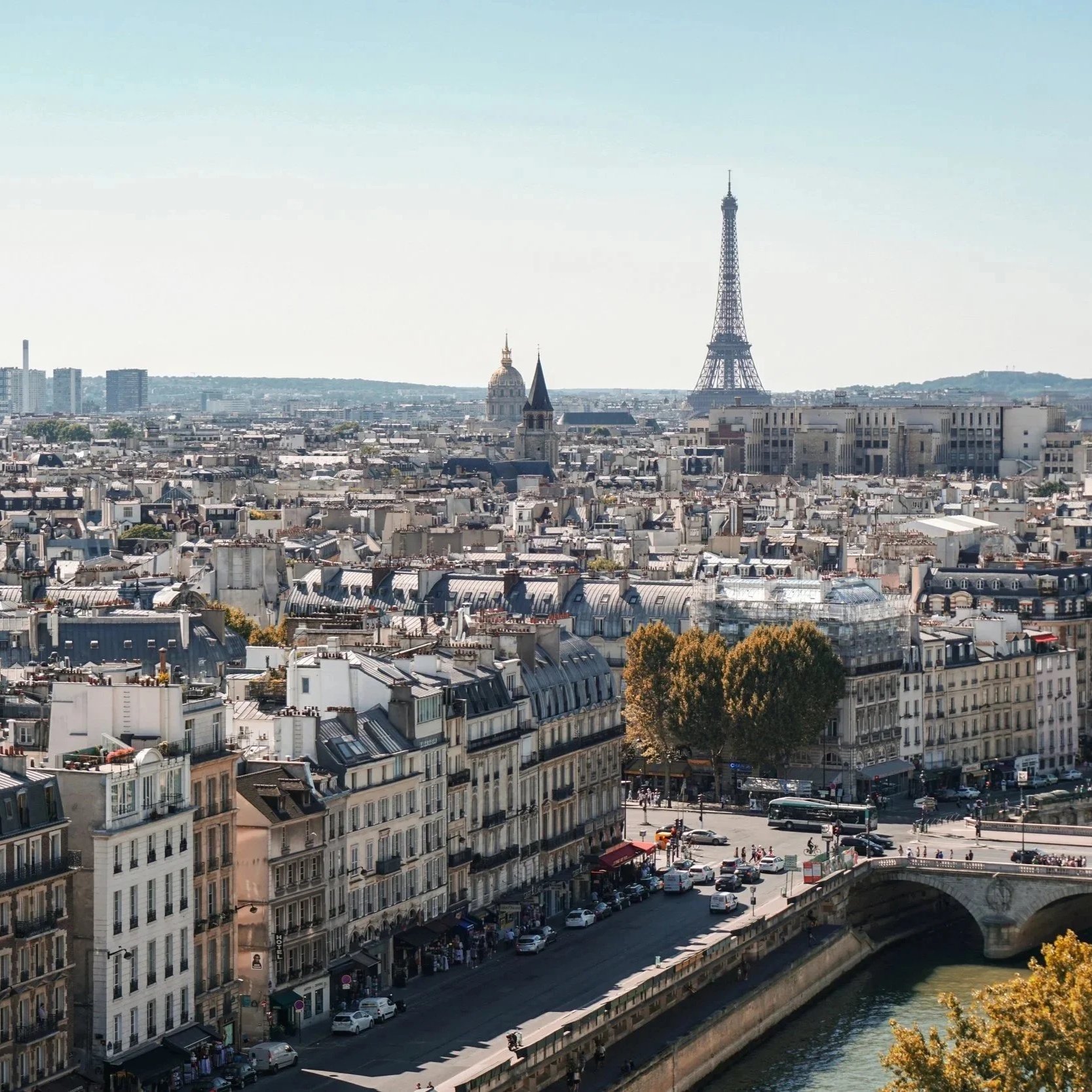
Falling for the Iron Lady, One Sparkle at a Time
Why does an iron tower built for a fair still stop Parisians mid-conversation? A personal look at the history, culture, and quiet pull of the Eiffel Tower.
A love letter to the landmark Parisians pretend not to notice
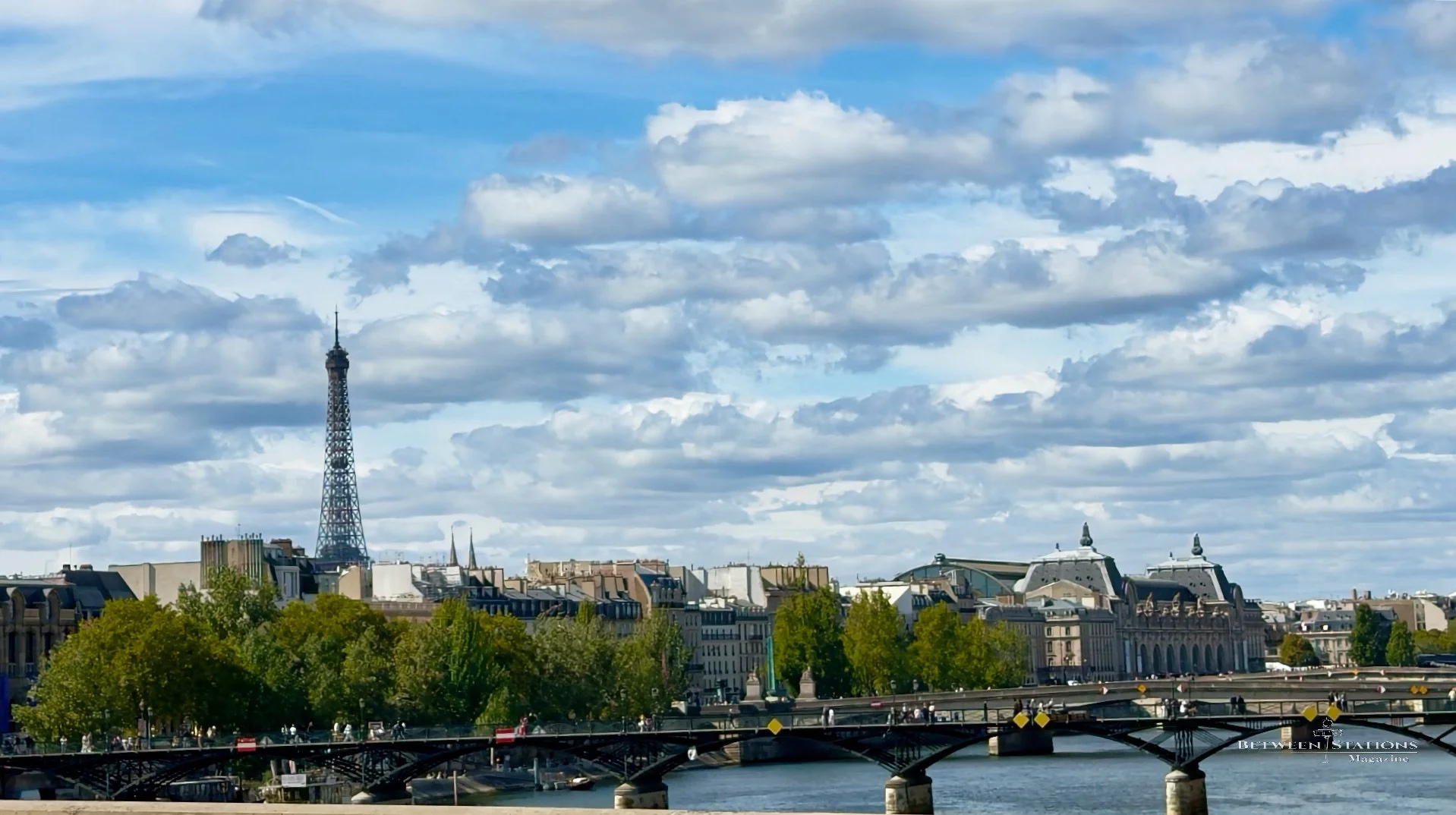
An Opening I Didn't See Coming
Say the words "Eiffel Tower" to a room full of strangers, anywhere on the planet, and watch what happens. Someone will sigh. Someone will mention a honeymoon. Someone, without fail, will bring up how they climbed the stairs and regretted every one of them by the second landing. Few structures on earth get people talking the way this one does. It has been stamped on t-shirts, folded into postcards, and dropped into the backgrounds of movies where nobody in the plot has any reason to be in Paris. It is, by most measures, the most photographed monument in the world. And yet ask a person who lives near it what they think, and you will often get a shrug.
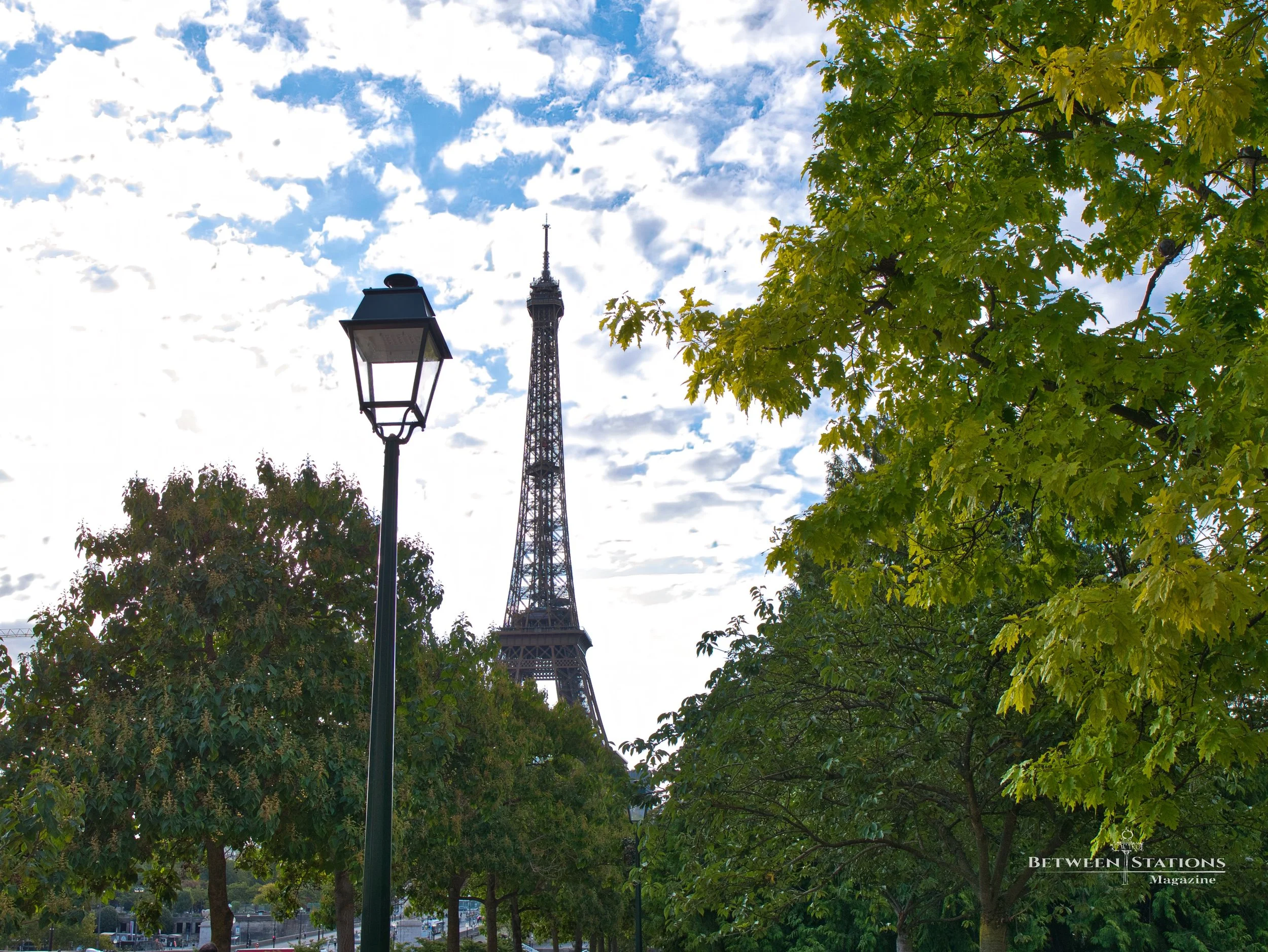
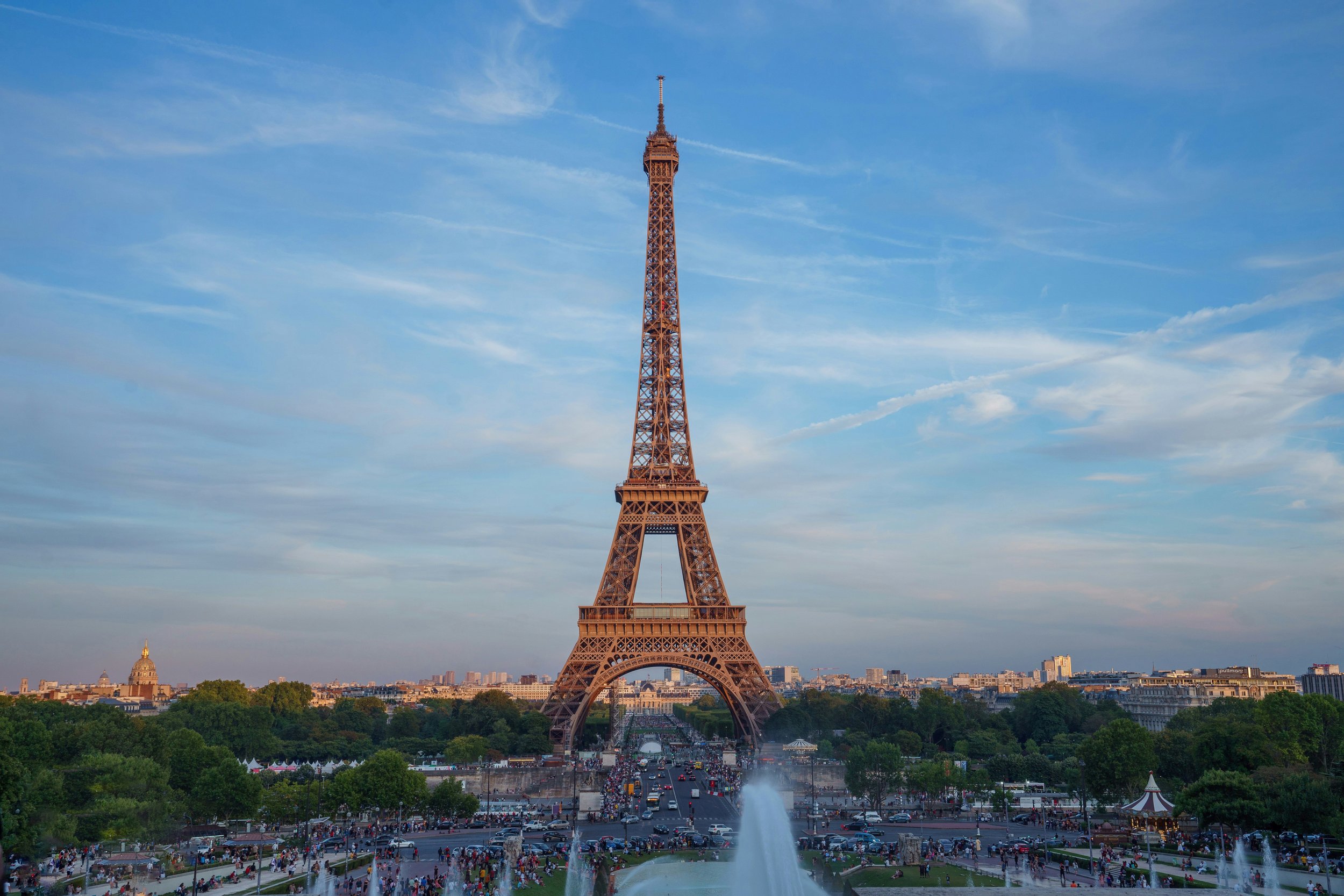
My very first introduction to the tower was in December 2018. It was my very first trip to Europe. My daughters were with me, and, in fact, urged me to go to Paris, saying that "Once you are in Paris, you will never be the same." On the evening of our arrival, they insisted that we go to the tower. Being who I am, I kind of shrugged off the notion that anything could be that "awesome." They got me to the edge of the Seine, told me to look up, and... WOW! My attitude changed in a hurry. There it was. Lit up and twinkling, with its massive spotlight sweeping into the night sky from the top. Seeing it in a movie or photo is one thing. Seeing the tower up close and personal is a completely different experience. Be it awe-inspiring, emotional, or both, seeing the Eiffel Tower for the first time has left a lasting impression. If I have people coming to visit Paris and they want to know where to meet, it's always the Trocadéro, which, in my opinion, is one of the most iconic views of the tower in the city. Cliché, I know, but breathtaking, nonetheless.
An Accident That Refused to Leave
The tower was never meant to stick around. It went up for the 1889 World's Fair, built to mark the hundredth anniversary of the French Revolution and to show off what French engineering could do. Gustave Eiffel's design won out over more than a hundred competing proposals, and his crew put the whole thing together in a little over two years, using nothing but iron, rivets, and a wildly ambitious amount of confidence.
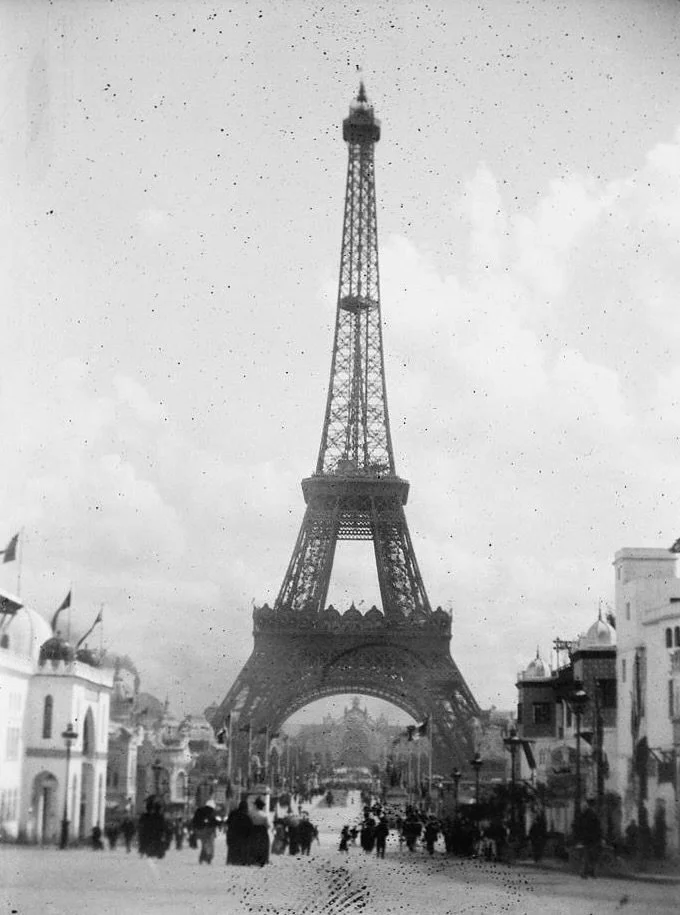
Parisians did not love it at first. A group of the city's most respected writers and artists signed a public letter calling it a "truly tragic streetlamp" and begging the government to tear it down before it ruined the skyline for good. The plan, in fact, was to dismantle it after twenty years. It survived because someone realized you could bolt a radio antenna to the top of it, and suddenly a decorative eyesore became a piece of essential infrastructure. During the First World War, transmissions from the tower reportedly helped intercept German communications. A structure built to celebrate a fair ended up helping win a war. Not bad for something half of Paris wanted gone.
If you want the fuller story of how a "temporary" monument became a permanent fixture of French identity, this account of the tower's history is worth the ten minutes.
The Iron Lady Everyone Recognizes and Almost No One Visits
Ask a Parisian about the tower and you will likely hear it called la Dame de Fer, the Iron Lady. It is a nickname with real affection in it, even from people who have not set foot inside since a school trip decades ago. That is the strange thing about living near a global icon: it stops being a destination and becomes furniture. Locals will point tourists toward the best photo angle without a hint of irony, then go about their day without a second glance upward.
Here is a detail that tends to surprise people at dinner parties. Daytime photos of the tower are yours to use however you like. But the lighting display added in the 1980s is treated differently. French copyright law counts it as a separate work of art, so publishing a nighttime photo for profit technically requires permission from the company that runs the tower. Nobody is coming to arrest you for an Instagram post, but the rule is real, and it says something about how seriously the tower's image is guarded. You can read the odd legal backstory in this breakdown of the rule, which somehow makes the tower feel even more like a celebrity with its own publicist.
What the Tourists See, and What the Rest of Us See
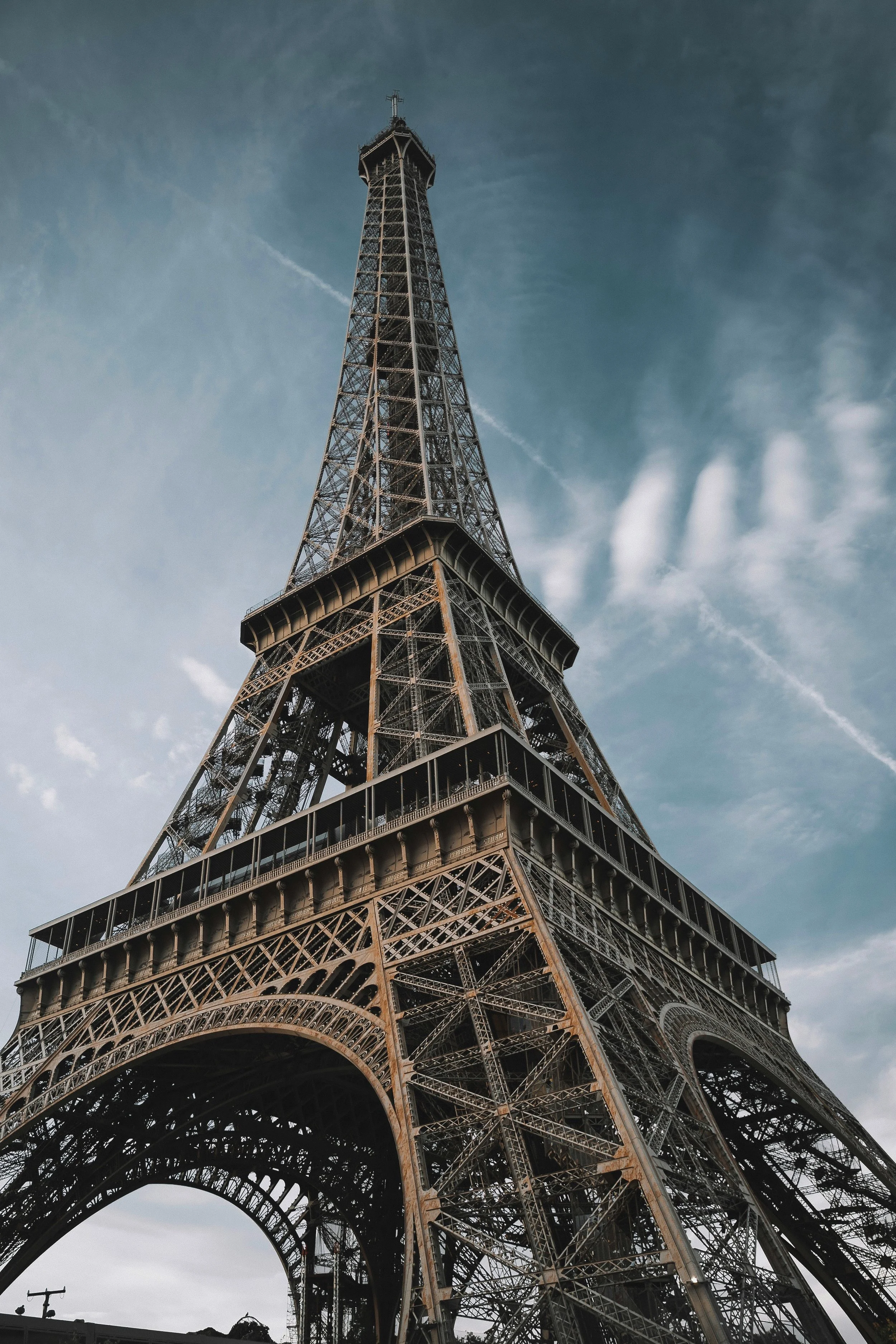
For visitors, the tower tends to arrive with a script already written. You have seen it in a hundred photos before you get there, so the real version must compete with the one in your head. Some people describe the moment they round a corner and see it in person as the closest thing to a religious experience they have had on vacation. Others admit, usually a little sheepishly, that it looked smaller than expected, or that the crowds and the security lines took some of the shine off. Both reactions are fair. A landmark this famous carries an enormous amount of expectation, and expectation is a heavy thing to live up to.
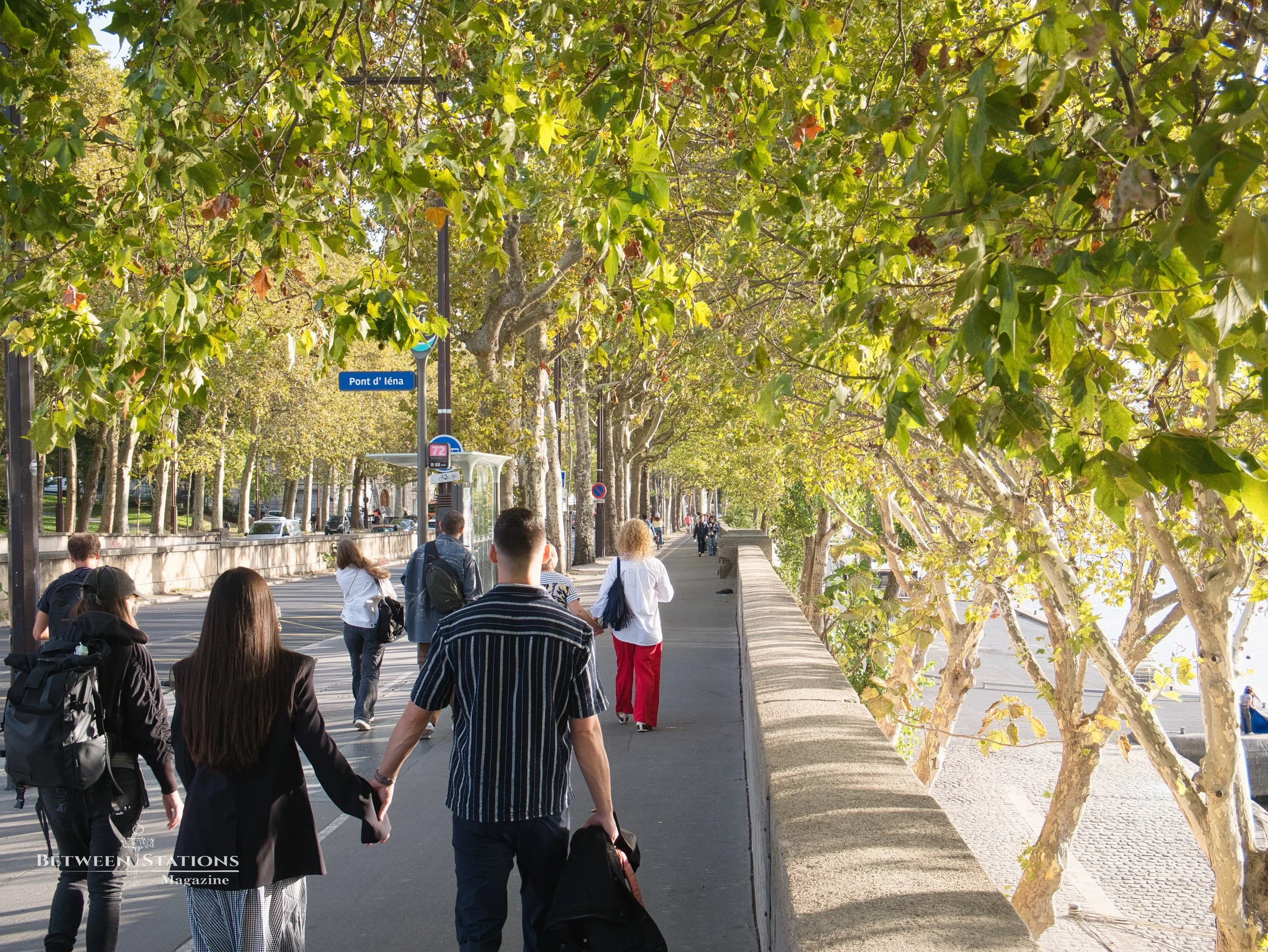
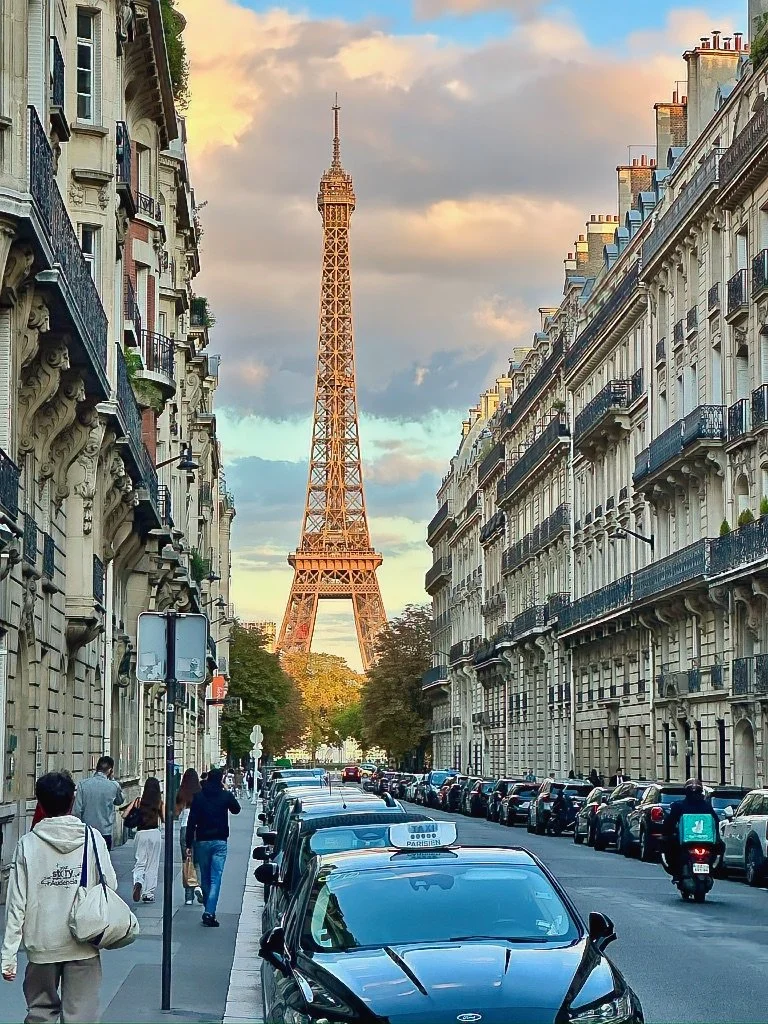
What tourists rarely see is the version residents know: the tower as a landmark you use for directions rather than admiration, the one that tells you which way is west when you come up out of a metro station disoriented. Greater Paris and the wider Île-de-France region orient themselves around it in ways that have nothing to do with romance. It shows up on maps, on weather broadcasts, on the horizon from a dozen different neighborhoods, each with its own claim to the best view.
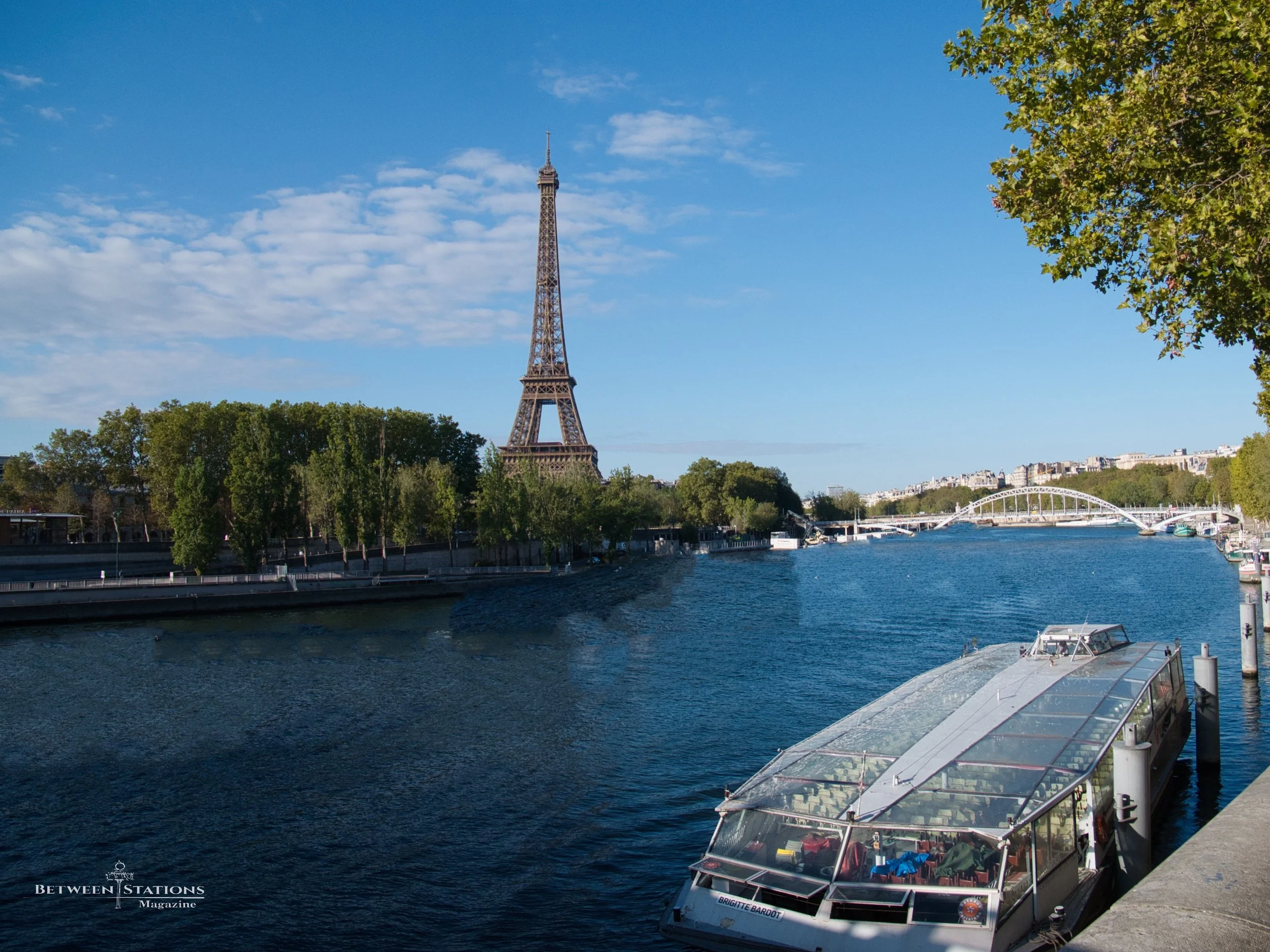
I always get a kick when I am out in the city and look up to see the tower in view. Sometimes it's from the metro, a bus window peeking between passing buildings, or other times when I'm walking down a random street and turn a corner. There are certain areas, like in the 16th arrondissement, where you are bound to see the tower easily and with greater frequency. But it's those times, in my opinion, where you stumble across a sighting by accident that are the most satisfying. I call those "happy accidents," and it never gets old. In fact, when I was visiting the overlook at a park in Saint Germain-en-Laye (quite a distance from Paris proper), I happened to see the tower in the far distance, which was both pleasantly unexpected and satisfying.
More Than a Postcard
It is easy to reduce the Eiffel Tower to a symbol of romance, but its real job in the region is closer to that of a steady old relative everyone assumes will always be there. It anchors the skyline the way a lighthouse anchors a coastline. It also brings in a huge share of the tourism economy that keeps hotels, cafés, and river cruise operators in business across the region, not just in the seventh arrondissement where it stands. During the Second World War, German forces occupied Paris. The story goes that the elevator cables were cut, so Hitler had to climb the stairs to get his view. Whether every detail of that story holds up to scrutiny or not, people still repeat it with a kind of pride, because it fits how the tower is meant to be understood here: stubborn, a little theatrical, quietly defiant. You can find the tower's own account of its history and its ongoing role in the city on its official site, which treats each anniversary and renovation like a family milestone.
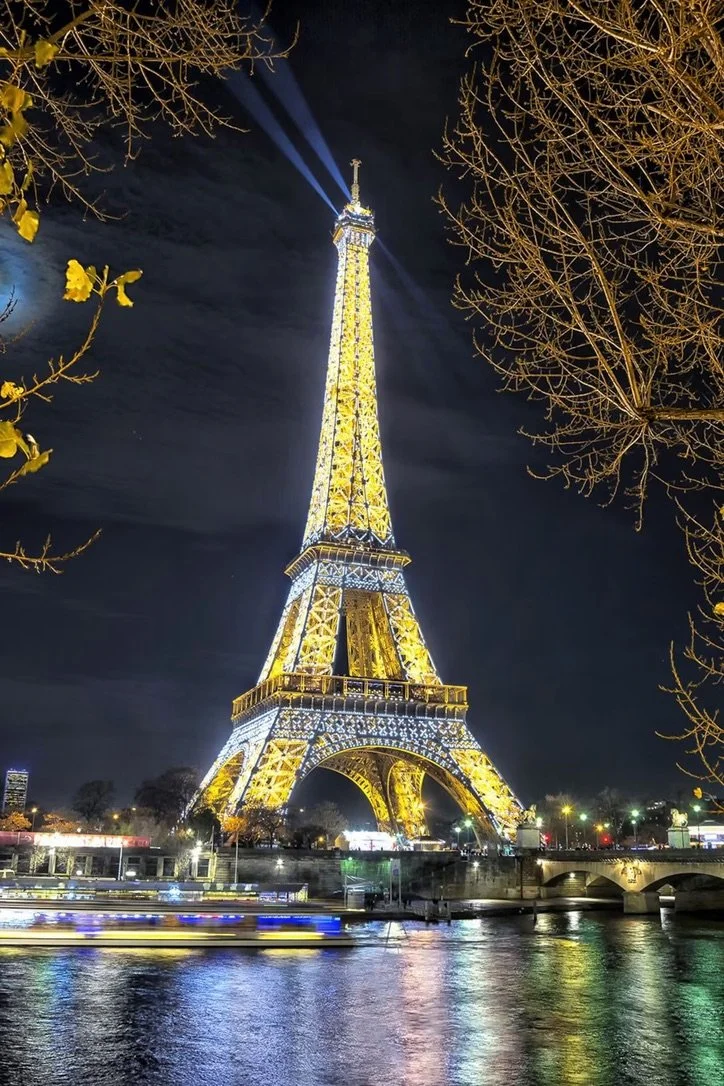
Every night, once darkness falls, the tower puts on a five-minute sparkle show at the top of each hour, thousands of small bulbs flickering like it is shaking off the day. Parisians who have seen it a thousand times will still occasionally stop mid-conversation on a bridge to watch it happen and then act as though they were not the least bit impressed. I have never once believed that act.
The Argument Paris Won
The Eiffel Tower has survived being called an eyesore, nearly getting torn down for scrap, a world war, and about a century and a half of tourists asking if the elevator line is really this long. It has earned its spot the hard way, by being useful when it needed to be and beautiful when it did not have to try. Maybe that is the real lesson buried under all that iron: the things that last are rarely the ones anyone plans to keep forever. They are the ones that make themselves impossible to get rid of.
So, the next time someone brings up the Eiffel Tower at a dinner party, and someone else rolls their eyes and calls it a tourist trap, let them. The Iron Lady has survived far worse opinions than that, and she is not going anywhere.
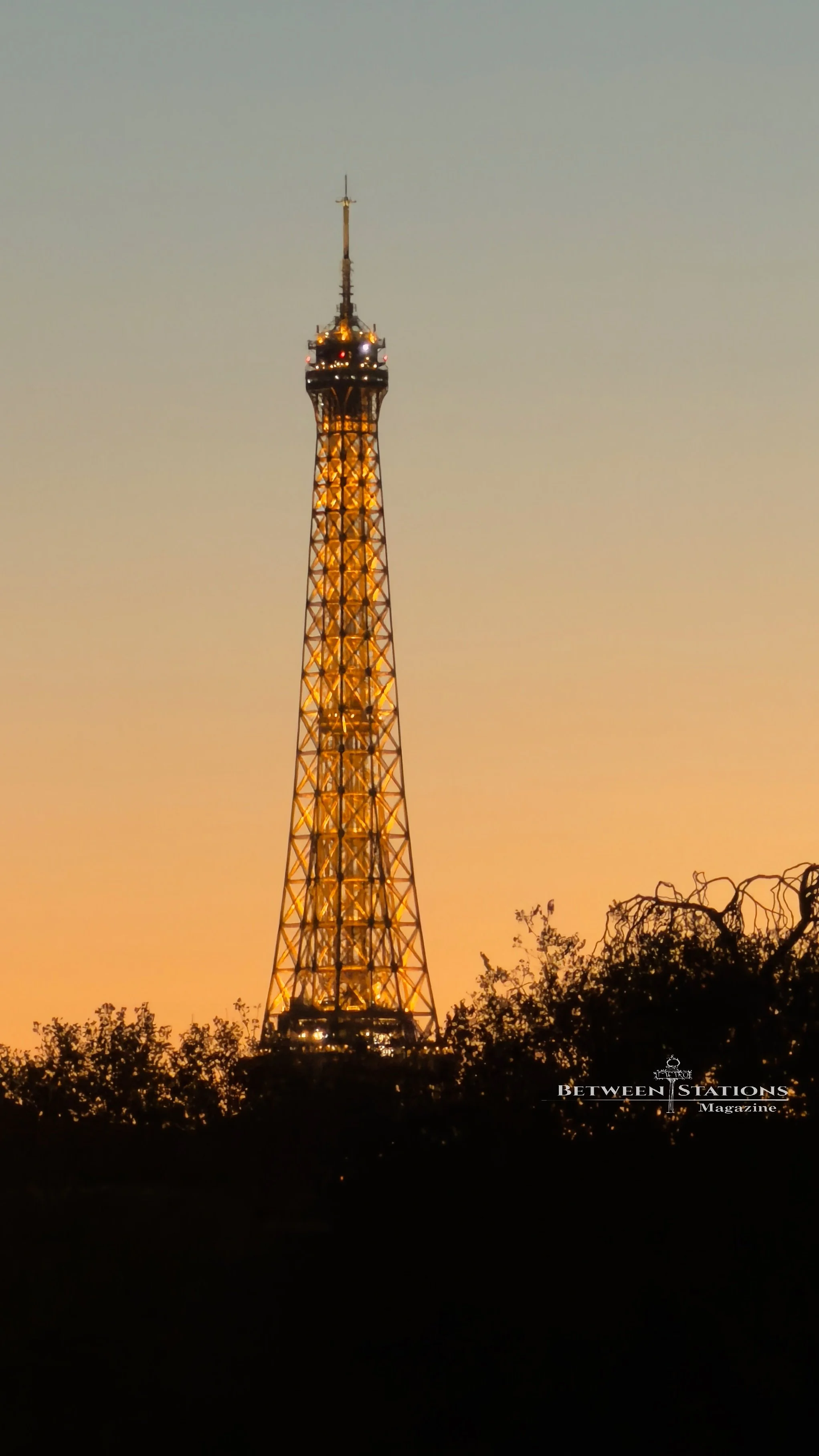
My opinion hasn't changed, and it probably never will. The Eiffel Tower, for me, is my introduction to Paris. Seeing it, even briefly from a distance, still creates an emotional connection to the city that I can't quite explain. Over time, it has become one of my favorite landmarks to photograph. There are plenty of sights in Paris, for sure. But the sight of the Eiffel Tower is grounding, reassuring, and comforting — so Paris, so Parisian, even when the people who live here try to play it cool about it.
To my daughters... thank you, girls! You were right — "Once you are in Paris, you will never be the same." I am not the same. Being able to regularly experience a view of the Eiffel Tower helps to cement that.
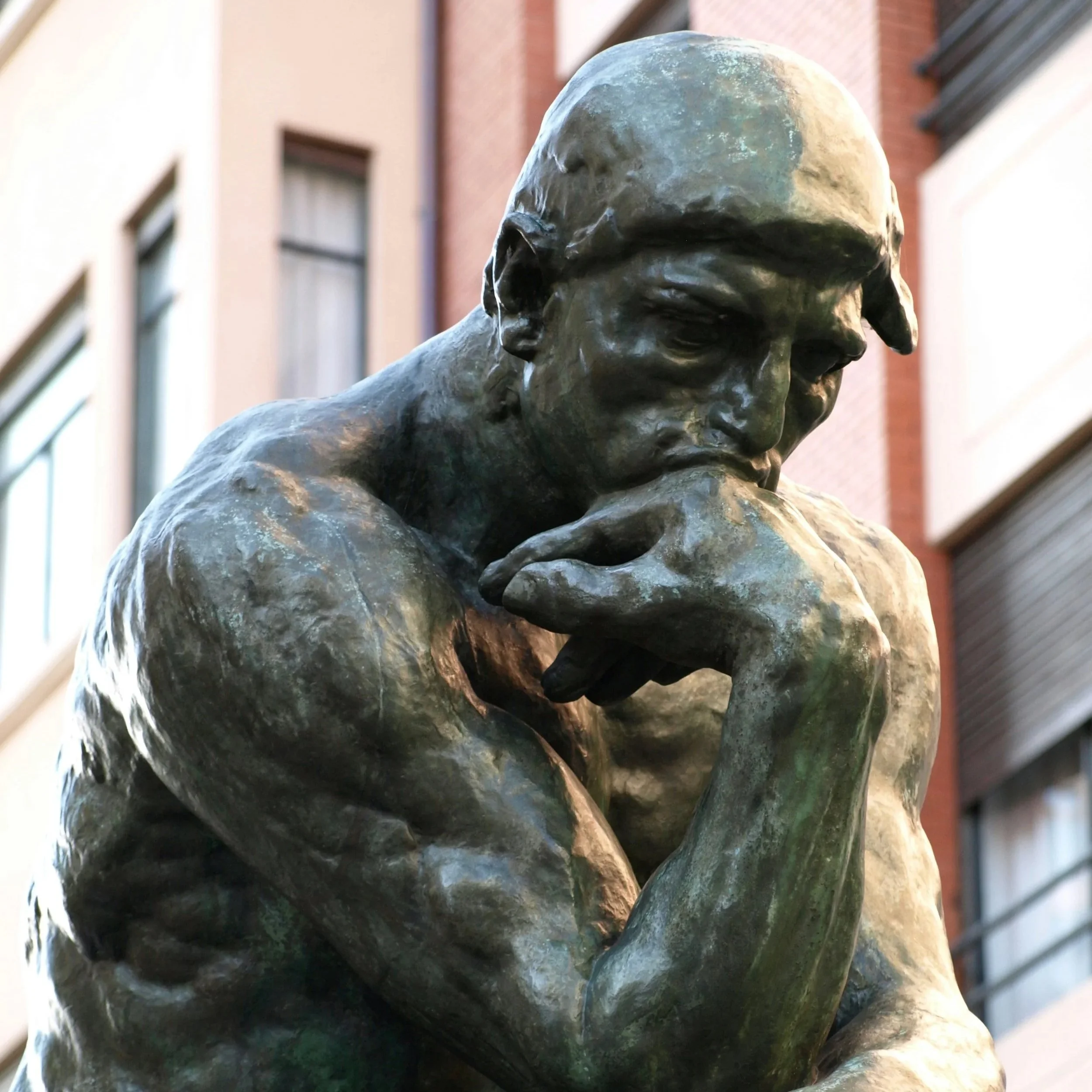
The Last Stop - A Closing Thought From Between Stations Magazine
Motion is Lotion
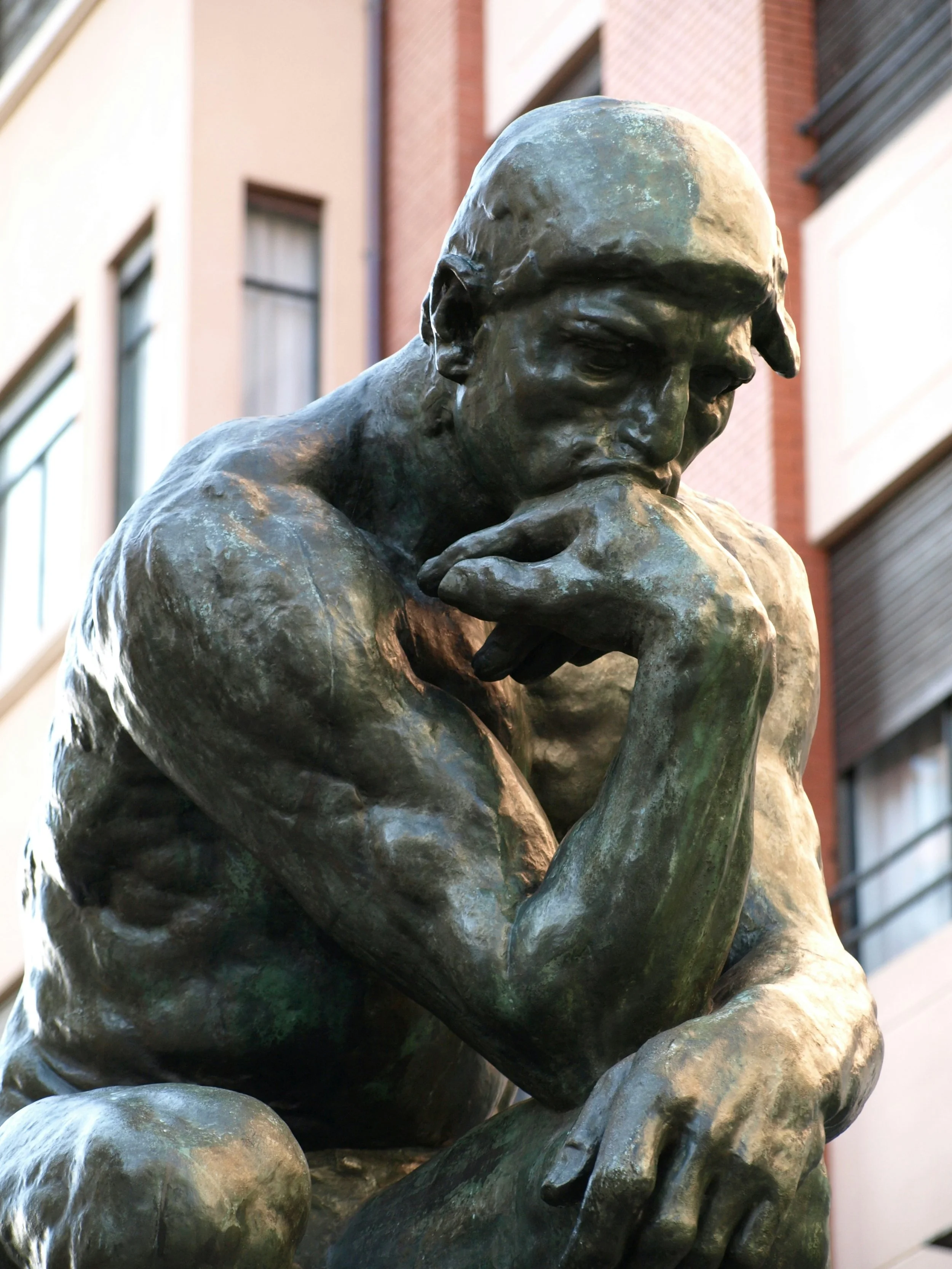
Motion Is Lotion
"Motion is lotion; Rest is rust - Use it or lose it!"
A wise man once told me that motion is lotion — a clever and fun way of saying "keep moving"! I heard this phrase from him more times than I can count, and over the years it settled into me the way good advice does: quietly, then all at once. Now I catch myself repeating it to my own family, friends, and anyone who will listen. In short, motion is my ultimate potion.
I didn't understand it right away. When you're young, moving is just what a body does — you run because the ball is there, you climb because the tree exists, you dance in the kitchen because a song came on and your feet had opinions about it. No one needs to tell a child or young adult to keep moving. It's simply what they do.
But somewhere along the way, chairs got comfortable and days got busy, and stillness crept in like a houseguest who never quite leaves. That's when the phrase started to make sense to me. Lotion doesn't fix dry skin once and walk away — it works because you keep applying it. Motion is the same. It isn't a single burst of energy that carries you for a lifetime. It's a small kindness you offer your body, again and again, so it remembers how to move without complaint.
There's something almost stubborn about a joint. Leave it alone too long and it tightens up, as if it's sulking. Ask it to bend after a week of sitting and it creaks like an old door hinge. But give it a little attention — a walk around the block, a stretch before bed, a few slow laps in a pool — and it softens. It says thank you in the only language joints know, which is ease.
The man who first said this to me wasn't a doctor or a trainer. He was just someone who noticed things. He noticed that the people who kept dancing, kept gardening, kept walking to the corner store instead of driving, seemed to carry their years more lightly than the ones who didn't. He wasn't chasing marathons — he was chasing mornings where his back didn't argue with him before coffee. He just moved.
That's the whimsical part of it, I think — the idea that staying limber isn't about punishing yourself into shape. It's closer to tending a garden than running a race. You don't yell at tomatoes to grow faster. You water them a little, most days, and trust the process. Bodies work the same way. A short walk today doesn't look like much, but stack enough of those small walks together and you've built something sturdy without ever noticing the construction.
I've started to see movement everywhere once I started looking for it. The neighbor who sweeps her porch every morning, humming to herself. The man at the park who does slow, deliberate stretches by the fountain, unbothered by anyone watching. My own habit of taking the stairs and walking everywhere, not because I'm in a hurry, but because I like the small proof that my legs still know their job. None of this looks like exercise in the traditional sense. It looks like living, done on purpose.
There's a lightness to this way of thinking that I find comforting. It takes the pressure off. You don't need the perfect routine or the fanciest equipment. You need permission to wiggle, stretch, pace, sway, and wander — and the willingness to do it tomorrow too, and the day after that. Motion, applied often and gently, becomes its own kind of care.
So, here's what I've come to believe, passed down from a wise man and tested by my own creaky mornings: don't wait for your body to ask for movement loudly, through pain or stiffness. Offer it before it has to ask. Dance in the kitchen. Take the long way. Stretch while the kettle boils. Keep the lotion coming.
Because a body that keeps moving tends to stay one that can.
-Dedicated to the memory of Big Brother Bay
As always, slow down, look around, and enjoy the journey…between stations.
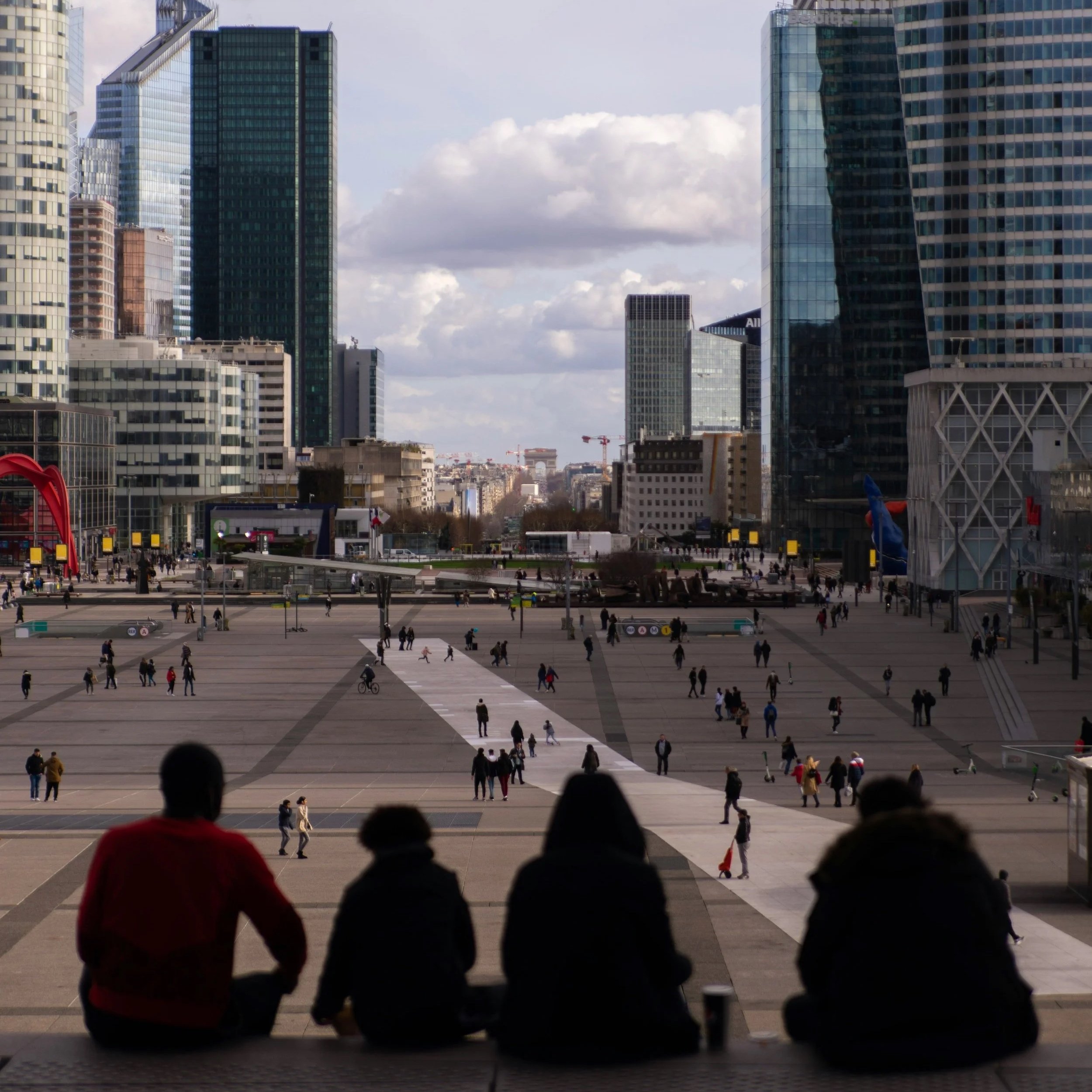
September Random Walk: Paris Arche to Arc
Four kilometers, one dead-straight sightline - this walk traces the Axe Historique from the Grande Arche through Quartier Bellini and Neuilly-sur-Seine, all the way to the Arc de Triomphe.
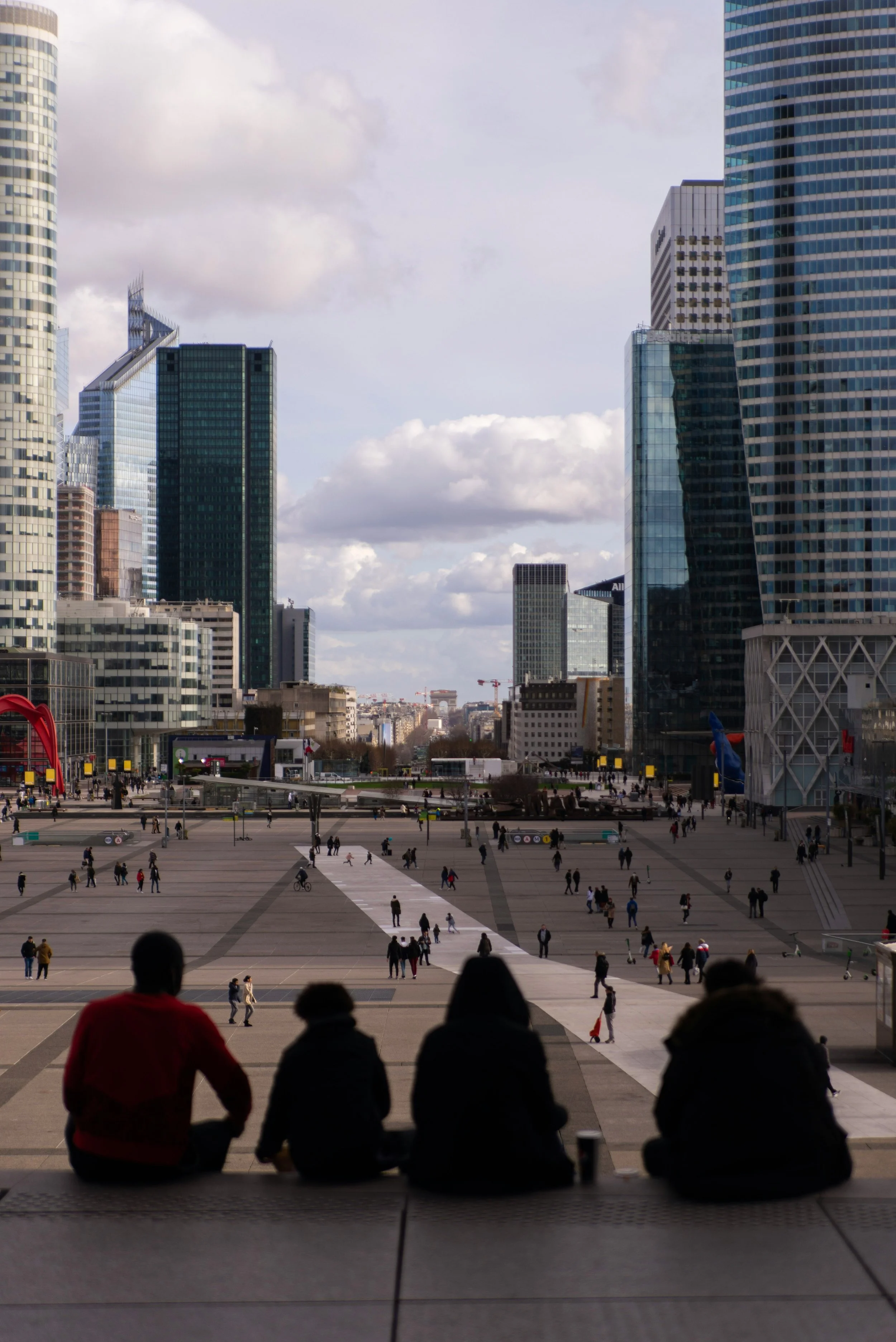
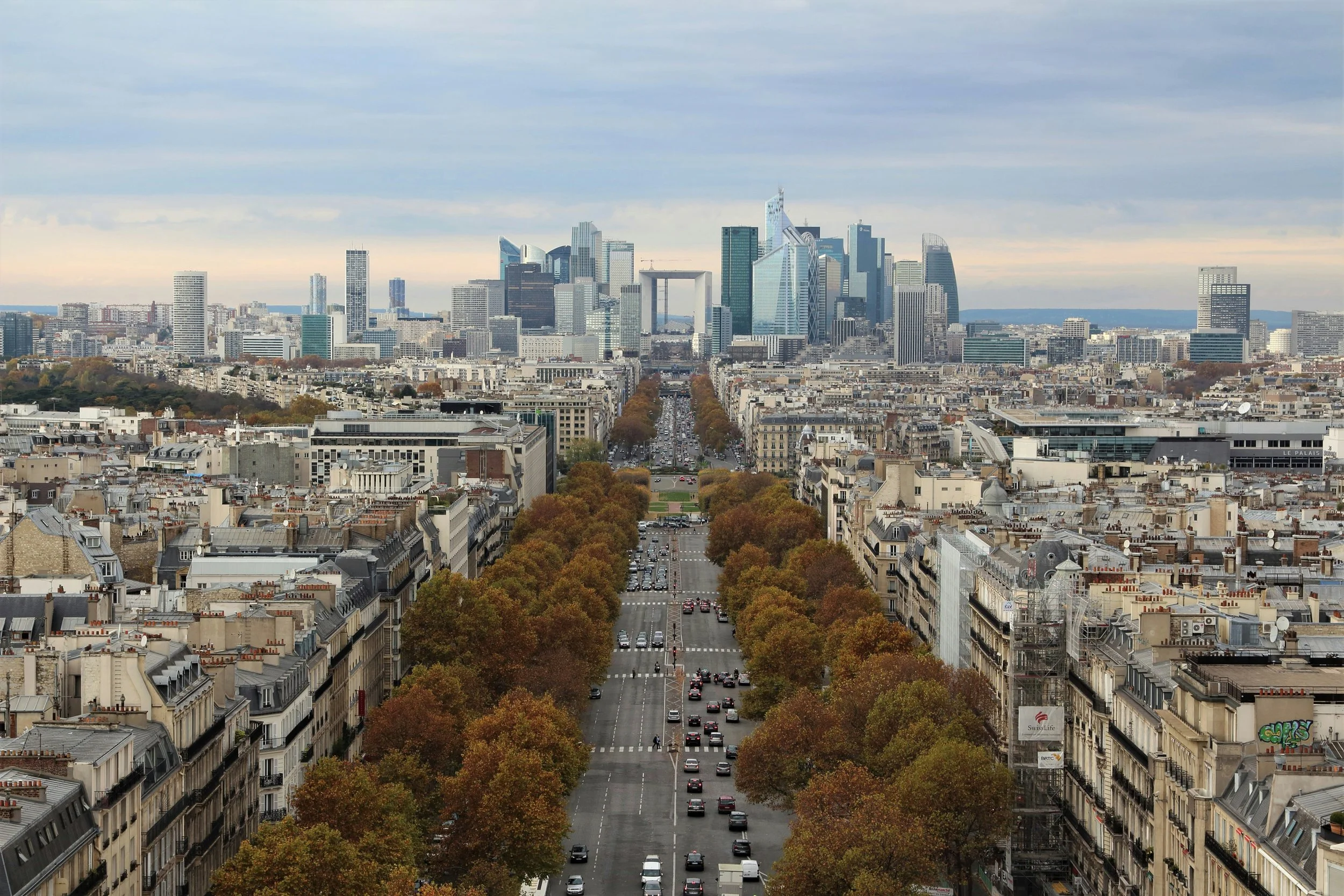
Some walks need a plan. This one just needs a straight line and a decent pair of shoes. If you draw an arrow from the Grande Arche in La Défense all the way to the Arc de Triomphe, you're tracing one of the most famous sightlines in the world. It's the Axe Historique, the same visual axis that stretches on through the Champs-Élysées, the Tuileries, and the Louvre. Walking it backwards, from modern glass cube to Napoleonic stone arch, feels like watching Paris rewind through a couple of centuries in about an hour and a half.
I did this walk on a whim one Sunday, mostly because I was curious whether the Grande Arche and the Arc de Triomphe would stay lined up with each other the entire way. They do, more or less. It's a little uncanny. Here's what the route looks like, block by block, with a few detours worth knowing about along the way.
Starting Point: The Grande Arche
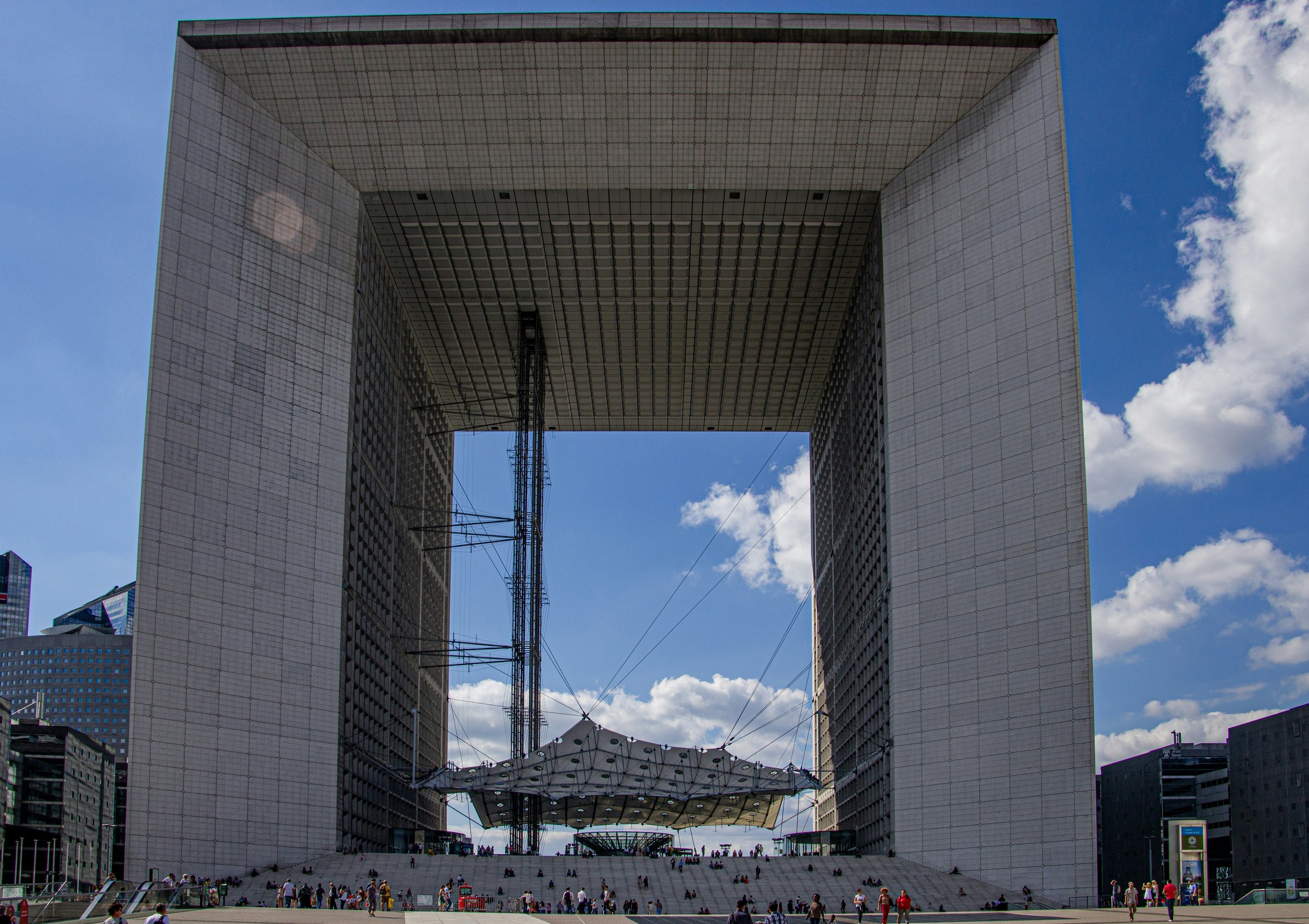
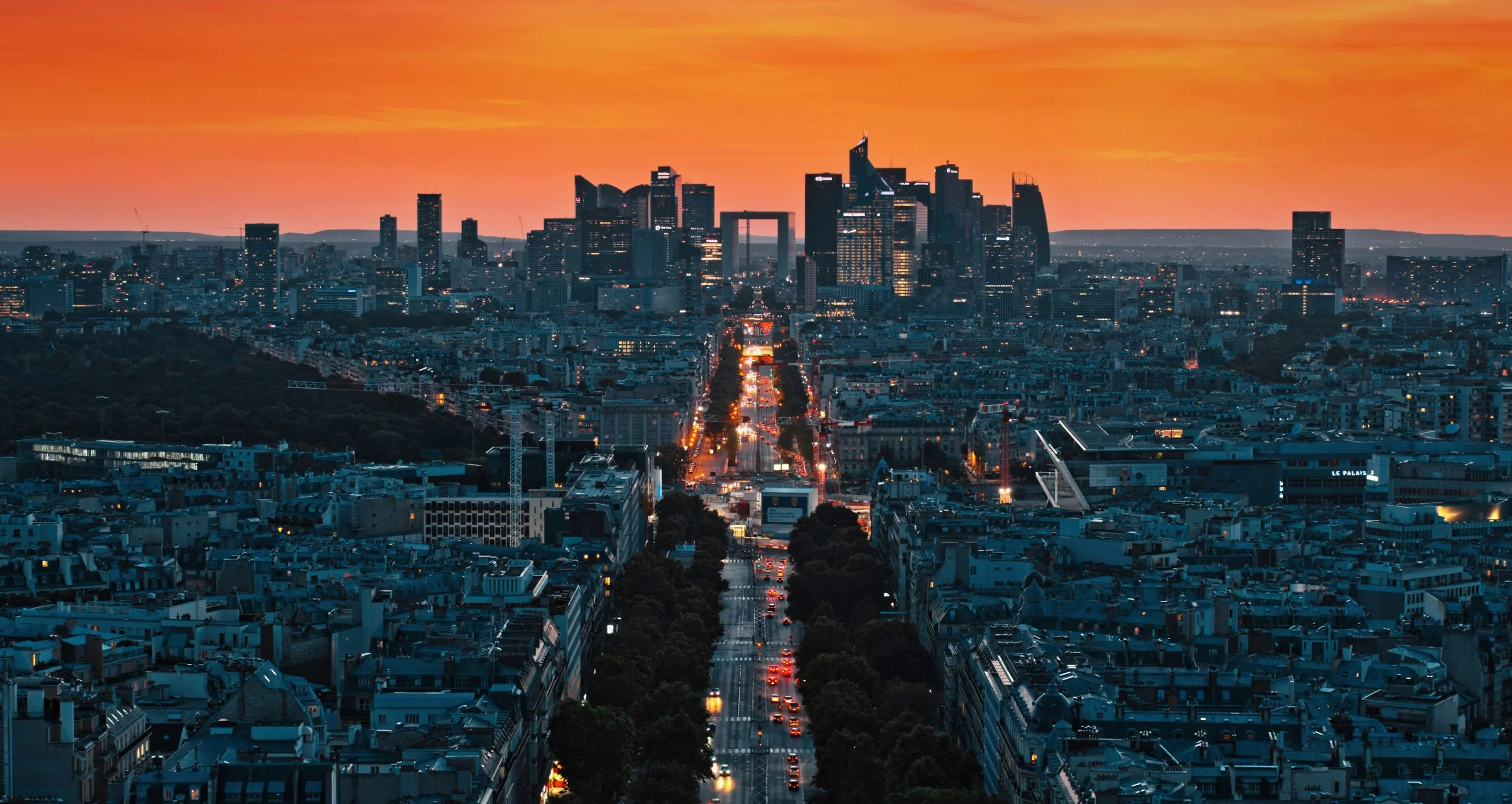
You start big. The Grande Arche in La Défense is a hollow marble cube so enormous that Notre-Dame could fit inside it with room to spare. Built in the late 1980s as a modern echo of the Arc de Triomphe standing four kilometers away, it's the perfect place to look east down the axis and pick out your target. On a clear day you can spot the silhouette of the Arc de Triomphe waiting for you in the distance.
From here, the plan is simple: head east through La Défense's business district, cross the Seine at Neuilly, and follow Avenue Charles-de-Gaulle straight to Place Charles-de-Gaulle-Étoile, where the Arc de Triomphe sits at the center of twelve converging avenues.
Through Quartier Bellini
Before you've even left the shadow of the Grande Arche, you'll drift through the Quartier Bellini, tucked along the edge of Puteaux where La Défense meets the Seine. It's one of the oldest corners of the whole business district. The Bellini housing block went up back in 1957, followed a decade later by the Tour Nobel, one of the first true skyscrapers in the area. Newer towers designed by architects like Christian de Portzamparc have since slotted in alongside the older ones, so you get this strange, layered effect: 1960s concrete standing shoulder to shoulder with sleek 21st-century glass. It's not a postcard stop, but it's a good reminder that La Défense didn't spring up overnight. It's been under construction, in one form or another, for seventy years.
Crossing the Seine at Pont de Neuilly
Keep walking east and the towers thin out as you approach the river. The Pont de Neuilly bridge carries you across the Seine and past the little Île de Puteaux sitting in the middle of the water, with a staircase down to the island if you fancy a short detour. This crossing has been a river passage since long before Paris had cars. There was once a ford here connecting an old Roman road, and the current bridge has carried a metro line since 1992, running at the steepest grade anywhere on the Paris network.
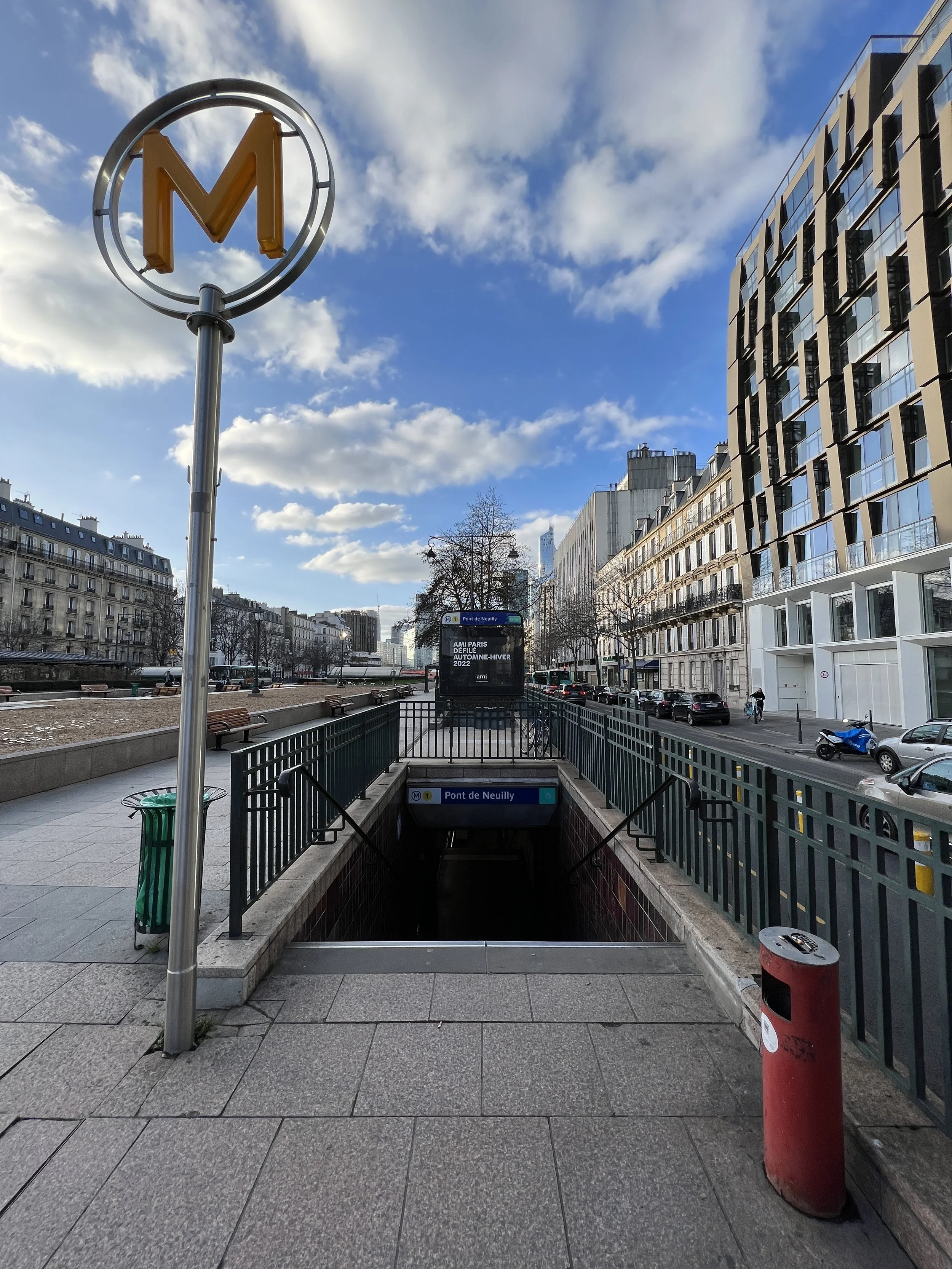
If your legs are already tired at this point, this is your exit ramp. The Pont de Neuilly metro station, right on Line 1, is an easy way to skip ahead. It was the western terminus of the whole line for over fifty years before it got extended out to La Défense. Hop on and you're delivered straight to Charles de Gaulle–Étoile, right at the foot of the Arc de Triomphe, in under fifteen minutes. No shame in it. Even seasoned walkers use this cutoff when the sun's out and the wine at lunch was a little too generous.
Wandering Through Neuilly-sur-Seine
Assuming your feet are still cooperating, the walk continues into Neuilly-sur-Seine, one of the wealthiest suburbs in France and a favorite address for diplomats, executives, and a long list of well-known French families. The mood shifts noticeably here. Wide, tree-lined avenues, grand Haussmann-style apartment buildings with wrought-iron balconies, and a general air of quiet money. The neoclassical Église Saint-Pierre and the Belle Époque city hall on Avenue Achille Peretti are both worth a glance if you veer a block or two off the main road.
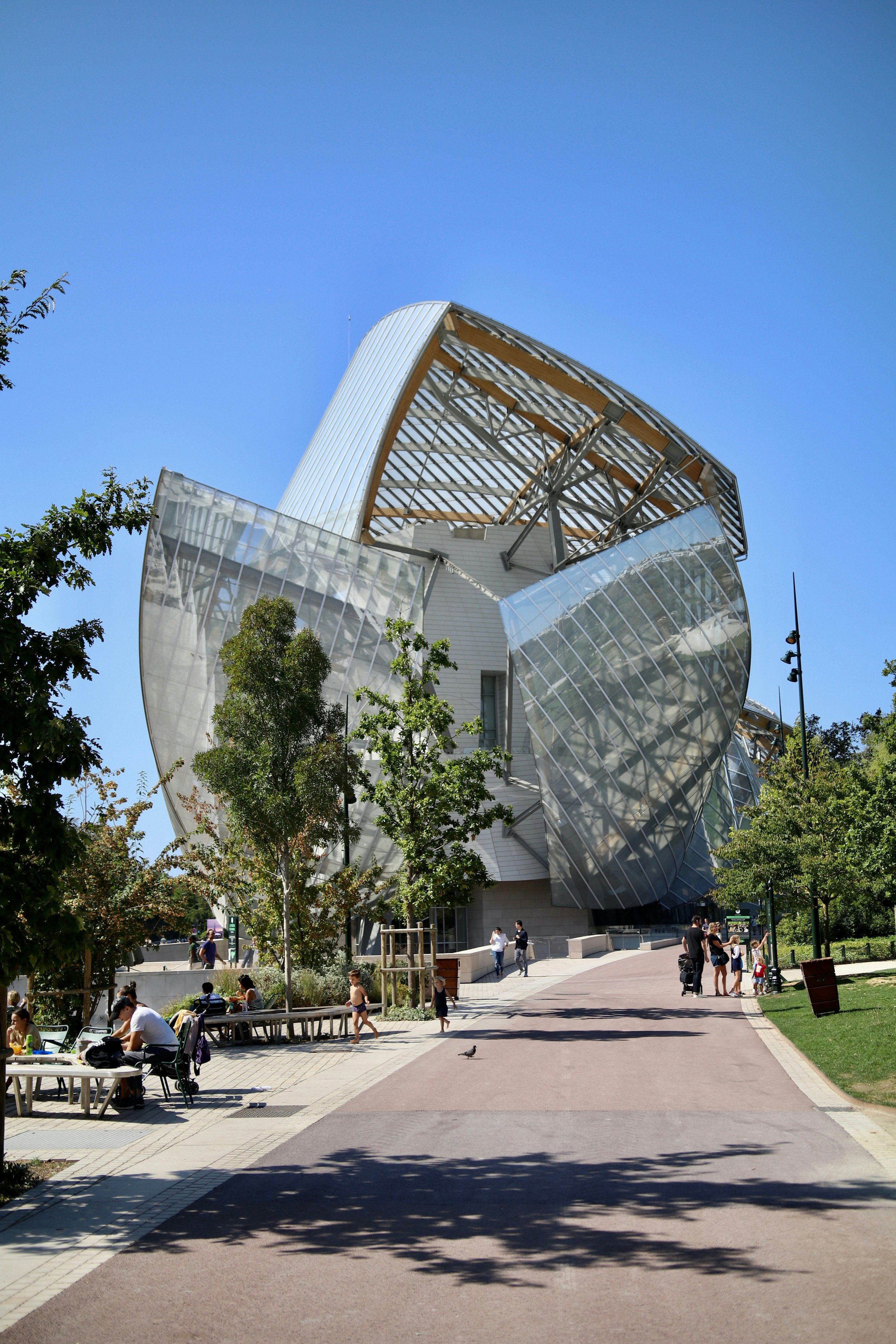
Neuilly also sits right against the Bois de Boulogne, and if the Fondation Louis Vuitton is open when you pass, its Frank Gehry-designed building, glass sails catching the light above the trees, is worth a short detour on its own. Otherwise, just enjoy the change of pace. After the towers of La Défense, Neuilly feels almost residential, like Paris caught its breath before the final stretch.
The Final Stretch: Avenue Charles-de-Gaulle to the Arc
Once you cross back into Paris proper, the street name shifts and the avenue narrows a bit, but the axis holds steady. The Arc de Triomphe grows from a smudge on the horizon into an actual monument, and the traffic swirling around Place Charles-de-Gaulle-Étoile gets louder and more theatrical the closer you get. Don't try to cross the roundabout on foot at street level. There's an underground passage that gets you safely to the base of the arch, since the traffic circling it is one of the more chaotic driving experiences in the city.
Standing underneath the arch, looking back the way you came, you can trace the entire walk in reverse. Avenue de la Grande Armée runs straight out toward Neuilly, the Seine sits somewhere beyond it, and if the haze cooperates, the Grande Arche itself is still lined up perfectly on the horizon, like it never lost sight of you.
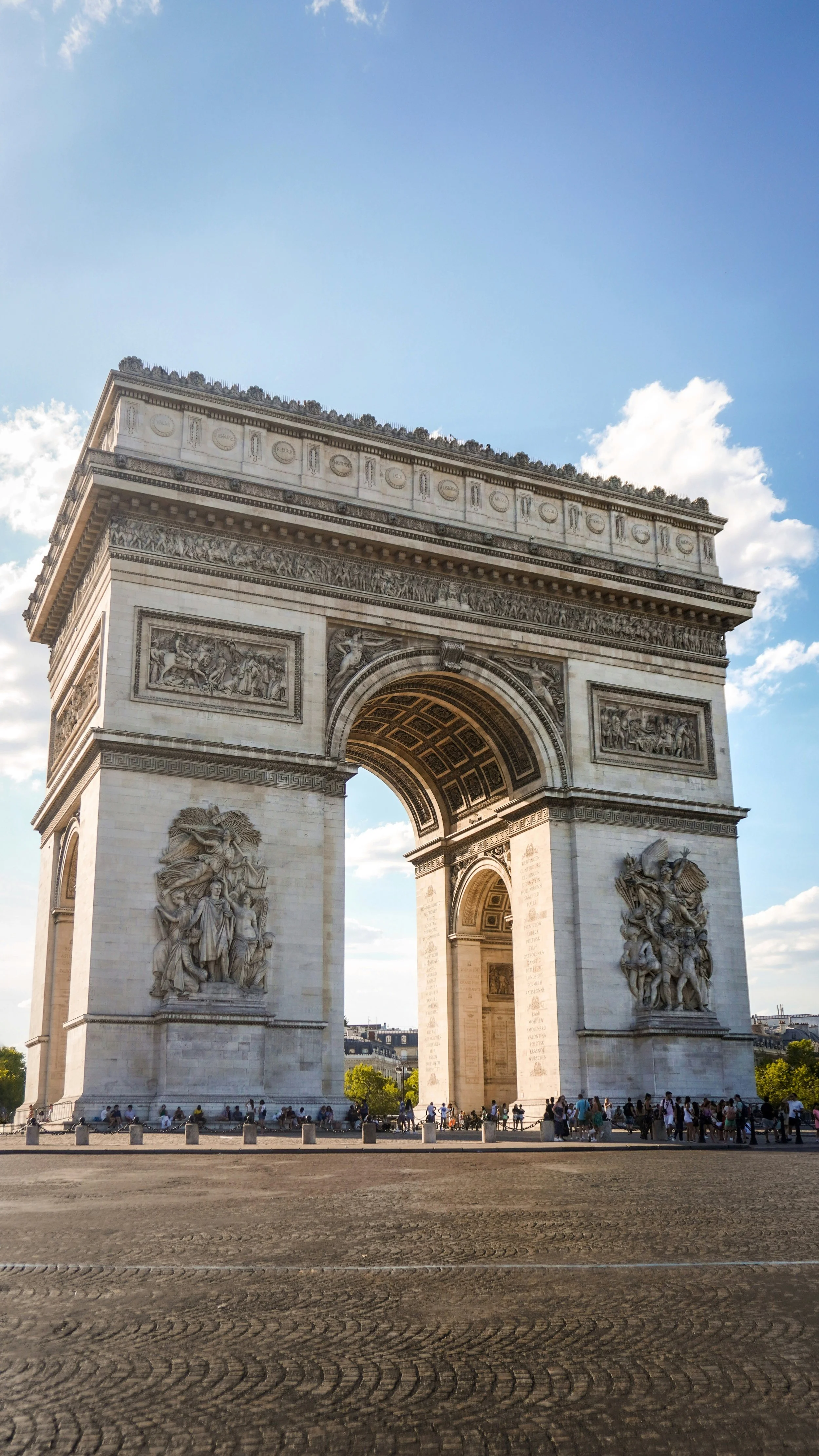
Refuel Near the Arc de Triomphe
The area around the Arc de Triomphe rewards a long walk generously. The streets fanning out from Place Charles-de-Gaulle-Étoile, especially Avenue de Wagram and the stretch of the Champs-Élysées itself, are packed with cafés and restaurants ready for a well-earned break. Everything from classic Parisian brasseries with steak-frites and a carafe of house red to quicker spots for a coffee and a croissant before you head back into the city. Grab a sidewalk table, order something simple, and watch the traffic loop endlessly around the arch. For a full rundown of dining and visiting details, the official Arc de Triomphe site is a solid resource before or after your walk.
A Few Practical Notes
Distance and time: Roughly 4 kilometers as a straight shot, though following streets rather than the exact axis pushes it closer to 5–6 kilometers. Budget 60–75 minutes at a steady pace, longer if you stop for photos or coffee.
Best time to go: Weekend mornings keep La Défense quiet, since it empties out once the office crowd clocks off on Friday.
Bailout option: Pont de Neuilly station on Line 1 sits almost exactly at the halfway mark, so there's no penalty for cutting the walk short.
Footwear: Some stretches near La Défense involve wide plazas and pedestrian bridges rather than sidewalks proper, so comfortable shoes matter more than you'd think.
It's not a walk built for hidden alleyways or secret courtyards. It's a walk built for watching Paris change character in real time. Glass towers, a quiet river crossing, a wealthy suburb, and then the roar of one of the busiest roundabouts in Europe, all lined up on a single, deliberate axis that someone planned centuries before La Défense ever existed.
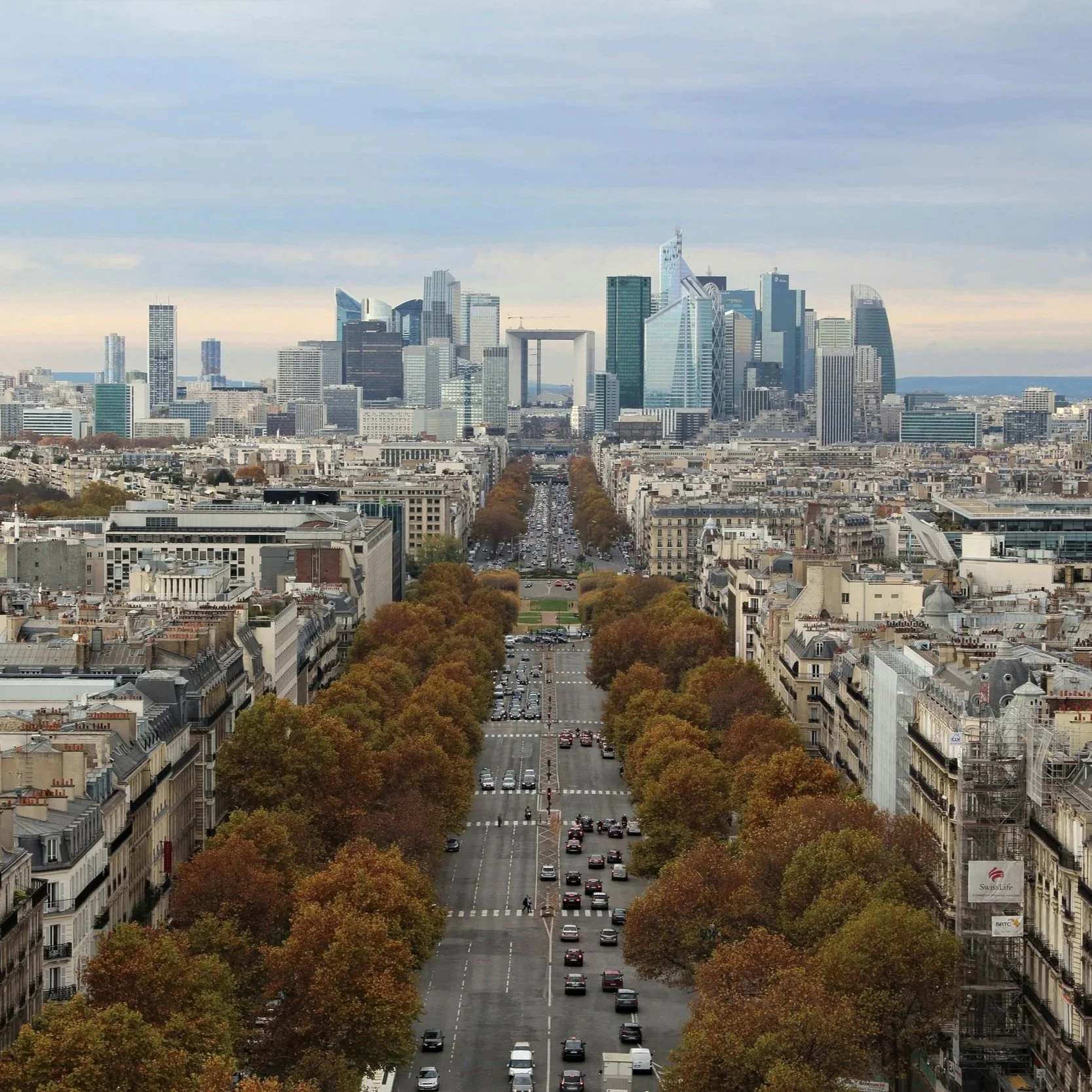
La Défense – The UnParis Paris
Just past the edge of Paris as most people know it, glass towers rise. La Défense is the district Paris built for its future — and, it turns out, the one Parisians quietly claimed for their weekends too.
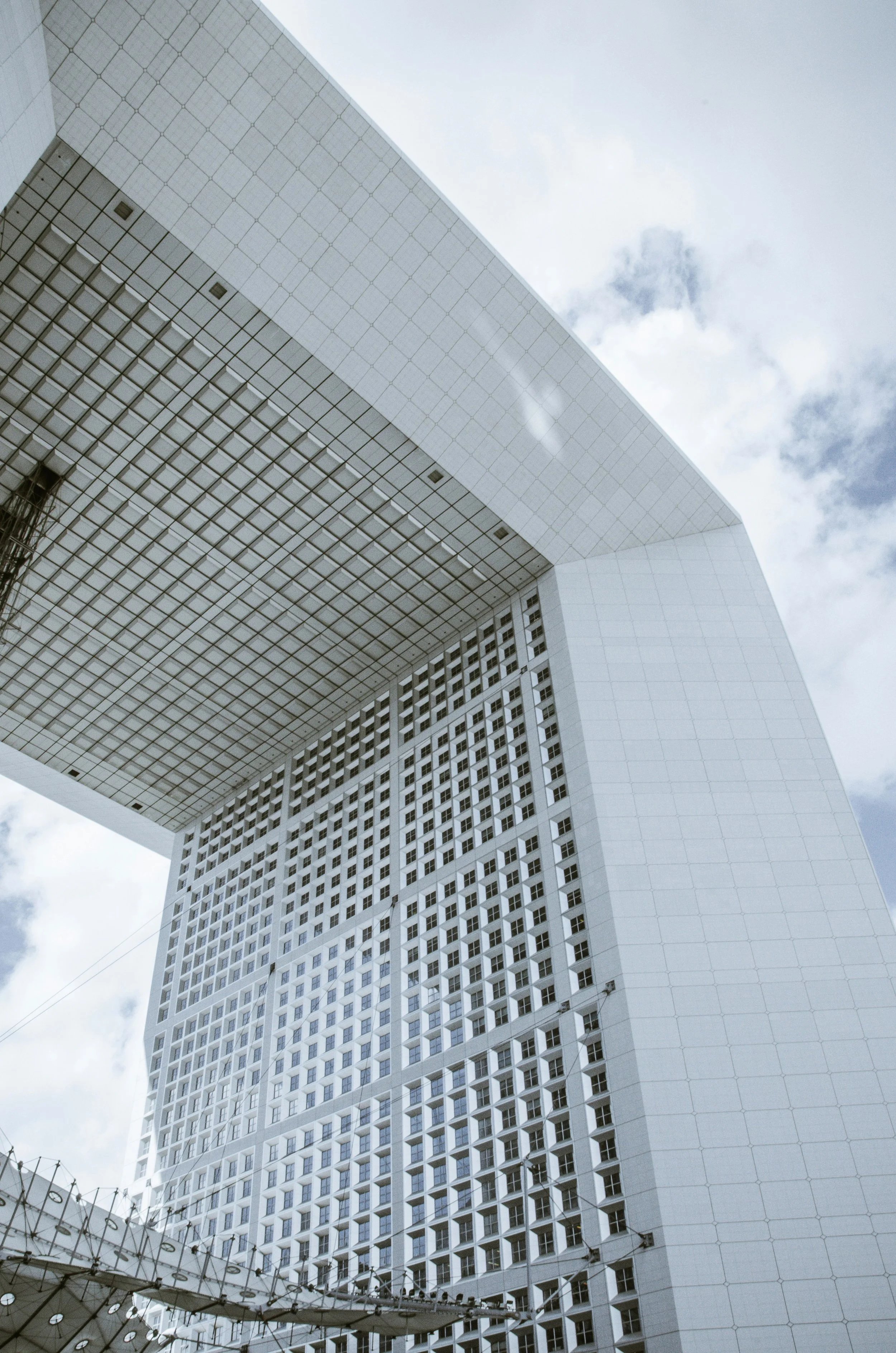
There is a version of Paris that smells like fresh bread and old stone, where the streets curve because someone forgot to invent the ruler. And then, just past the edge of the 16th arrondissement, there is a version of Paris that seems to have skipped that memo entirely. Glass towers instead of zinc roofs. Wide open plazas instead of narrow lanes. A skyline that looks like it borrowed a plane ticket from Chicago and never gave it back. Welcome to La Défense — the district that Paris built when it needed somewhere to put its future, and decided, quite deliberately, not to put it downtown.
Locals sometimes call it "the other Paris," said with more fondness than the teasing tone lets on. This isn't the Paris of postcards. It's the Paris of elevators and espresso breaks, of Sunday markets that pop up beneath buildings named after banks, of a skyline that shifts season to season as the light catches a hundred glass panels differently. Odd, a little brash for a city known for its restraint, and somehow unmistakably Parisian once you've spent an afternoon there. If you're mapping out things to do in Paris beyond the usual landmarks, this is the kind of detour worth making.
Where the Name Comes From
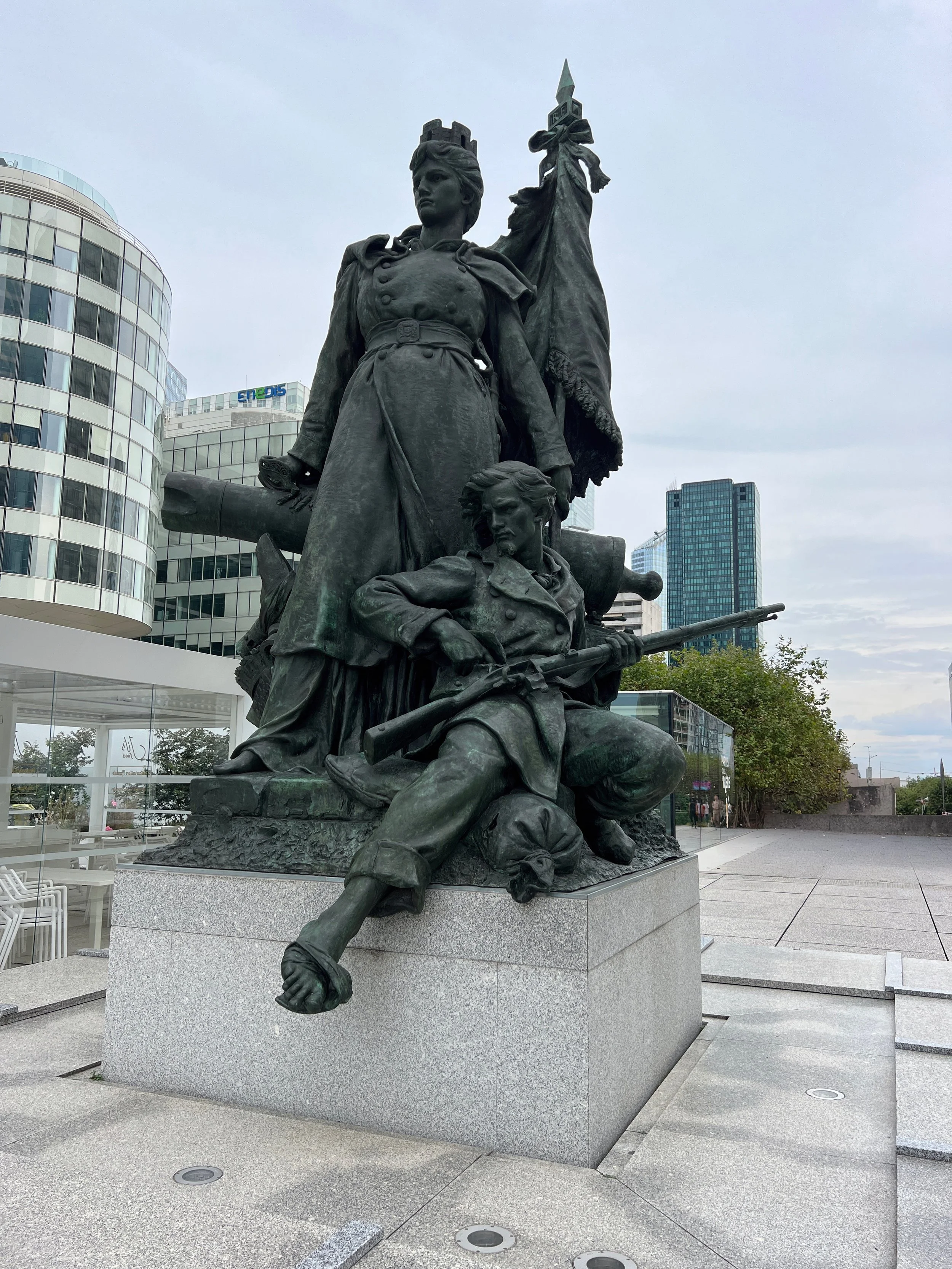
Here's a fun one to bring up over dinner: La Défense has nothing to do with defending a business deal or protecting your lunch reservation. The name comes from a statue, put up in 1871 to honor the soldiers who held this ground during the siege of Paris in the Franco-Prussian War. That statue is still there, standing quietly among the glass towers, and I love that detail. Long before anyone dreamed up skyscrapers, this stretch of land was just fields and a crossroads west of the city, and the one thing marking it as special was a monument to people who fought for Paris, not a monument to Paris itself.
For a long stretch after that, nothing much happened here. Small factories, plain houses, open land — the kind of place you'd pass through, not visit. What changed things was a fairly practical problem. By the 1950s, France wanted the modern office towers that cities like New York and Chicago were putting up, but central Paris simply had no room for them, and no interest in bending its own rules to make room.
So instead of squeezing skyscrapers into streets built for six-story buildings, planners picked this spot and started fresh. A government authority was set up in 1958 to build the whole district essentially from scratch, and within a decade, the first towers were going up. What started as an answer to a zoning headache slowly turned into one of the biggest business districts in Europe.
An Architecture That Argues With Itself
Honestly, no single building makes La Défense worth the trip. It's the way they all sit together, like guests at a party who showed up in completely different outfits and somehow ended up having a good time anyway. The Grande Arche is the one everyone points their camera at first — this enormous cube, finished in 1989, big enough that you could tuck Notre-Dame inside its opening with room to spare. And here's the part that always gets me: its architect, Johan Otto von Spreckelsen, lined it up on purpose with the Arc de Triomphe and the Louvre, so if you stand underneath, and look east, you're staring straight down a line that Parisians have been calling the Historical Axis for generations. A modern glass cube, quietly shaking hands with the rest of the city's history.
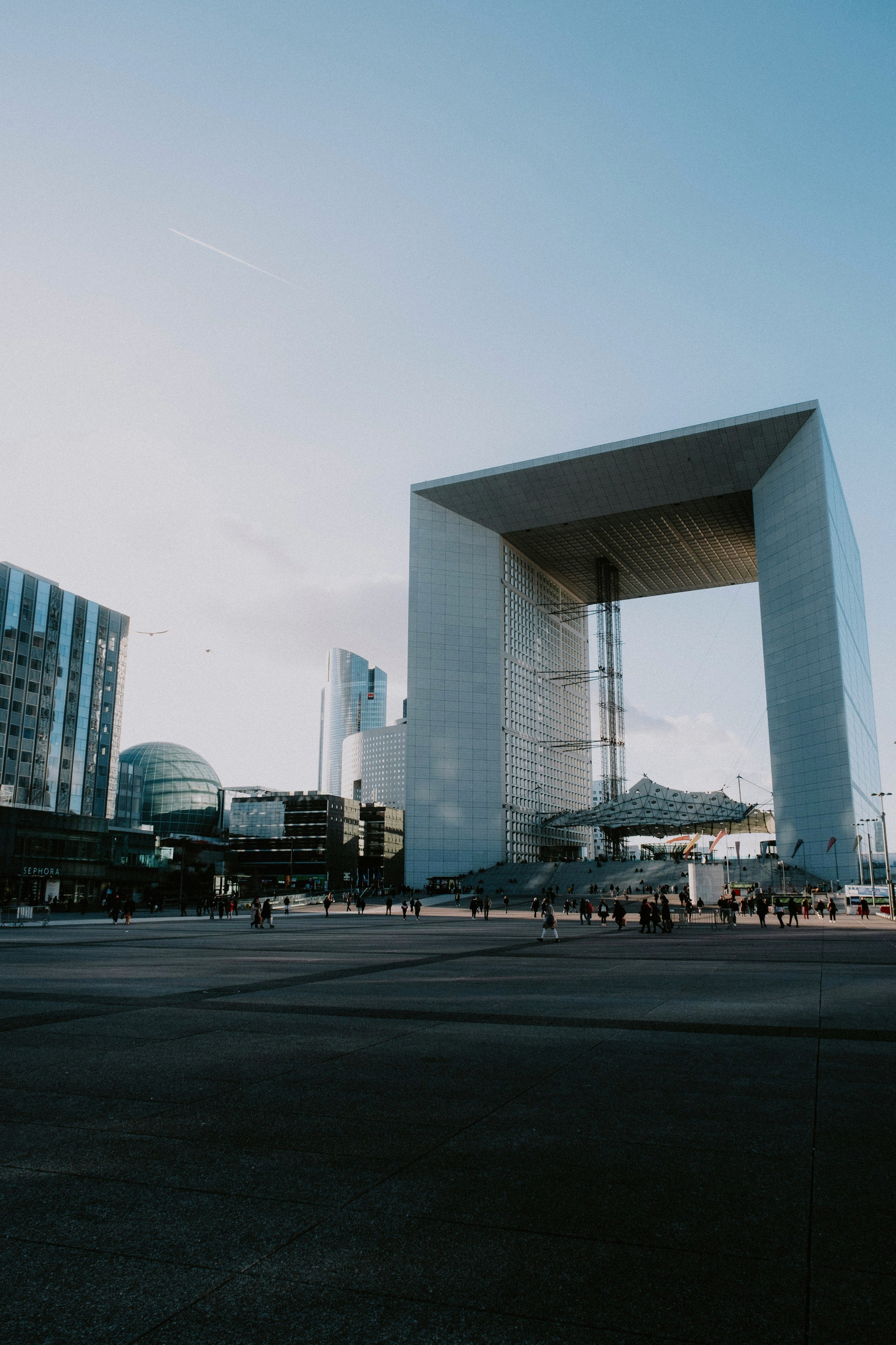
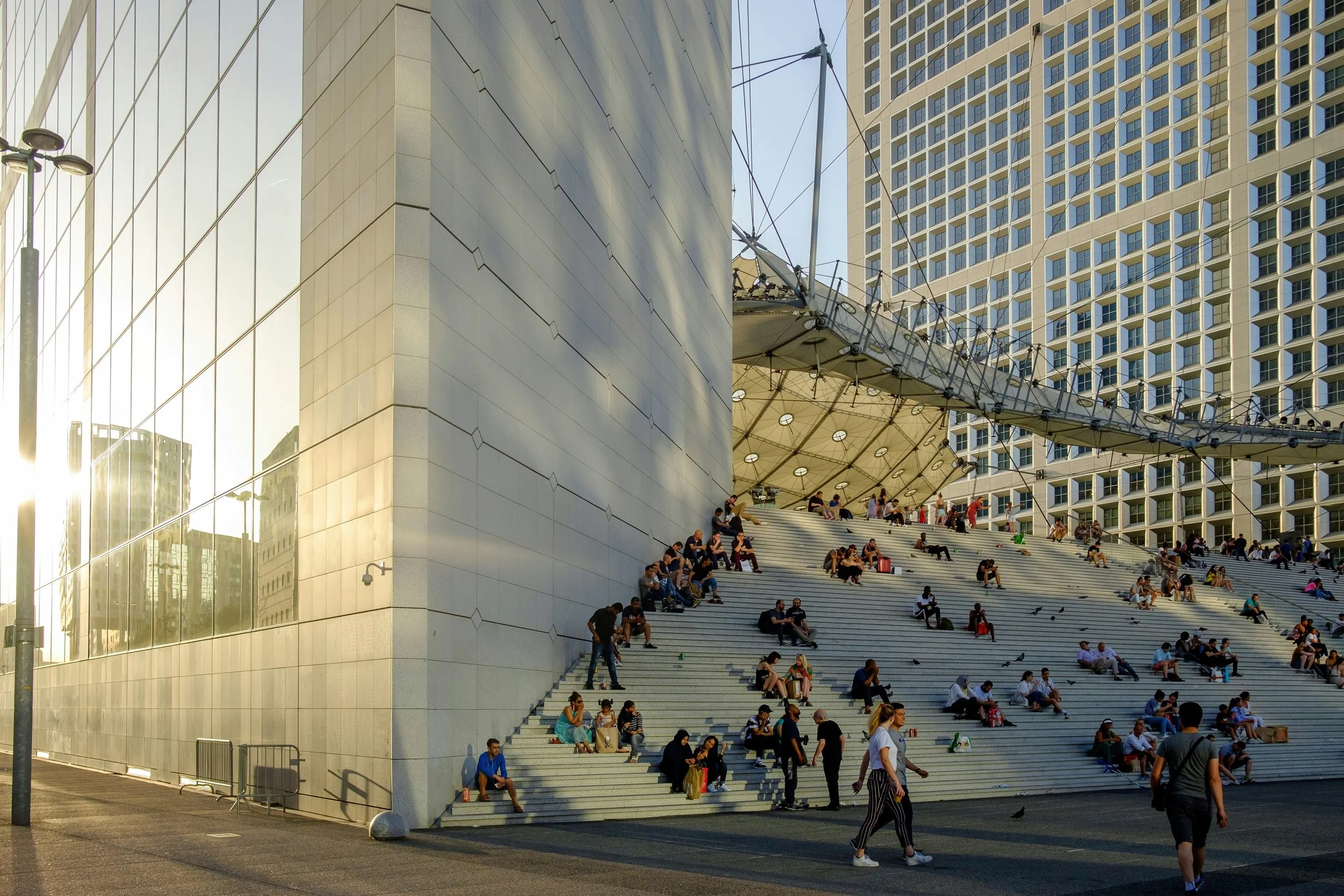
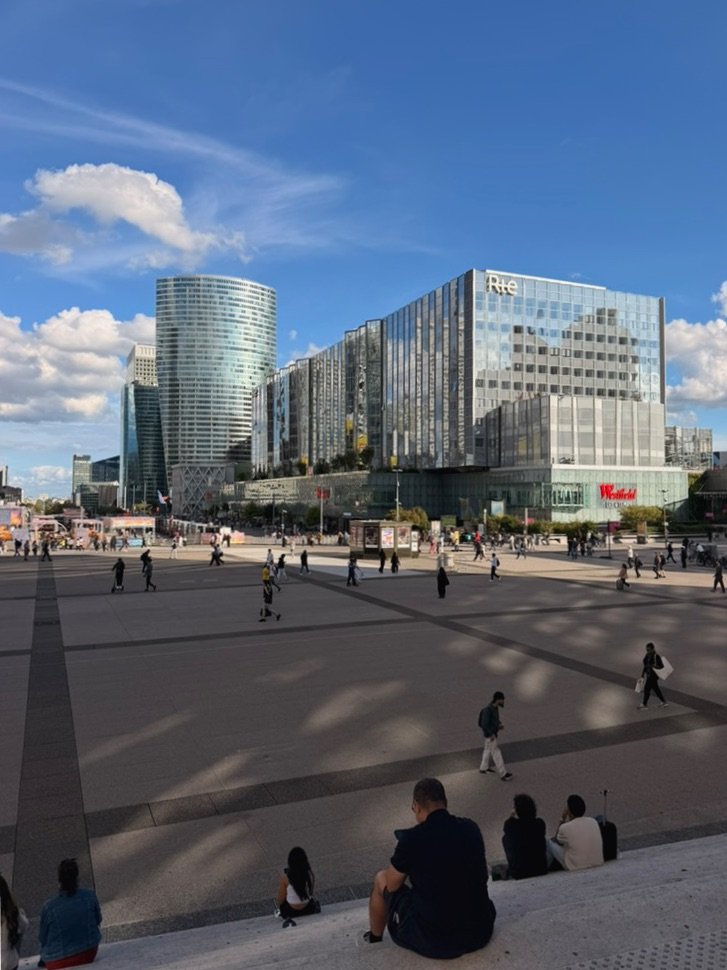
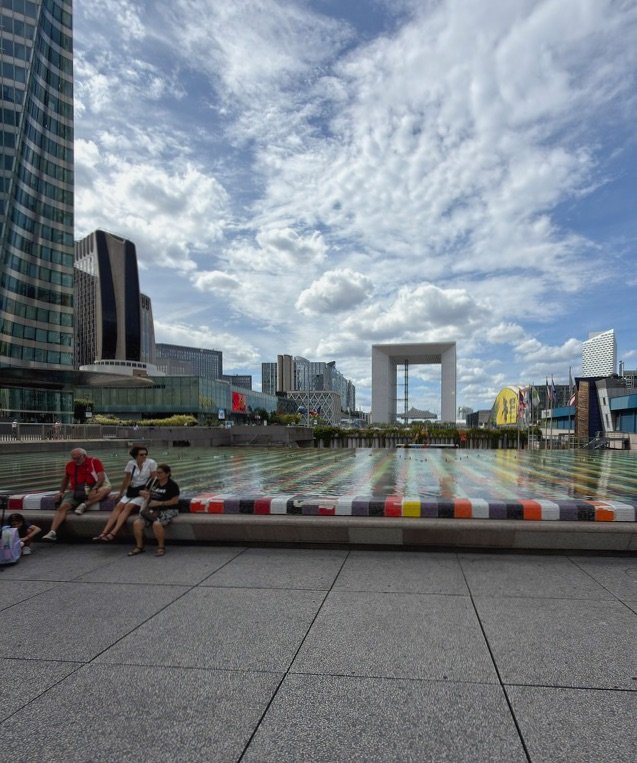
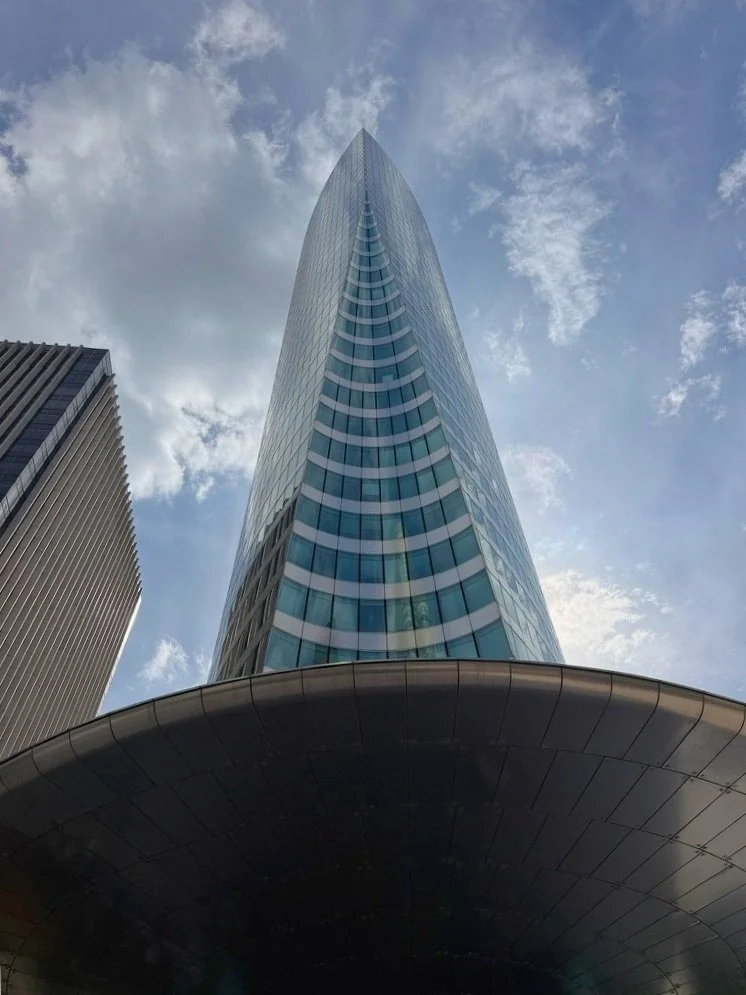
Walk past the Arche and the towers start telling on themselves a little. You can practically guess the decade each one was built just by looking at it. The older ones from the 1970s are boxy and stern, all dark glass and straight lines, like they're still dressed for an office meeting that ended fifty years ago. The newer ones curve and lean and catch the light differently, as if the architects finally relaxed. Tour First rises up nearby, one of the tallest in the country, and around it you'll spot towers with rounded edges or mirrored fronts that seem to be borrowing the sky for the afternoon. Wandering the plaza starts to feel like flipping through decades of design taste, except each page is a couple hundred meters tall and there's a coffee cart on the ground floor.
When I look at the La Défense area, I'm still amazed at how different it is from the rest of Paris — extremely modern, dominated by chrome and glass, with a scale to the plaza and surrounding buildings that catches me off guard every time I visit. If I couldn't see the Arc de Triomphe in the distance from the top of the plaza, I would find it hard to believe I was in Paris. I enjoy the pull between old and new, especially since the "old" of central Paris sits in such stark contrast to the "new" of La Défense — only a short metro or bike ride away.
How It Fits Into Parisian Life
I used to think of La Défense as somewhere Parisians commuted to (and through, since it's a major metro hub) and nowhere they wanted to linger. That impression didn't survive my first visit on a weekend.
Away from the Monday-through-Friday rush of briefcases and badge lanyards, the district turns into something closer to an open-air sculpture park. There are more than sixty works of public art scattered across the esplanade — sculptures by Joan Miró, Alexander Calder, César, and others, placed among the fountains and benches almost as an afterthought, the way a person might leave a favorite book out on a coffee table.
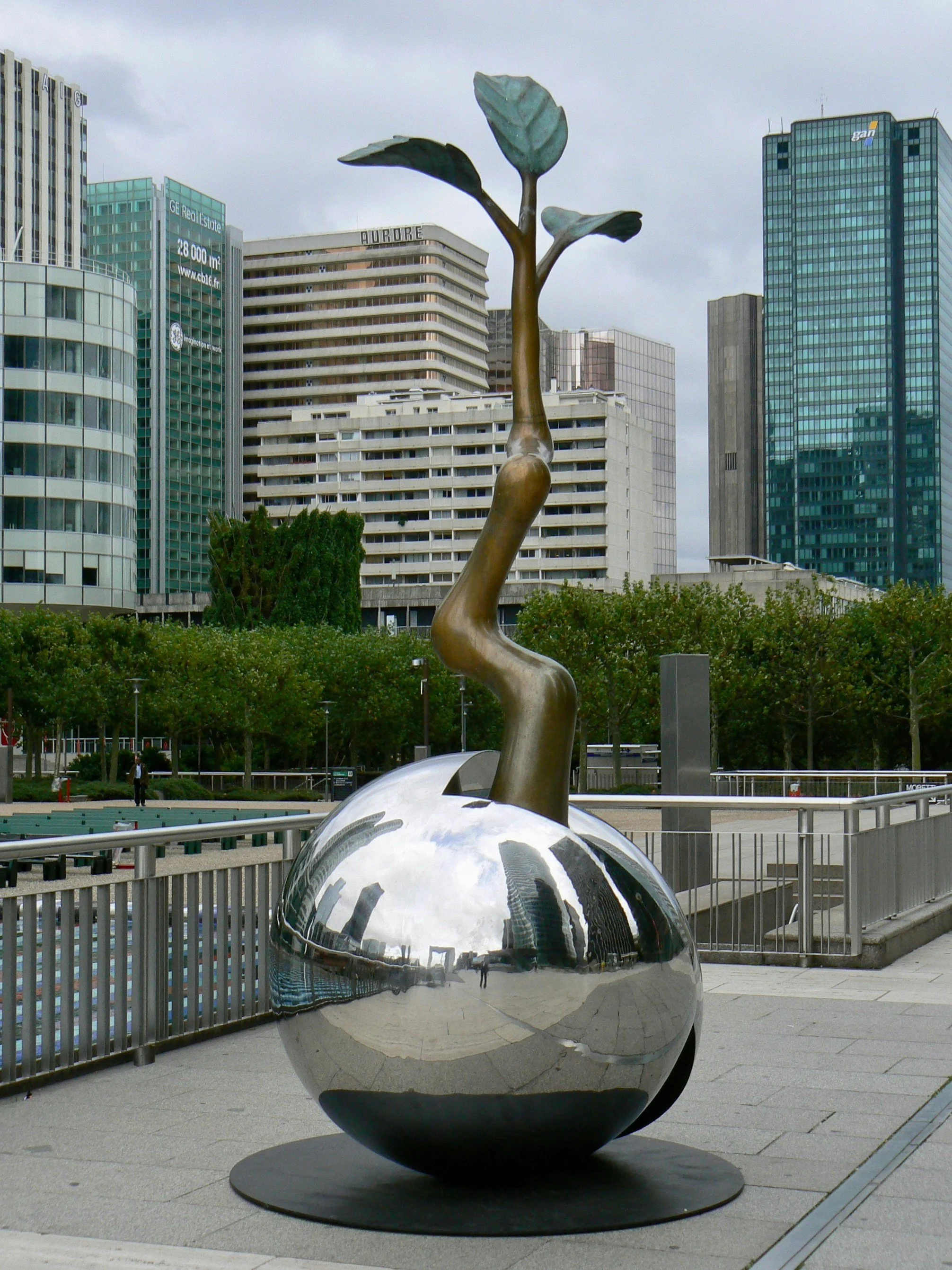
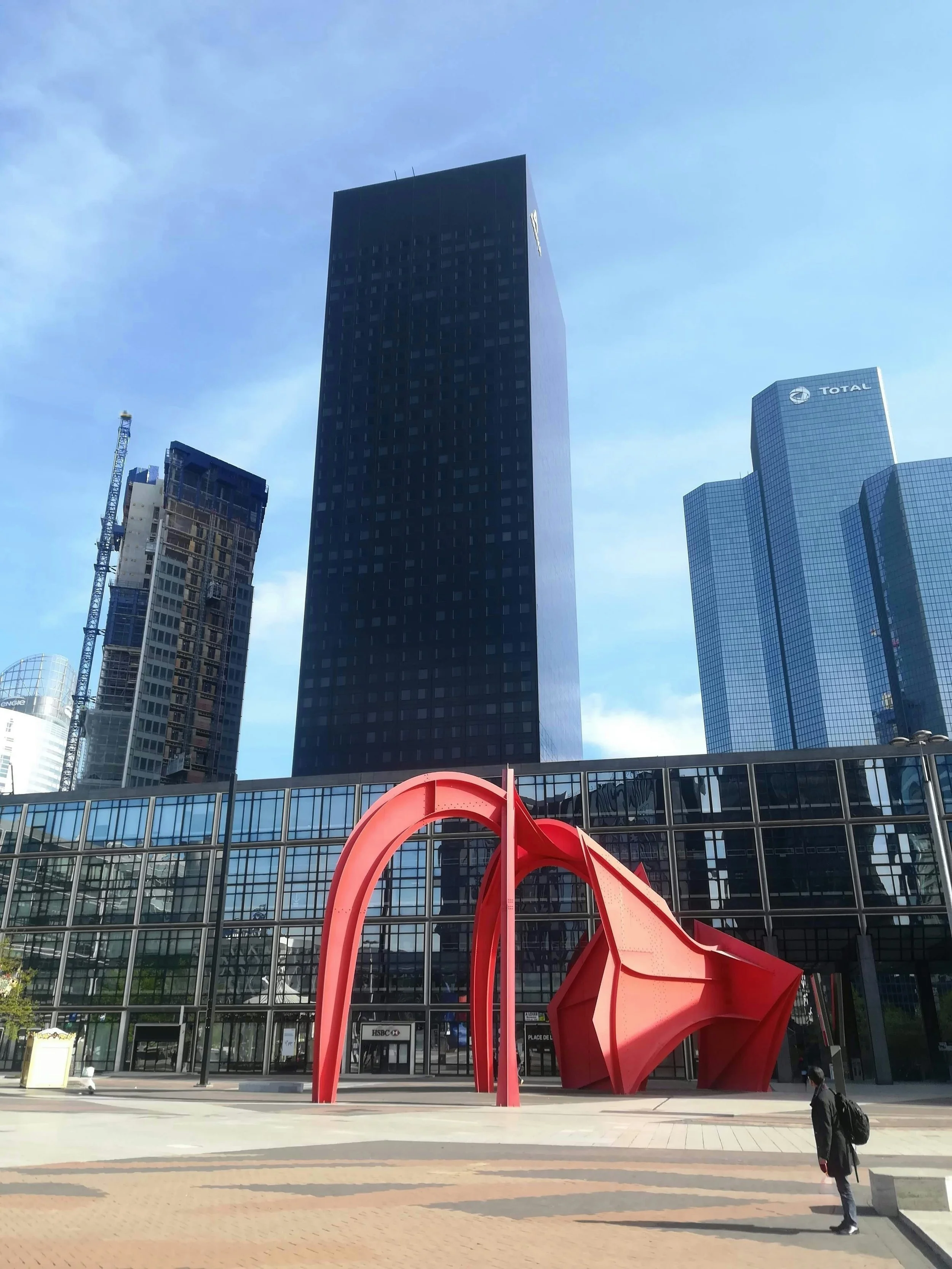
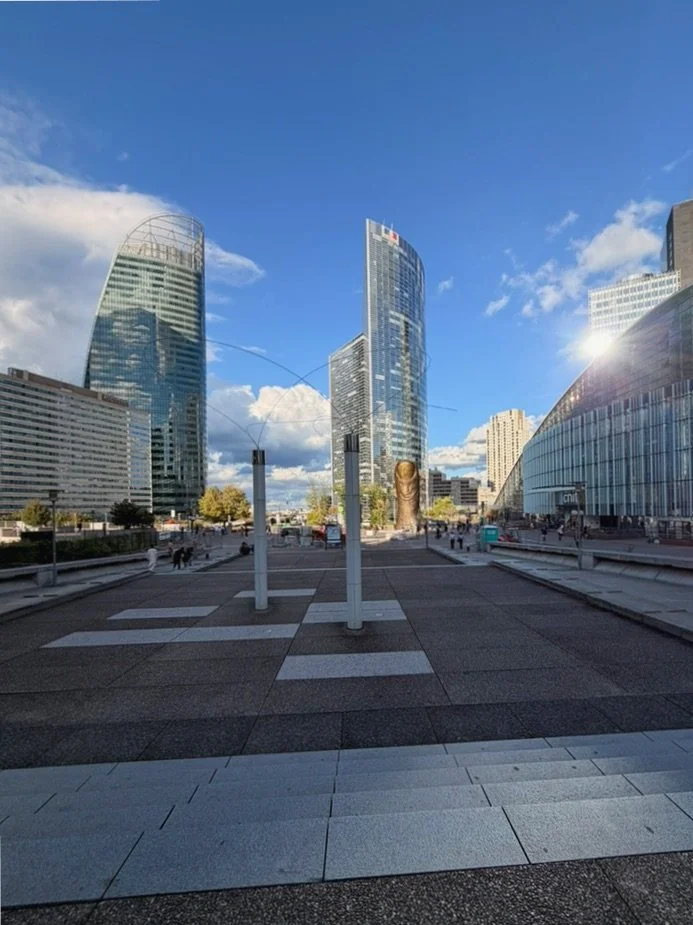
Families come for the fountains in summer, teenagers skateboard and bike along the wide plazas, and office workers who spend their weekdays in suits return on weekends in jeans, treating the same ground as an entirely different place. It's a district that Paris built for commerce, but that Parisians have claimed for leisure all the same. Even the most planned corner of the city, it turns out, eventually absorbs a little of the improvisational spirit found everywhere else in France.
The area is such a departure from central Paris, but I like that. Yes, it's big, sprawling, and modern, but all of that adds a buzz that feels good to be around. I like wandering the plaza, browsing the attached mall and shops, and sitting on the massive stairs that lead up to the Grande Arche. This, in my opinion, is where the quirkiness, size, and frantic pace come together into a charm all their own.
Seasons Bring Their Own Character
La Défense changes costume with the calendar. In December, the esplanade hosts one of the region's largest Christmas markets, with wooden chalets selling mulled wine, roasted chestnuts, and handmade gifts stretching out beneath the towers — a scene that feels almost deliberately mismatched, glass skyscrapers standing guard over a market that could belong in any medieval town square. In the warmer months, outdoor concerts, food festivals, and art installations fill the same plazas that host lunchtime crowds during the week.
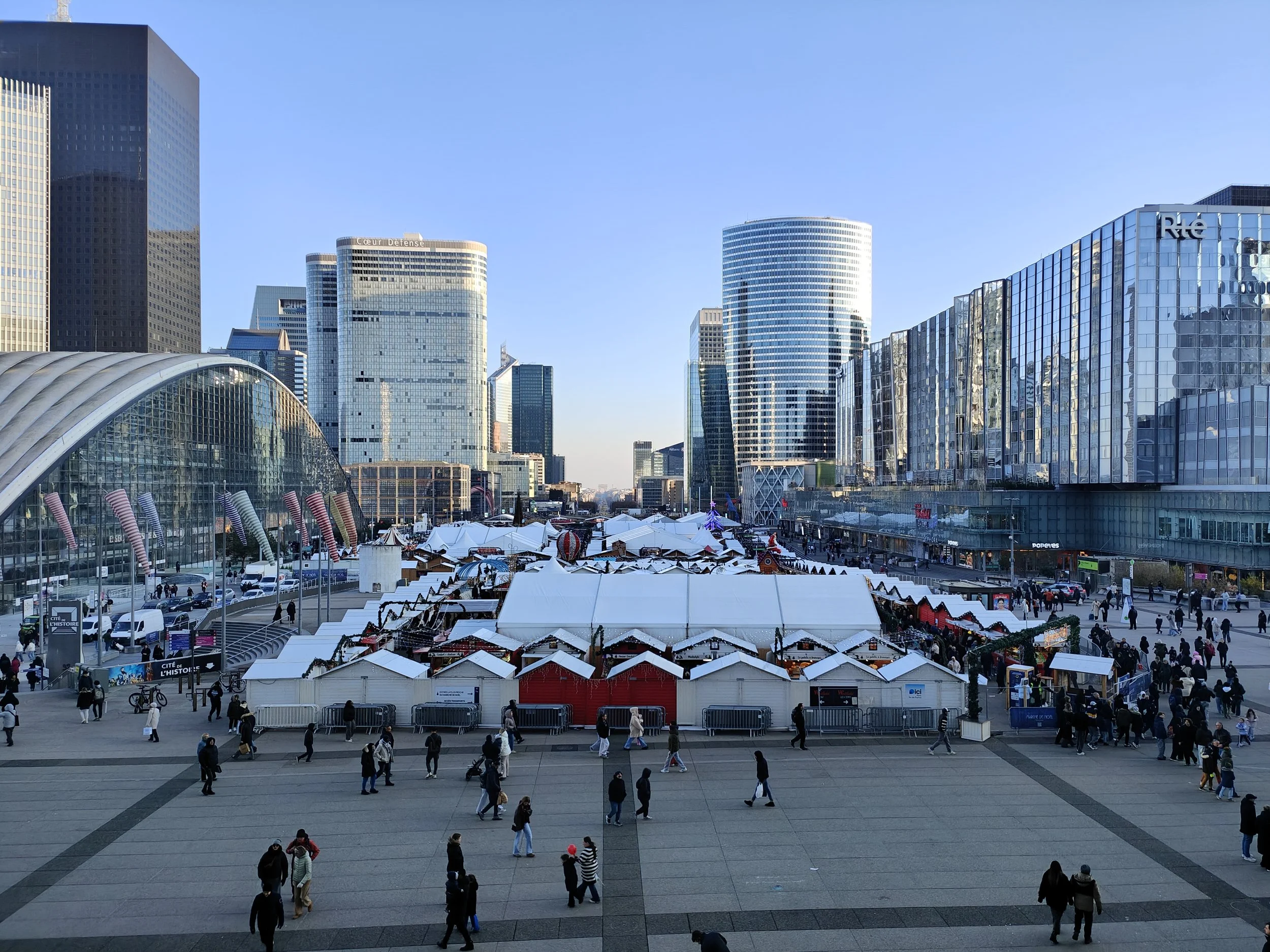
One of the more surprising traditions is the Automnales, an autumn arts festival that brings temporary sculpture and installation work into the public spaces, turning the whole district into a rotating gallery for a few weeks each year. There's also a summer beach event some years, complete with sand trucked in and deck chairs set up against a backdrop that has nothing to do with the seaside and everything to do with Parisian humor.
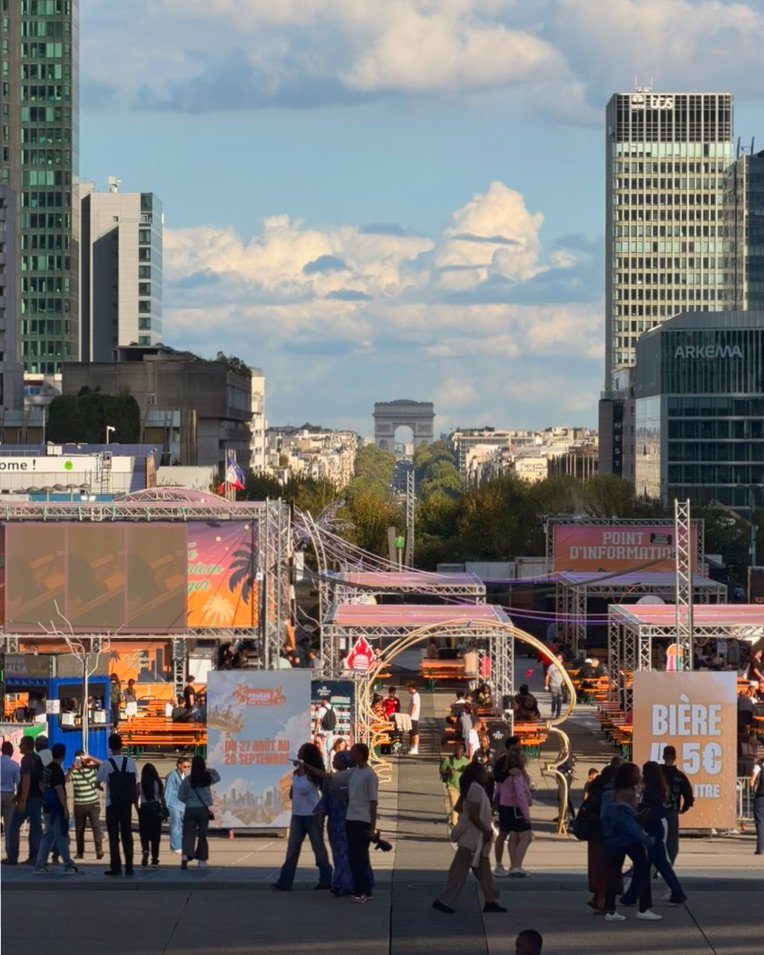
Seasonal events are great here, but I also have a soft spot for the off-beat ones. Recently I went to the Champions Burger event, a touring burger competition with about twenty vendors set up in the main plaza. The food was incredible, and the whole thing was a blast — so many burgers, so little belly. It's events like these that I appreciate most. They keep the area feeling relevant and fun, not just a place people pass through on their commute.
A Different Kind of View
For anyone who wants the postcard moment without the postcard crowd, the observation deck at the top of the Grande Arche offers one of the more underrated views in the city. From up there, Paris stretches out in its full layered history — the old rooftops, the distant Eiffel Tower, the geometric order of Haussmann's boulevards — all visible from a building that represents everything those boulevards were not designed to hold.
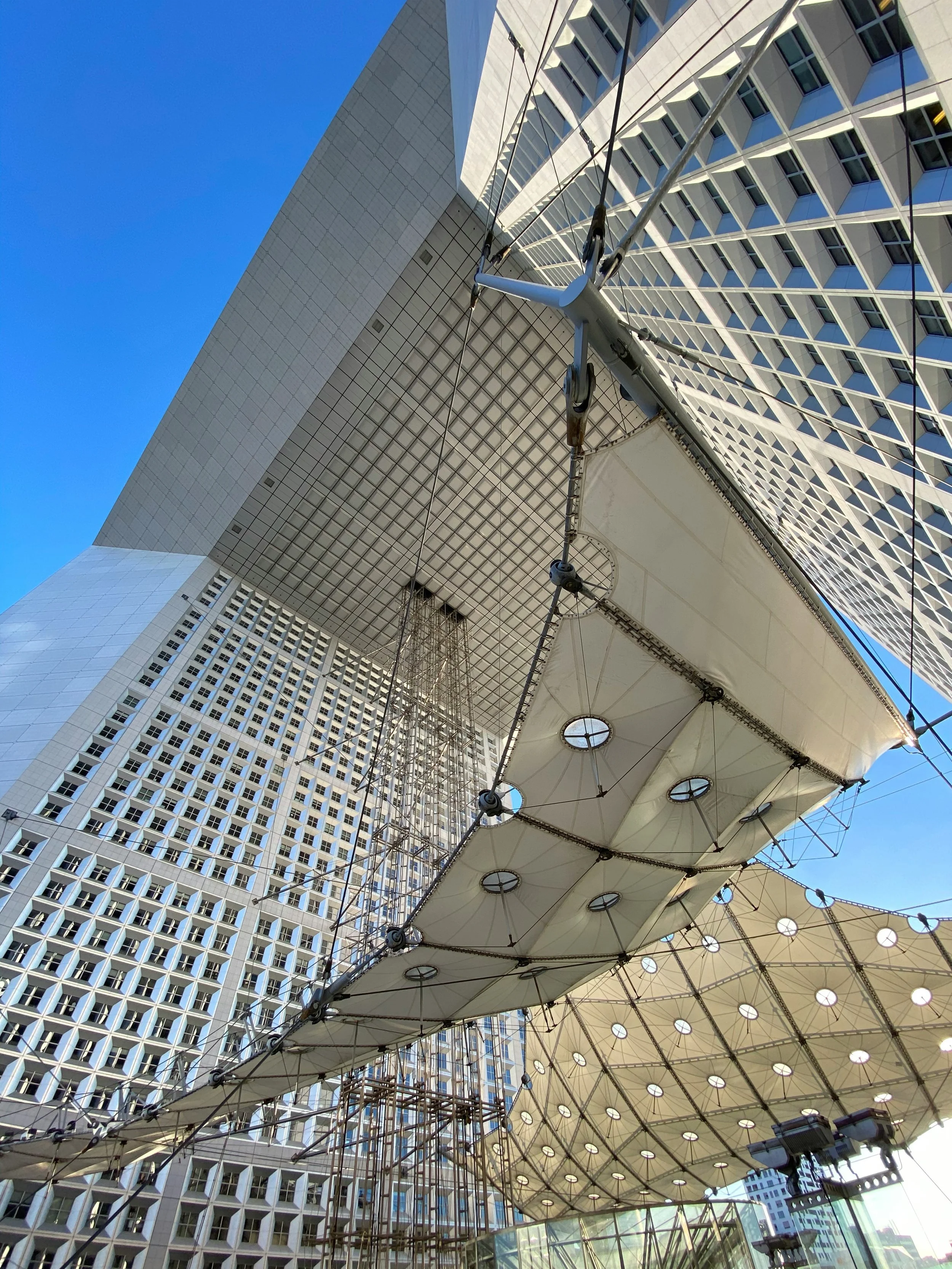
La Défense will never replace the Paris most people come looking for, and it isn't trying to. It exists as a kind of pressure valve, a place where the city could grow upward and outward without disturbing the streets that took centuries to settle into their current shape. Standing at its center, surrounded by glass and steel and the occasional Calder sculpture, you get the sense that Paris didn't abandon its old self by building this district. It simply gave its future somewhere else to stand.
For planning a visit to La Défense, Paris, the official La Défense website keeps an up-to-date calendar of markets, exhibitions, and events happening across the district throughout the year, and Paris Convention and Visitors Bureau has practical details on getting there by RER or metro if you're coming from the city center. Whichever season you catch it in, give La Défense an afternoon of your trip. It asks for nothing more than that, and it tends to give back more than expected.
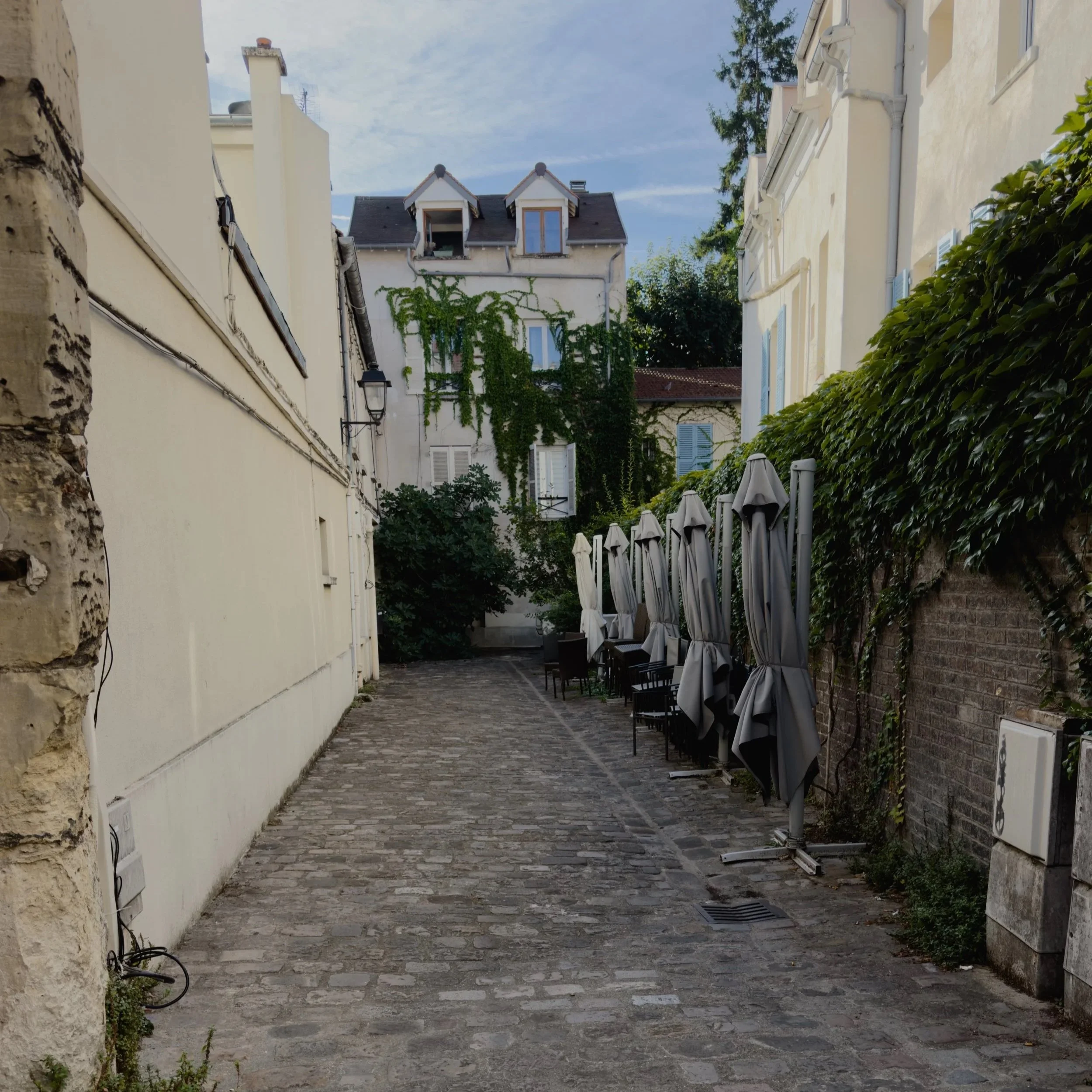
August in France: The Month the Country Exhales
France, especially the big cities, is big and bold. Then, there's August — when the shutters roll down, the boulangeries go dark, and an entire country quietly disappears to the coast.
France, especially the big cities, is big and bold. Then, there's August — when the shutters roll down, the boulangeries go dark, and an entire country quietly disappears to the coast.
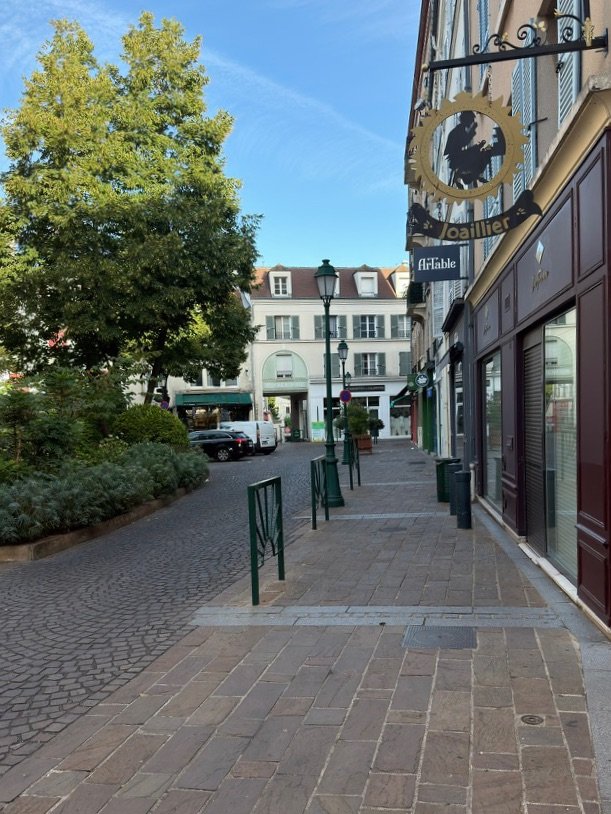
France, especially the big cities, is big and bold. You can imagine the feeling — café terraces filling up by 8am, espresso machines hissing, a delivery van somehow wedged into a street that was clearly built for something the size of a donkey cart. Paris, and a good part of France, always seems to be walking a little faster than it needs to. Lyon hums along its two rivers. Marseille just shouts a bit louder than everyone else, honestly, because it can.
Then, there is August.
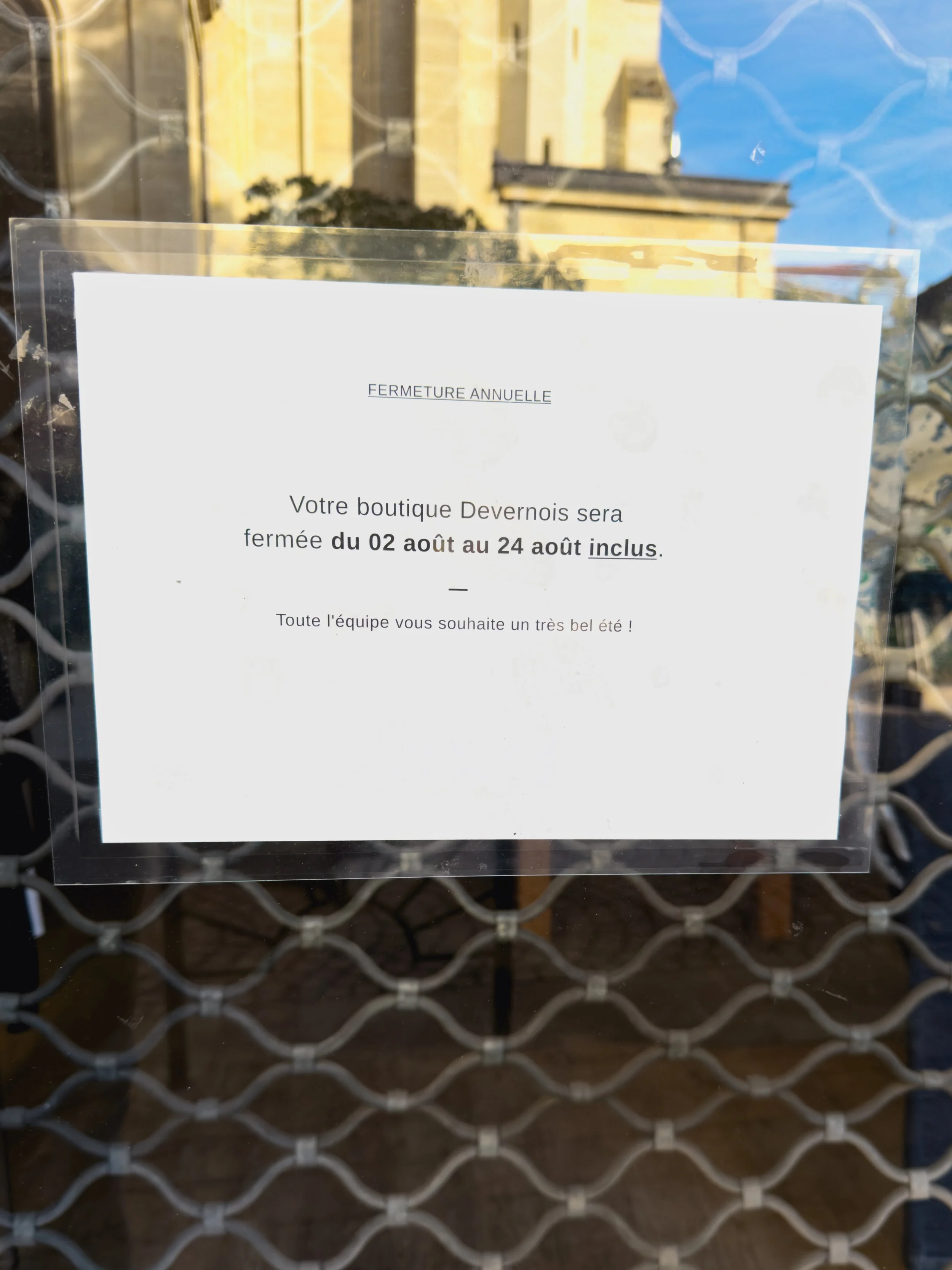
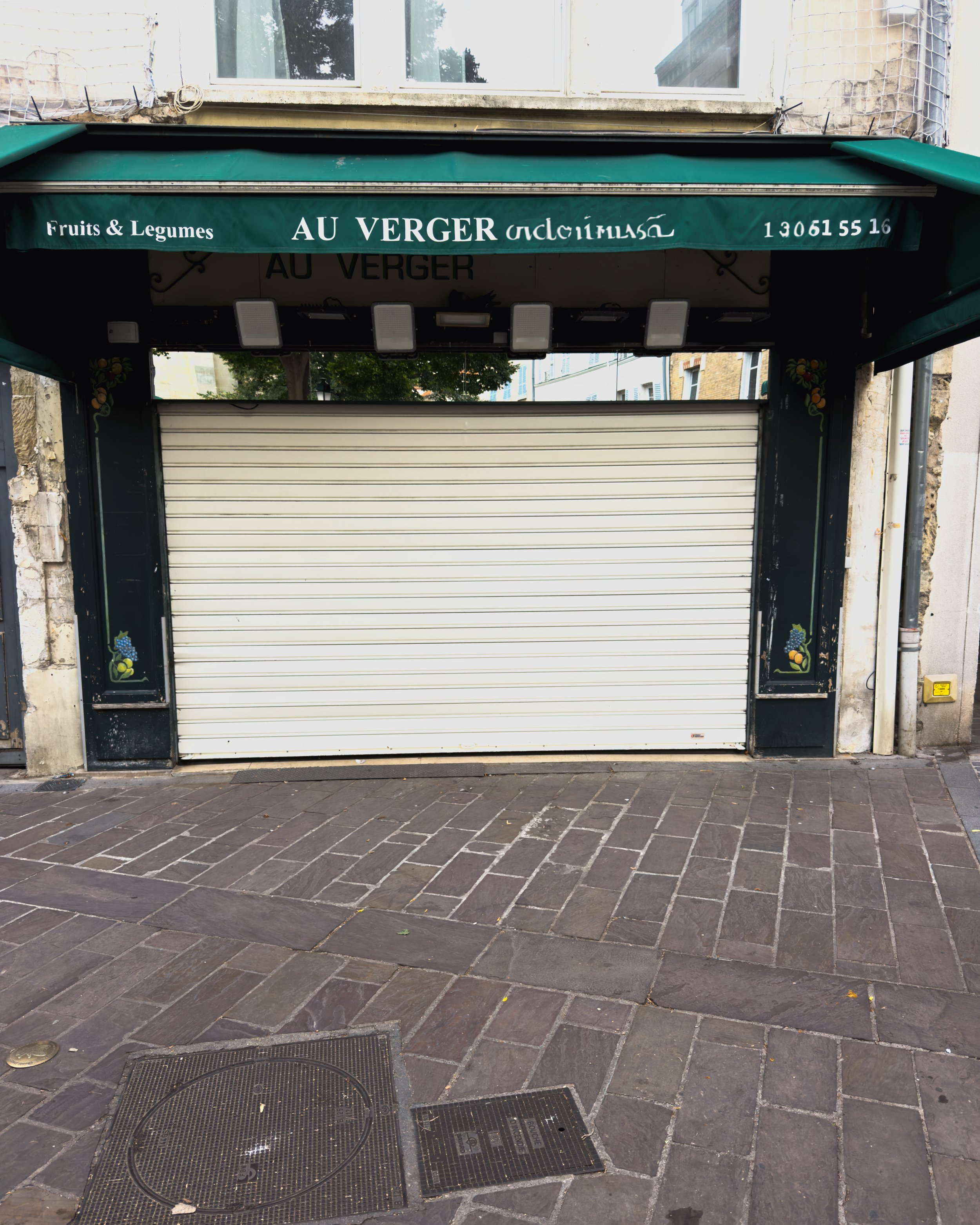
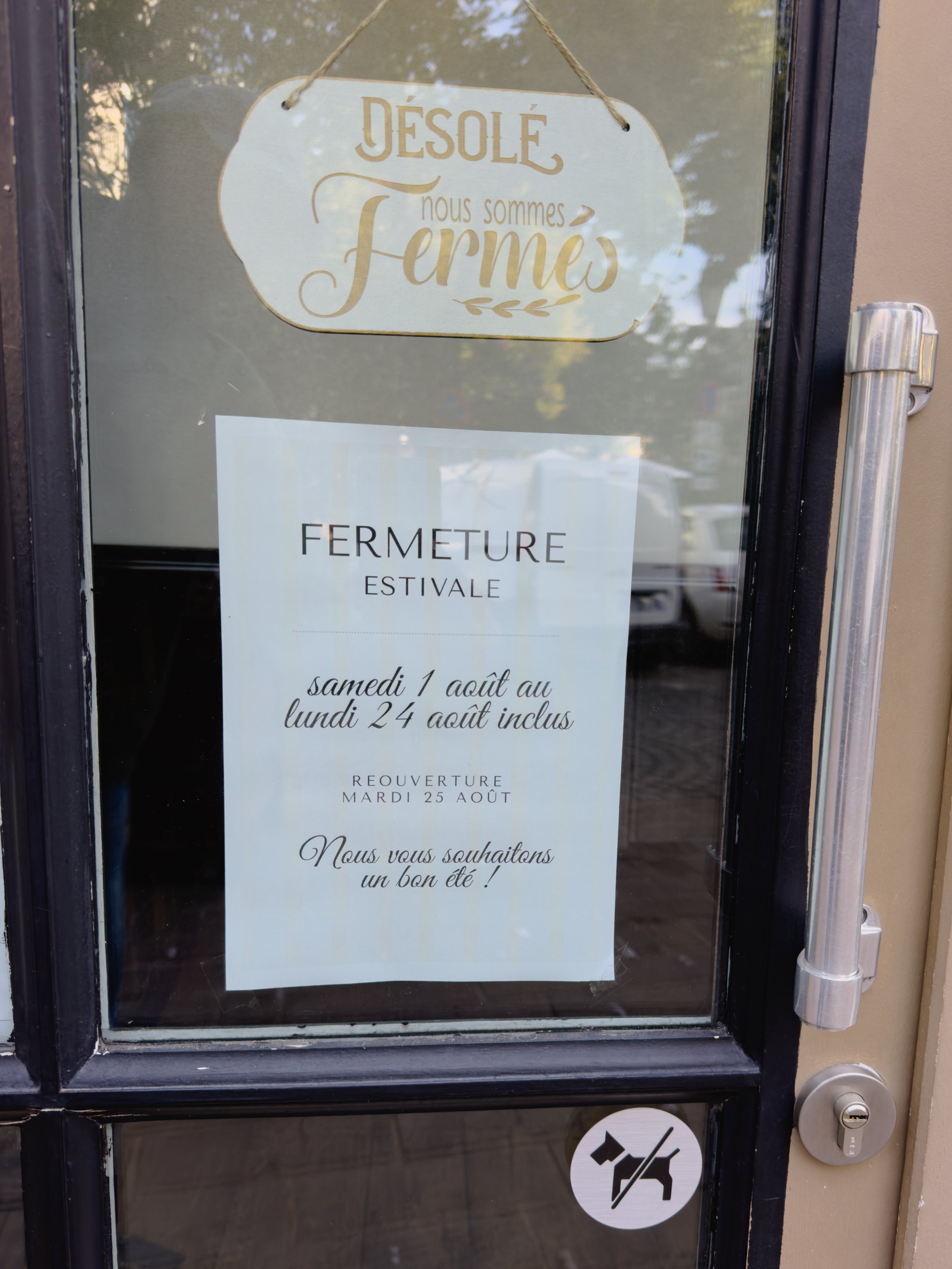
August is the month in France that does the same thing every single year, at pretty much the same time as you’d expect and somehow it still catches you off guard. Sometime around the last week of July, with no announcement, no fanfare, no single moment you could point to and say, "there, that's when it happened," someone reaches over and turns the volume down. Shutters roll shut. Little handwritten notes start showing up taped to the inside of glass doors and windows — fermeture annuelle, they say. Annual closure. Sometimes there's a date scrawled underneath for when they'll be back. Sometimes there isn't. The boulangerie on the corner goes dark. So does the dry cleaner, the physiotherapist, that little bookshop that's been there since before you can remember. It's not a strike, and it's not a holiday in the flag-waving sense. It's something quieter and a little stranger than that — an entire country, more or less all together, just... leaving.
Where This Habit Actually Comes From
I used to assume the French had always done this — packed up and vanished every summer, like it was written into the water. But it isn't nearly that old, and honestly, the real story is more interesting. For most working people in France, taking real time off just wasn't something that happened until fairly recently in the scheme of things. That changed on June 20, 1936, when the government led by Léon Blum passed a law guaranteeing every salaried worker two weeks of paid vacation a year. It came right on the heels of the Matignon Accords, signed just days earlier after a wave of strikes swept the country and workers occupied factory floors demanding, among other things, simply the right to rest. Before that summer, only around 600,000 French workers had ever gone away on a proper seaside or countryside vacation. The very next year, that number jumped to 1.7 million. Imagine that — a whole country discovering, almost at once, what it felt like to have somewhere to be that wasn't work.
From there, that first tiny slice of vacation just kept growing — three weeks, then four, and eventually the five weeks most salaried workers in France are entitled to today. And somewhere along the way, August became the month for it. Not because any law said so, but because once people realized everyone else was disappearing too, staying behind started to feel a little silly, and honestly a little lonely. Why keep the shop open if your regulars aren't even in town to walk through the door?
What August Actually Means to People Here
Ask someone in France about August and you won't get a shrug. You'll get something closer to reverence, like you've asked them about a person they love. Vacation isn't treated as some little perk squeezed in around real life — it's treated as part of what a good year is made of, as ordinary and necessary as sleep. There's even a phrase for how sacred it is: les grandes vacances, the great vacation, the one you build your whole year around rather than fitting in around everything else.
And there's a small, very French bit of vocabulary I love for this — juilletistes and aoûtiens, the July people and the August people. It's such a normal, built-in split in how people live here that it earned its own words, the way some places have specific names for kinds of snow.
I am that person that always seems to forget. This idea of a quiet August slips my mind every single year. This is especially true when I step out onto the street on August 1st, make a beeline to my favorite boulangerie, only to find the shades drawn and the note in the window. I’m happy that everyone is getting time off, but so sad that I will be without my favorite Rouleau a la Cannelle (cinnamon roll) for the next three weeks (sad face). Yes, I’m sure that the ladies told me that they’d be away, but I was probably in denial. After all, three weeks is a long time.
The Cities Left Behind
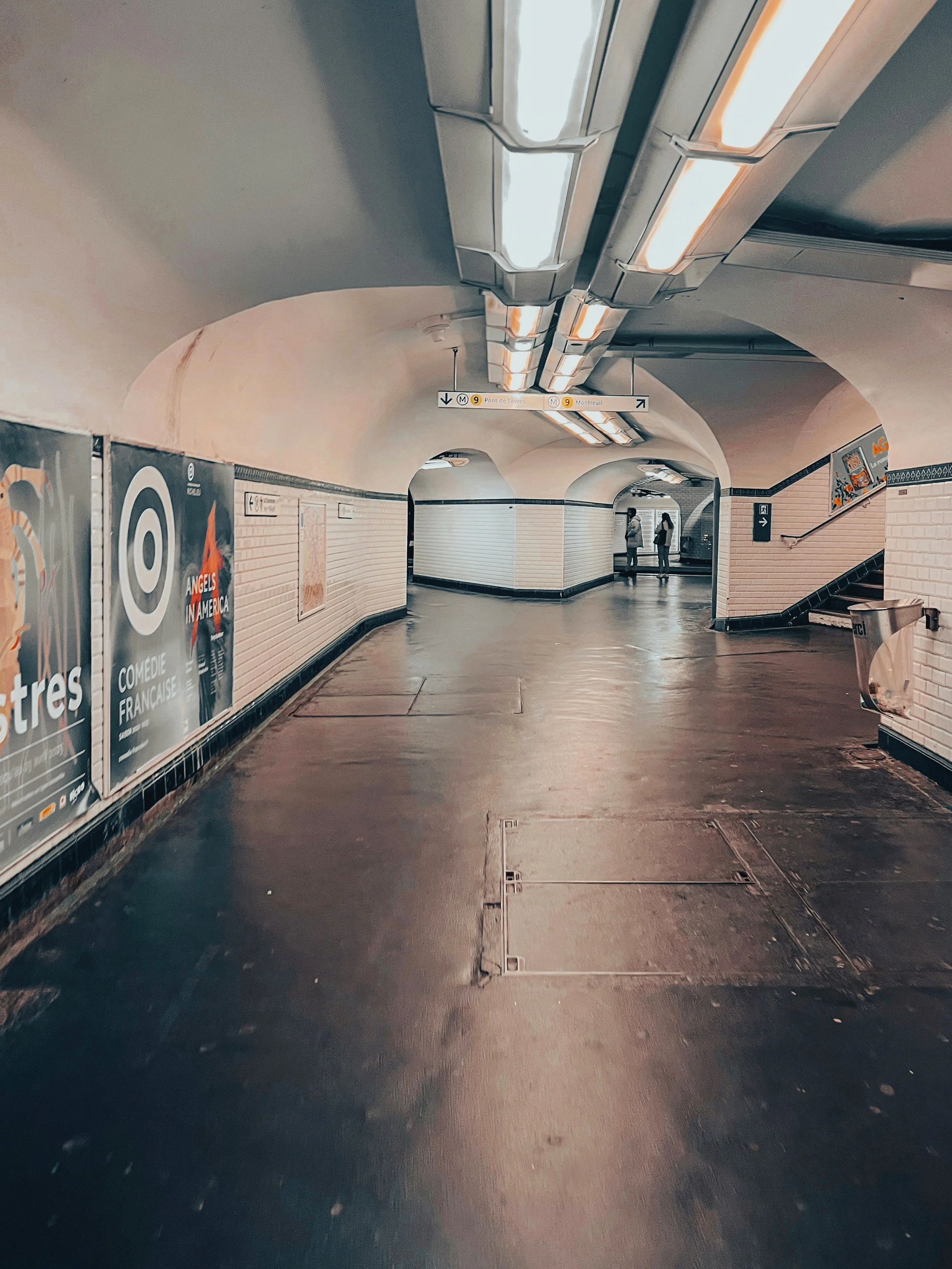
This is the part that always gets me, honestly — what happens to the cities once everyone's gone. It's mostly Parisians, along with people from Lyon, Lille, and the other big urban centers, who head for the coasts: Brittany, Normandy, the Basque country, and above all the Côte d'Azur, where a sleepy little town in June can turn into something several times its size by mid-August. But what's left behind in the cities is this strange, hollowed-out version of the place you thought you knew. Traffic that normally chokes the boulevards just... isn't there. The Métro rolls through at what should be rush hour with half its seats empty. You can hear your own footsteps on streets that are usually a wall of noise.
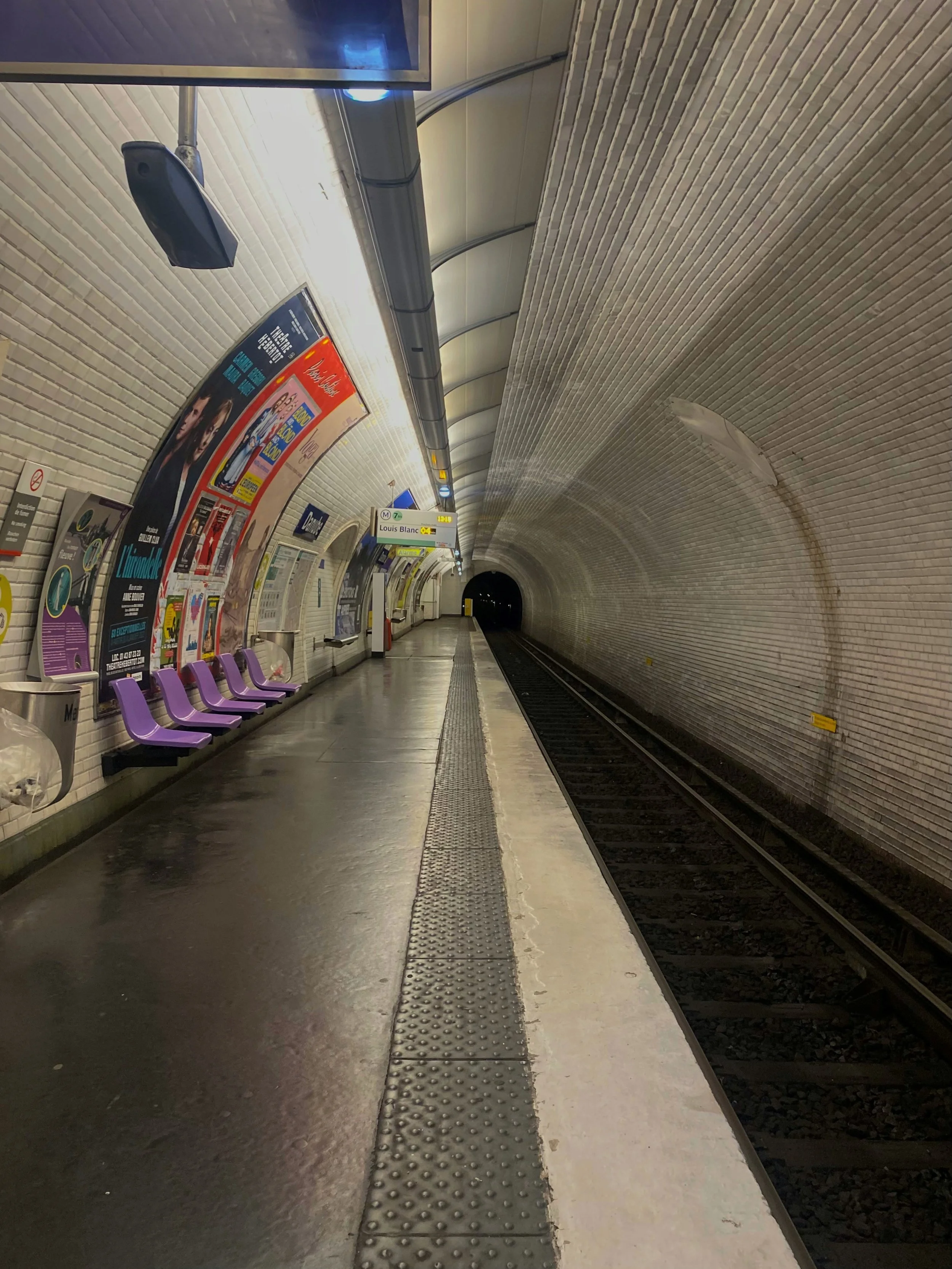
Restaurants you'd normally need to book three weeks ahead will suddenly have a table for you on a random Tuesday at 8pm — if they're even open. Some of the neighborhood spots people love, the ones that aren't just there for tourists, will pull the shutters down for two, three, sometimes four weeks straight. It's not only that the owners want a break, though of course they do. It's that half their staff is legally entitled to be gone at exactly the same time everyone else wants to go too, so there's often nobody left to run the place even if they wanted to stay open.
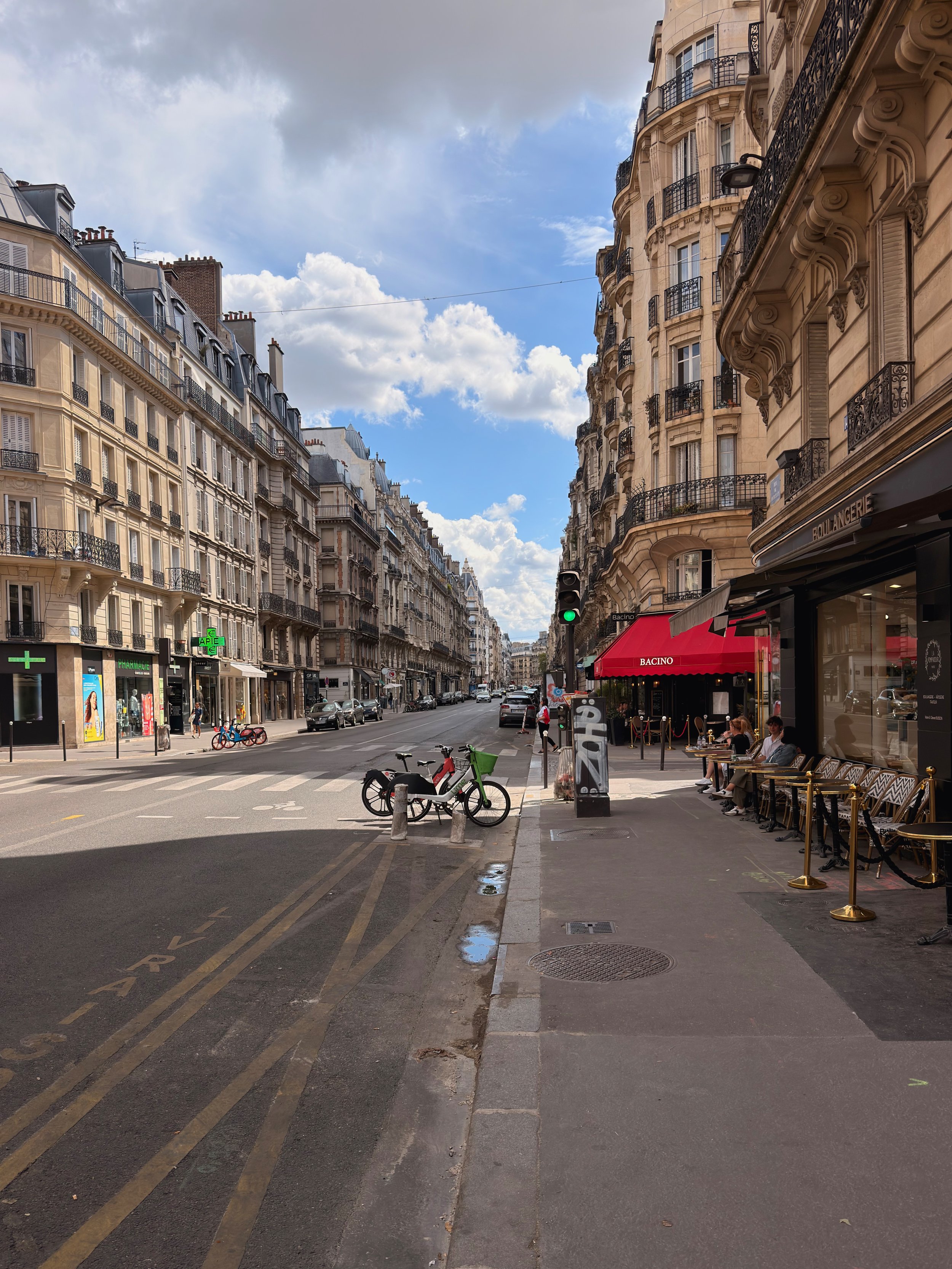
The stores and shops closing are one part of it. In my village, part of the place going silent is not seeing the faces that you’re used to seeing and not hearing sounds that I’m used to hearing. No throngs of children, bikes clattering down the street or neighbors and folks that you normally wave to. Just quiet and unoccupied space.
Everyday Life, Rearranged
If you live in a French city and stick around for August — and plenty of people do, whether by choice or because their turn comes in a different month — you learn pretty fast that certain things just have to wait. Trying to get a dentist appointment, or see your accountant, or get your car looked at in late August can feel a bit like shouting into an empty room. Government offices run on a skeleton crew. Even hospitals and pharmacies work out a careful rotation so the whole neighborhood isn't left without care at once, though it can still feel that way when you're the one wandering around on a Sunday looking for a green cross that's actually lit up.
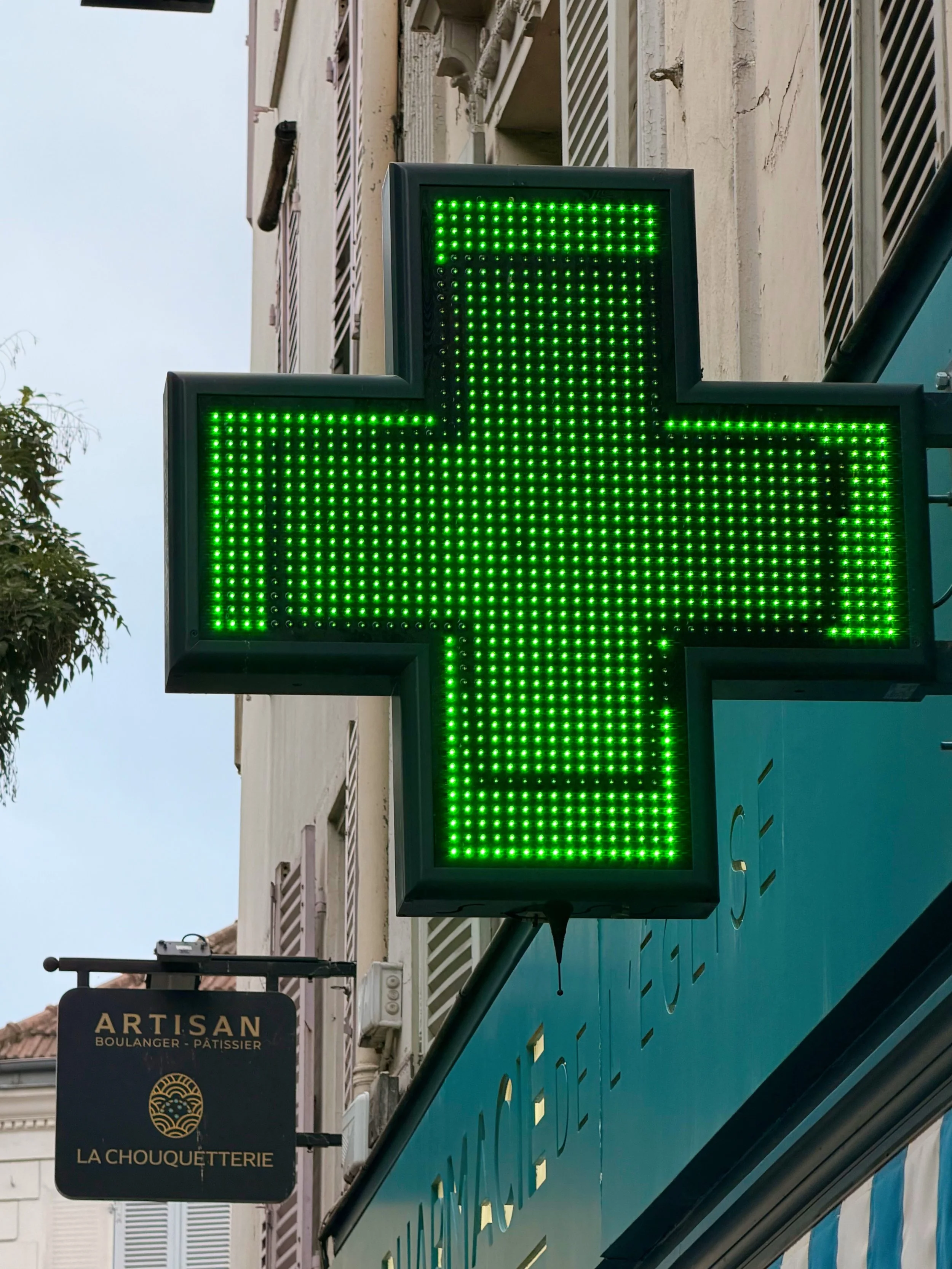
And yet, none of this really registers as an inconvenience to the people living it, not the way it might to a visitor seeing it for the first time. There's this quiet, unspoken deal at play: sure, your dry cleaning might have to wait until September, but when your own turn comes to disappear to the coast for a month, nobody's going to hold it against you either. It's less a system of closures, honestly, and more a system of everyone giving everyone else permission.
For me August is a weird experience, particularly after living through the hectic pace of Mid-May through July. However, the slowdown in activity really gives me time to settle down and recalibrate. I love to take advantage of the open town square, the peace and quiet of the early mornings and having the chance to roam the streets here and in Paris with a bit more ease. Though a lot of things are closed, it is still intoxicating to have such a level of serenity. Although I know that it is for a short time, I try to take full advantage.
Meanwhile, Somewhere on the Coast
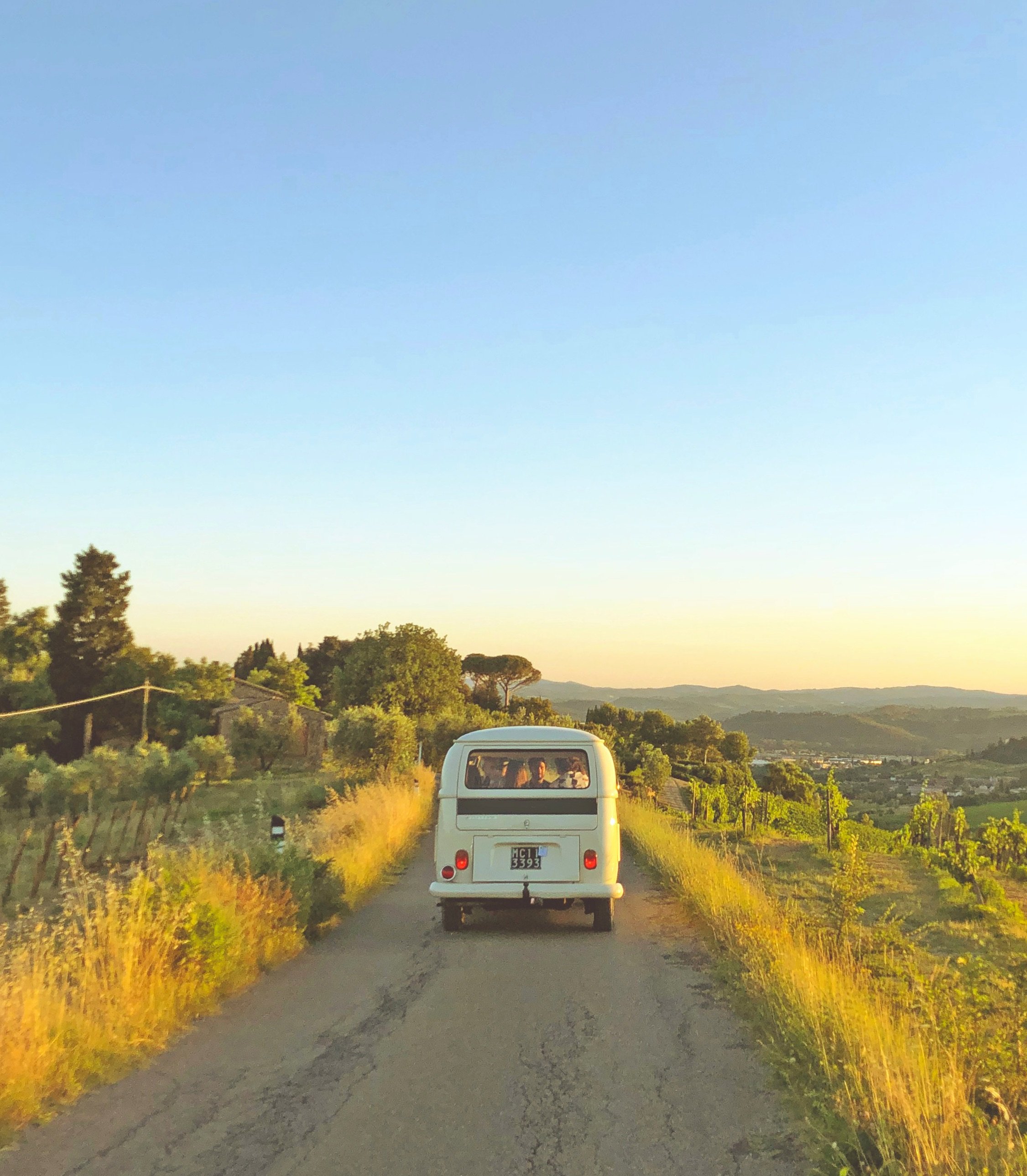
While the cities go quiet, somewhere else gets a whole lot louder. Beach towns along the Atlantic and the Mediterranean swell overnight into their fullest, sunniest selves. A market square that sees a modest little crowd in April is shoulder to shoulder by the second week of August. Restaurants that were half-asleep in June suddenly have a line out the door. It's not really that France goes quiet in August — it's more that all the noise just moves. From the boulevards to the beach towns. From office buildings to campsites. From empty Métro platforms to train station departure boards packed with families and an amount of luggage that really shouldn't be possible.
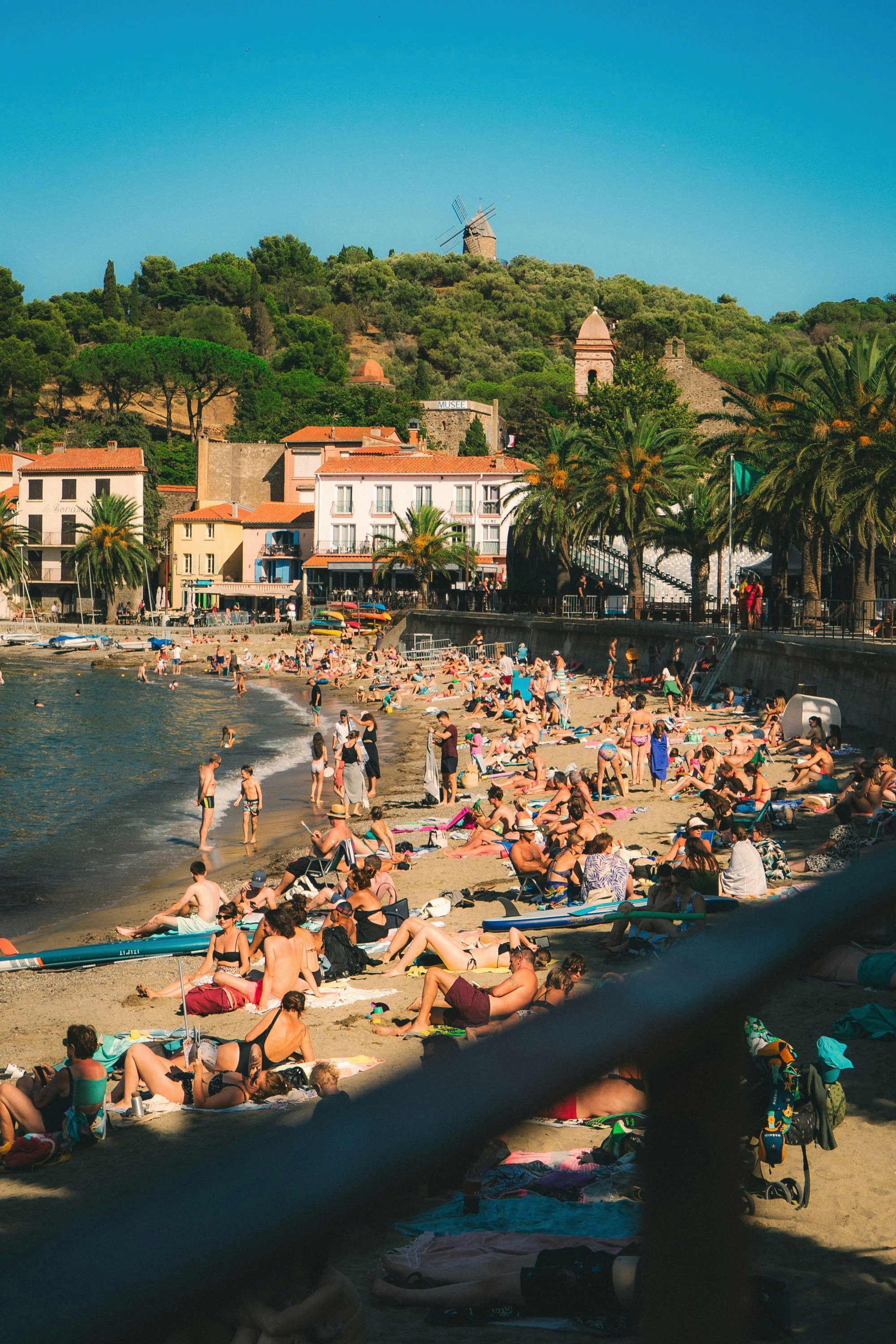
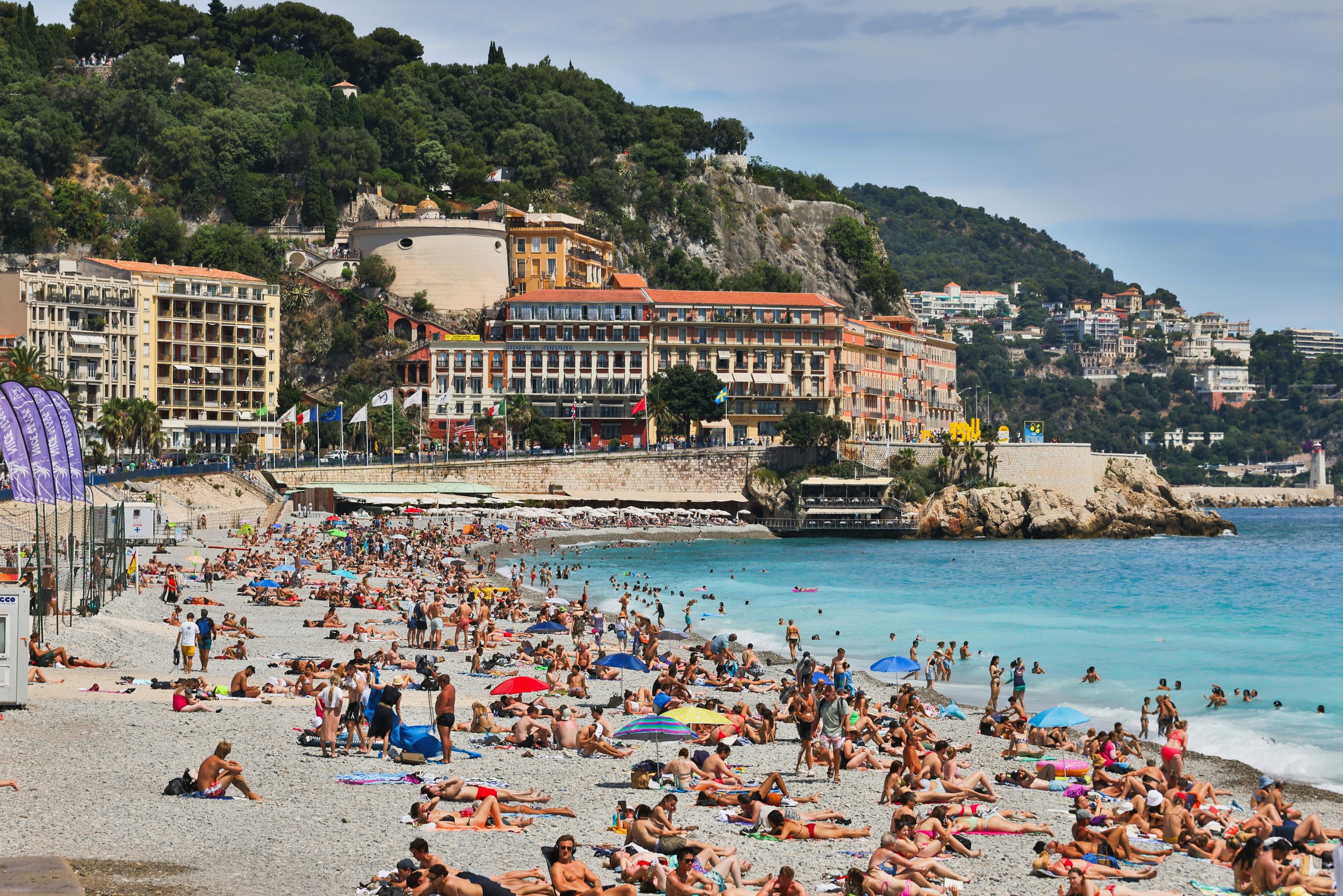
Many people travel to the coast to enjoy the sea. Personally, I'm not much of a beach person, but I can certainly see the appeal. Families park themselves at the beach for a full day in the sun — sleeping, playing, relaxing. While the beach is nice, I enjoy getting away, roaming the streets, talking to locals, and snapping photographs. This is especially true in my surrounding area when everyone leaves — I feel like I have the place all to myself. Odd for some, but so perfect for me.
And Then, Quietly, It Ends
By the last days of August, something shifts back. The trains reverse direction. Suitcases come back down off car roofs. And with almost the same quiet, steady rhythm as when the shutters first went up in July, they start coming back down again. There's a word for this too — la rentrée, "the return" — when kids go back to school and offices fill up again and every inbox that's been quietly stacking up auto-replies for a month suddenly demands to be dealt with all at once. There's a particular feeling to early September in Paris that catches a lot of people off guard: the city snapping back into its bold, loud, unmistakable self, like it had simply been holding its breath the whole time.
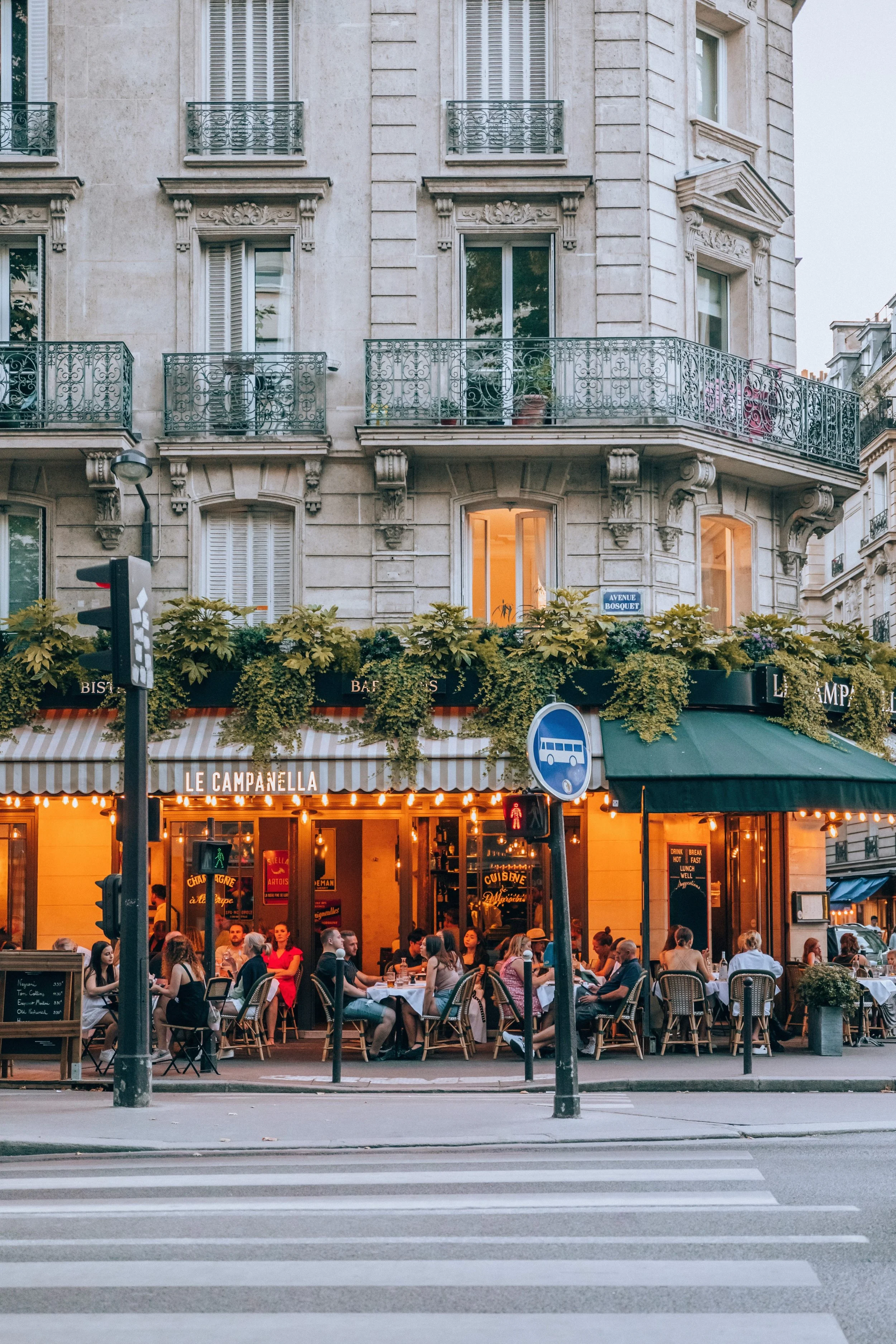
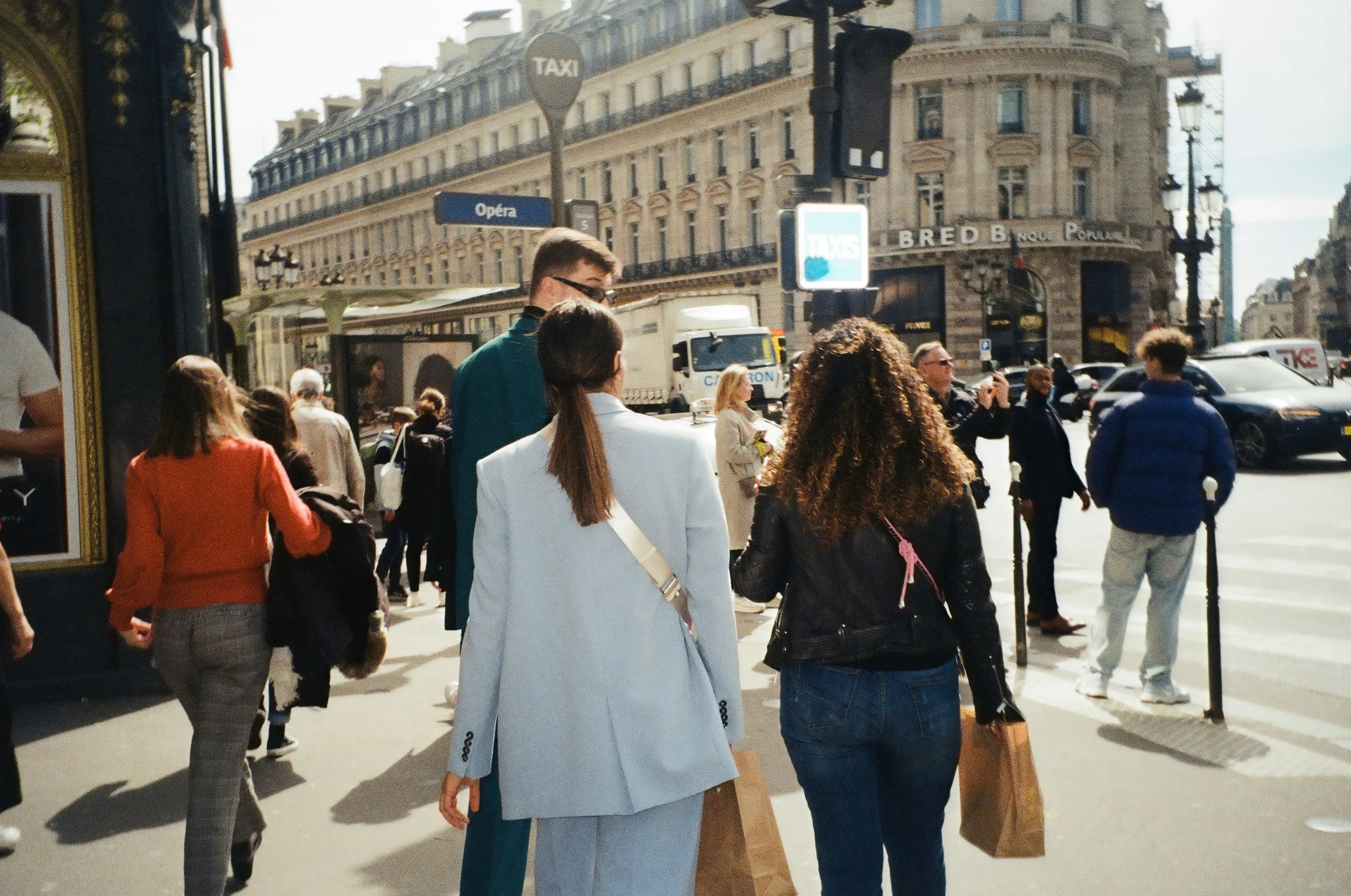
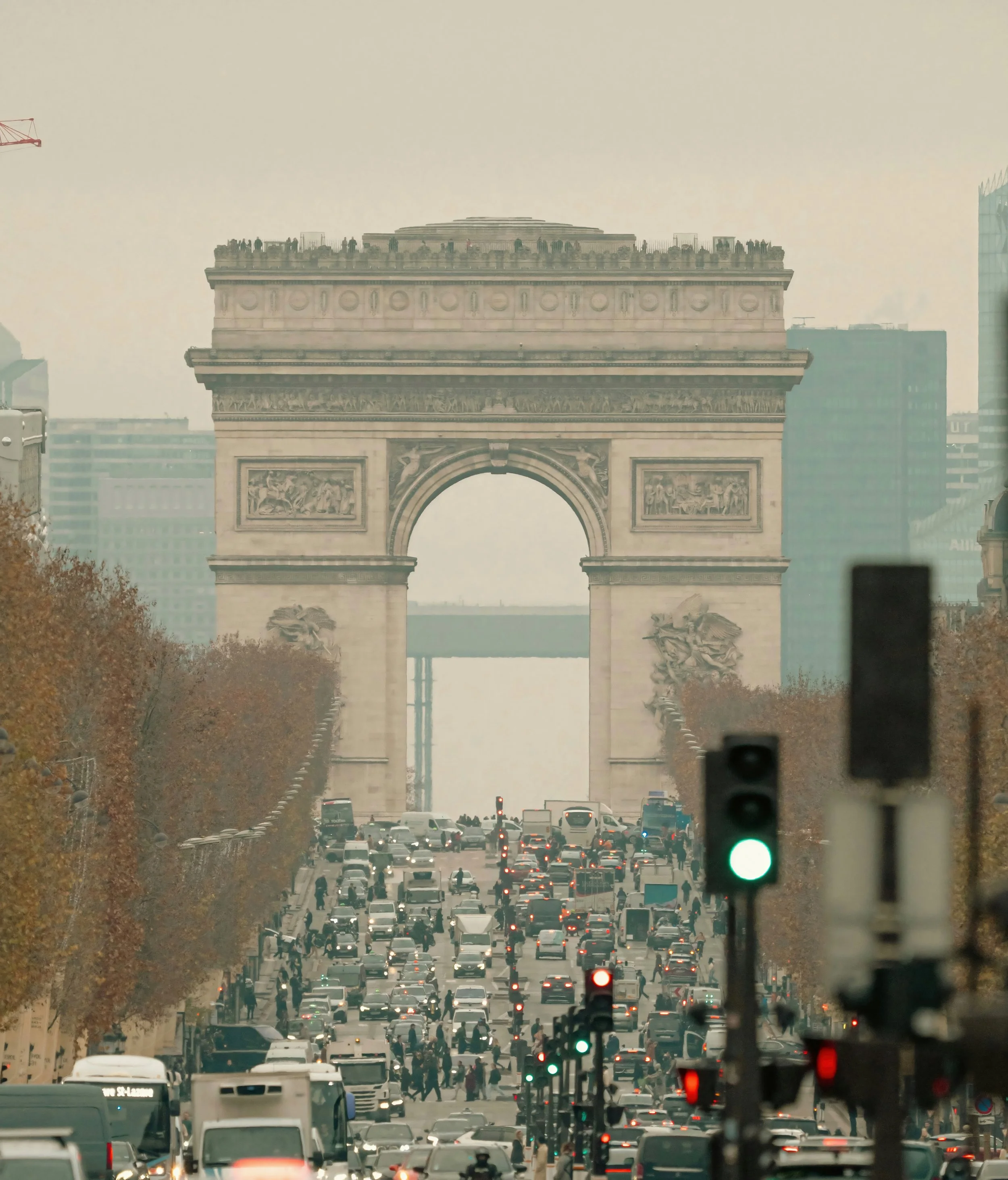
August in France isn't just some footnote to the year — it's built right into the rhythm of the place, all traced back to a single law passed nearly ninety years ago that quietly reshaped how an entire country thinks about work and rest. So, if you're planning a trip, or just trying to figure out why nobody's answered your email in three weeks, it helps to remember: this isn't France being difficult.
This is France, for one month a year, simply refusing to be.
The Last Stop - A Closing Thought From Between Stations Magazine
A Sense of Wonder
A Sense of Wonder
"A sense of wonder is the mind's way of reminding you that the world is bigger than your plans."
Think back to when you were a kid for a second. I bet you had some pretty big, wild plans. Not really about what you wanted to be when you grew up, but what you wanted to do. Fly a jet. Climb a mountain. Race a fast car. Go to space, even. Or maybe your version was a little quieter — sailing across the ocean, biking across the whole state, or just landing somewhere far away and completely new. Whatever it was, there were no limits on it. No budget, no logistics, no "but how would that even work." Looking back, honestly, that was a great headspace to live in.
When Wonder Gets Buried
And then... we grow up. And somehow that sense of wonder just gets buried under everything else — work, bills, deadlines, all the little responsibilities that pile up day after day. You don't even notice it happening. One day you look up and adulting has basically taken the wheel. "It's gonna happen" turns into "one day it'll happen," and then eventually just kind of fades into "one day... maybe." Nobody decides to let go of that wonder. It just gets crowded out, a little at a time.
And look, that makes sense. When life gets full, you focus on what's right in front of you, because it matters. We build careers, buy homes, raise families, take care of the people we love. A lot of us are genuinely happy living that life. But here's the thing — that sense of wonder, those dreams you had as a kid? They never actually left. They're still in there somewhere, kind of jumping up and down, waving their arms, trying to get your attention. That curiosity, that itch to go see or try something new — it didn't disappear. It's just resting. Waiting for you to give it a little nudge. And the fact that it's still there tells you something: you've still got what it takes to go after it, in whatever shape makes sense for your life now.
Finding Wonder Again
Maybe you can't climb Everest — but you can find a trail near you and fall in love with hiking. Maybe race cars aren't happening — but a road trip with no real plan can scratch that same itch. Maybe space is off the table — but you could join a stargazing group and finally learn what you're looking at up there. And hey, if some of those bigger dreams are still within reach, go for it. If new ones have taken their place along the way, that's great too. This is your story, and whatever you're chasing — big or small — it's worth going after. So, take that first step. Or if you've already started, just take the next one.
Whatever else happens, try not to let go of your sense of wonder. It's one of the things that reminds you you're really here, really living — still curious, still able to be surprised by the world. Life will try to convince you that wonder is something you outgrow, something for kids. Don't buy into that.
It never left you, you know. It's just been sitting quietly in the back of the room this whole time, waiting for you to notice. So go say hi. Tap it on the shoulder like you're catching up with an old friend. Don't be surprised if it lights up the second it sees you — it's been waiting a long time for this.
As always, slow down, look around, and enjoy the journey…between stations.
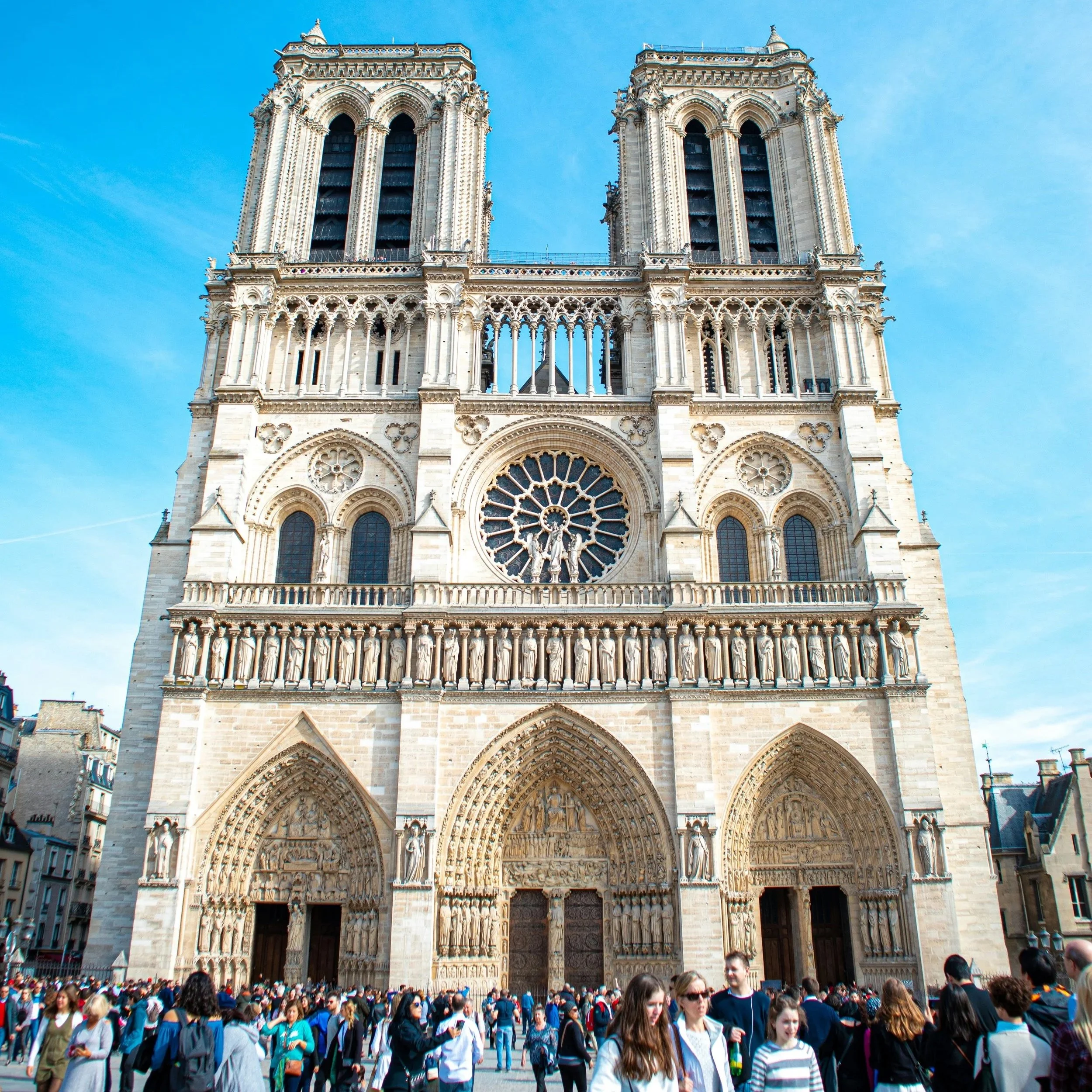
August Random Walk: Notre-Dame to the Tuileries
A simple walk across Paris reveals three very different experiences.
This walk looks almost too simple on a map — just a straight shot across central Paris from one landmark to another. Don't be fooled. There's a lot packed into this short stretch, and it's one of my favorite ways to spend an unhurried afternoon in the city. We're heading from the stunning Notre-Dame Cathedral to the calm, leafy grounds of the Jardin des Tuileries. On paper, it's about 3 km, or 1.75 miles — roughly 40 to 45 minutes of walking. In reality, the distance never changes, but the time absolutely does. You'll see why soon enough. So, let's get walking.
Starting at Notre Dame
Whenever I'm in the city, I love starting a walk at or near a landmark everyone knows. There's a certain buzz to those spots, and Notre-Dame Cathedral has that in spades. Families wrangling kids, tour guides waving little flags to keep their groups together, clusters of students posing with that jaw-dropping cathedral behind them — it's a lot of energy in one place, and I mean that in the best way. Even if you skip going inside, you can wander the grounds for a while and just take in the facade, all that incredible stonework and detail up close. The cathedral’s restoration and ongoing preservation have made Notre-Dame one of the most closely watched heritage projects in France. Honestly, it's easy to lose thirty minutes or more just standing there, soaking it all in. Street musicians drift in and out, someone's always selling something, and there's a kind of hum to the whole plaza that makes you want to slow down before you've even started walking. It makes for the perfect launch point.
Three Ways to Reach the Tuileries
This is where things get interesting. Your route west toward the Tuileries isn't just one path — you've got a choice, and each one gives you a completely different afternoon. I think of them as three options: River View, the Beautiful Detour, and Rue de Rivoli. None of them is the "right" one. It just depends on the mood you're in that day.
Three routes from Notre-Dame to Tuileries
The River View hugs the banks of the Seine, and it's probably my favorite of the three. This stretch of the river is part of the historic Paris landscape recognized for its cultural significance and relationship to the city's identity. There are benches to sit on, secondhand booksellers with their green stalls lined up along the quay, and endless spots for a good photo. The water moves slowly beside you the whole way, and there's an overall calm that makes the walk feel more like a stroll than a commute. If you're in the mood to just breathe and let your mind wander, this is the one.
River View: This is a beautiful walk - Perfect for first-timers!
Next up is the Beautiful Detour, which winds through nearby streets and cuts through the grounds of the Louvre — yes, past the glass pyramid — before spilling out right at the entrance to the Tuileries. There's something almost cinematic about walking through that courtyard, especially if the light's hitting the glass just right. It's the route to take if you want a little grandeur mixed into your walk, and it doesn't add much distance at all for the payoff you get.
Beautiful Detour: A great walking route for art and architecture
And then there's Rue de Rivoli, for anyone who wants the full city-street experience. From the cathedral, head straight north on Rue de la Cité, which turns into Rue Saint-Martin once you cross the river, then take a left onto Rue de Rivoli. This one is loud, fast, and completely alive — bikes weaving everywhere, cars, delivery trucks, pedestrians dodging each other like it's a full-contact sport. It's controlled chaos, and somehow, it's exactly what makes it feel so Parisian. Your head will be on a swivel the whole way, in the best sense. The upside is that you'll pass shop after shop, plus cafés and little convenience stores if you need a snack, a coffee, or just an excuse to duck in somewhere for a minute. Just keep walking straight, and the Tuileries will show up on your left.
Rue de Rivoli: Best route for city vibes, cafes and shopping
The Journey is the Destination
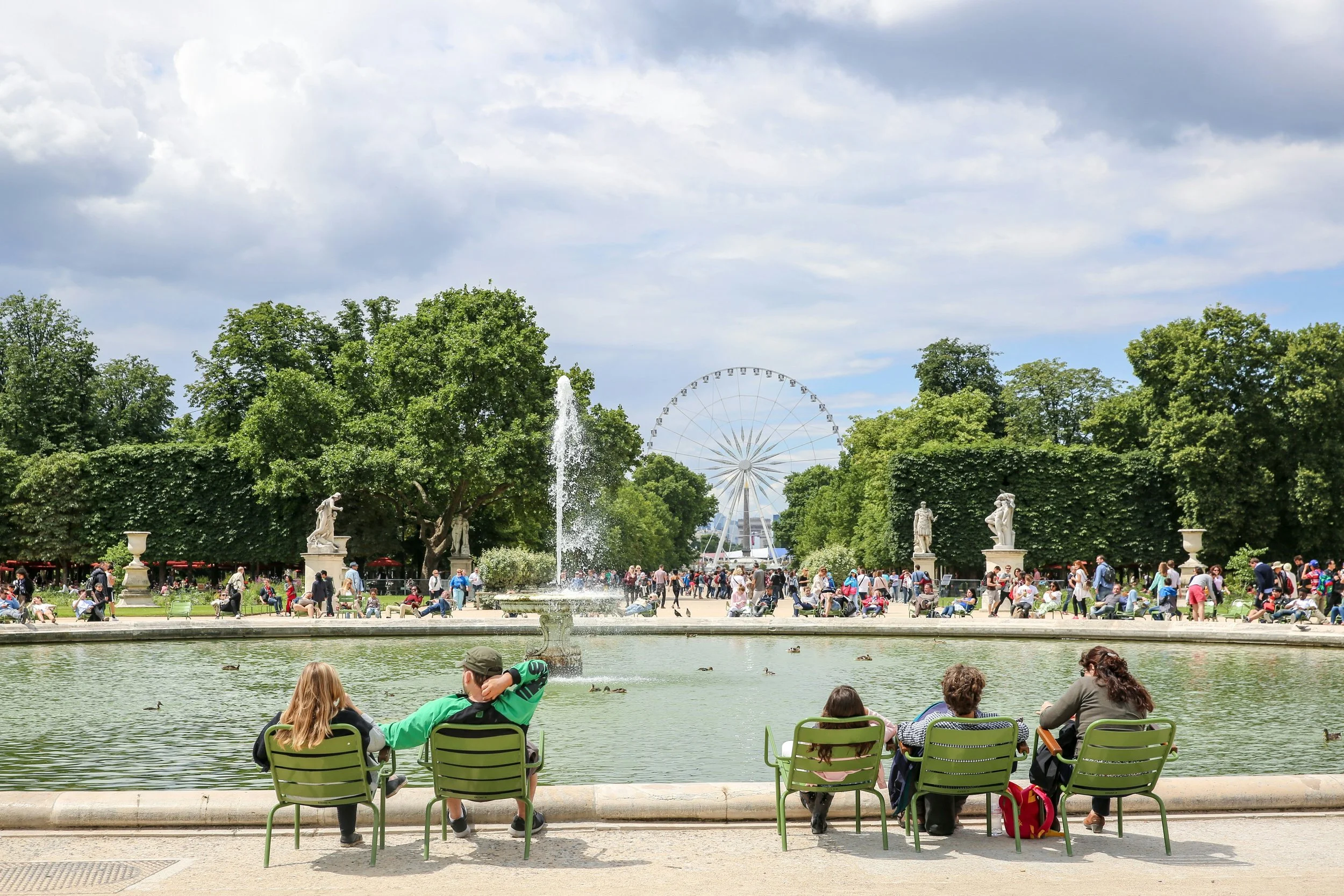
However you get there, arriving at the Tuileries feels like a reward. Open lawns, wide gravel paths, little tucked-away seating areas, fountains catching the afternoon light — it's enormous, honestly, easily worth another hour of wandering on its own. The Jardin des Tuileries has been part of Parisian life for centuries, connecting the Louvre with the Place de la Concorde. This is your moment to grab a shaded bench, sit back, and just let the calm wash over you. You've earned it, especially if you took the Rivoli route and your nervous system needs a minute to recover.
One more thing worth knowing: the terrain shifts a lot along this walk — cobblestones, smooth stone, concrete, gravel, patches of dirt. It adds up over a few kilometers, so wear shoes you trust and build in a break or two. Your feet will thank you later.
A Walk Worth Taking
This little walk might look ordinary on paper, but it never really is. Whichever route pulls you in — the quiet river, the grandeur near the Louvre, or the chaotic pulse of Rivoli — you'll end up somewhere unforgettable either way. And that's the real charm of it: Paris keeps finding ways to turn a simple 3 km stroll into something worth remembering. So, lace up, take your time, and let the city do what it does best.