
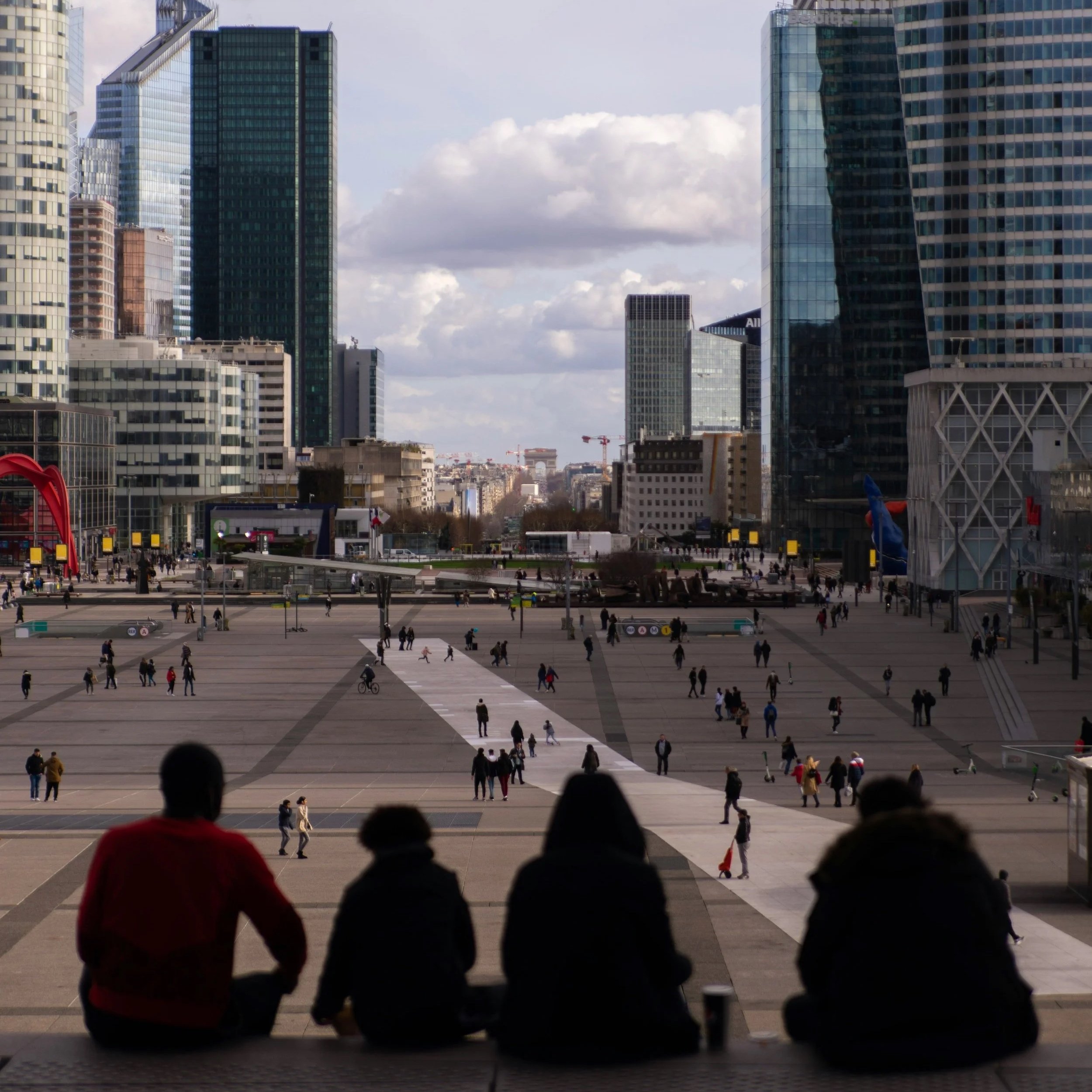
September Random Walk: Paris Arche to Arc
Four kilometers, one dead-straight sightline - this walk traces the Axe Historique from the Grande Arche through Quartier Bellini and Neuilly-sur-Seine, all the way to the Arc de Triomphe.
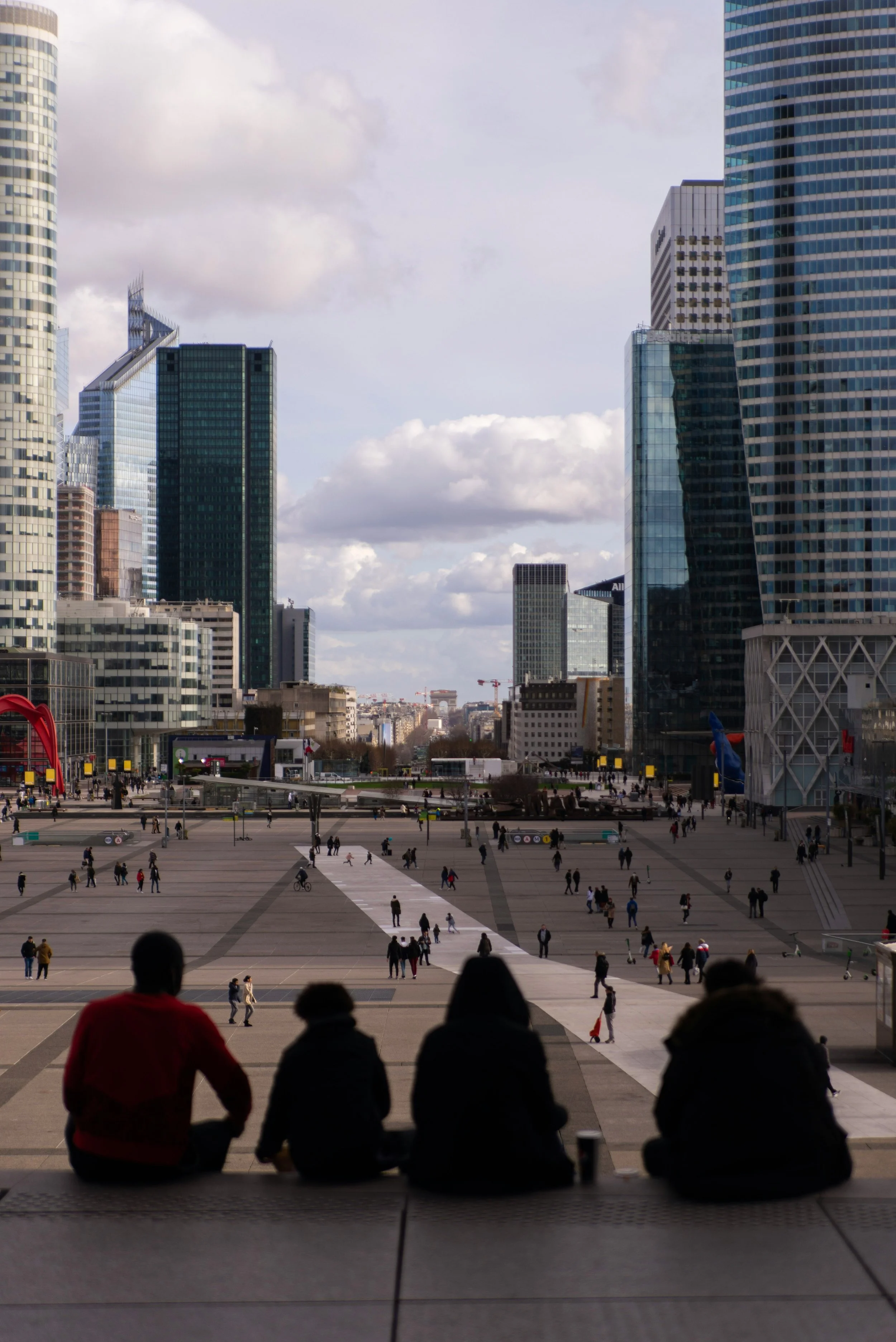
Some walks need a plan. This one just needs a straight line and a decent pair of shoes. If you draw an arrow from the Grande Arche in La Défense all the way to the Arc de Triomphe, you're tracing one of the most famous sightlines in the world. It's the Axe Historique, the same visual axis that stretches on through the Champs-Élysées, the Tuileries, and the Louvre. Walking it backwards, from modern glass cube to Napoleonic stone arch, feels like watching Paris rewind through a couple of centuries in about an hour and a half.
I did this walk on a whim one Sunday, mostly because I was curious whether the Grande Arche and the Arc de Triomphe would stay lined up with each other the entire way. They do, more or less. It's a little uncanny. Here's what the route looks like, block by block, with a few detours worth knowing about along the way.
Starting Point: The Grande Arche
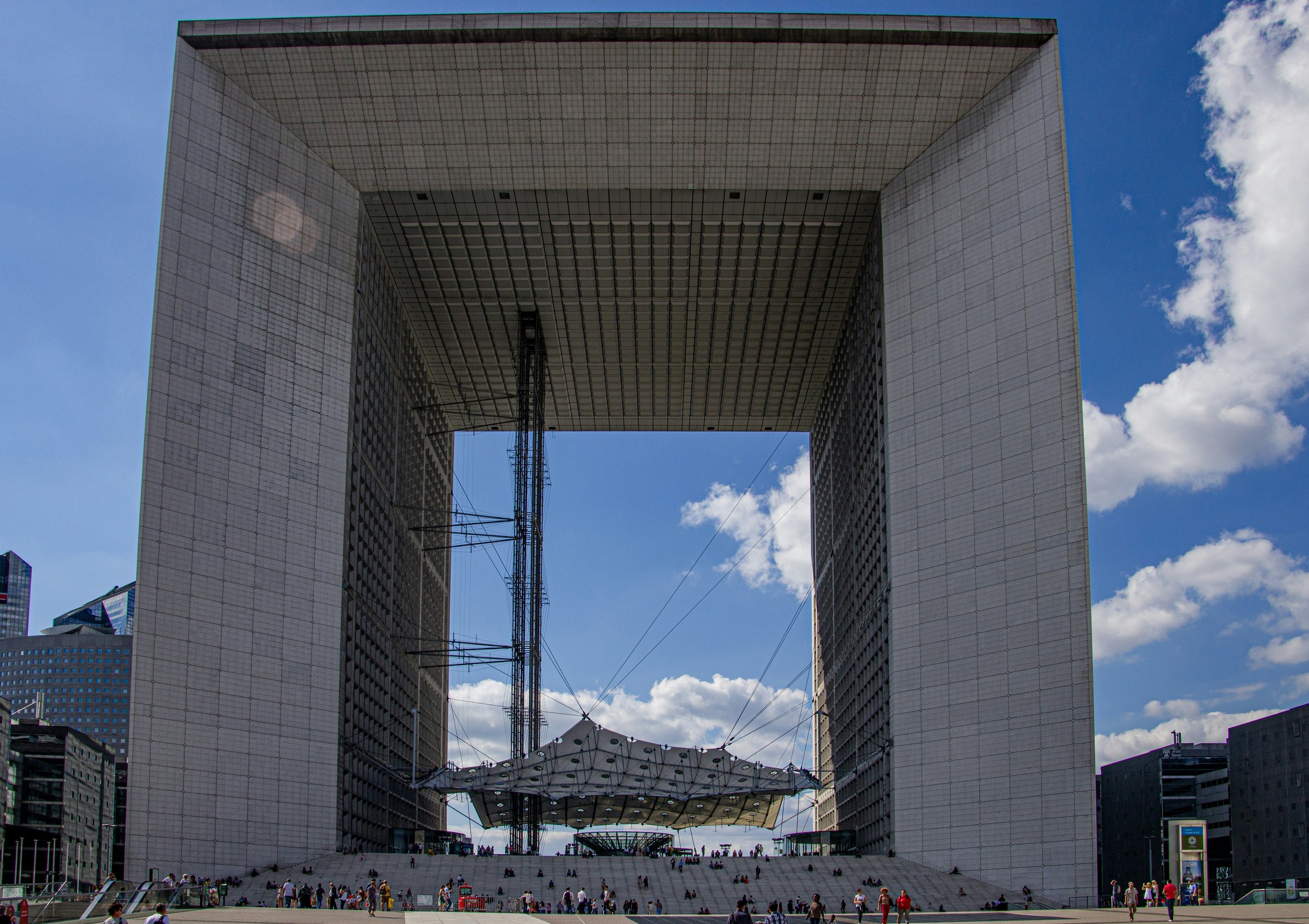
You start big. The Grande Arche in La Défense is a hollow marble cube so enormous that Notre-Dame could fit inside it with room to spare. Built in the late 1980s as a modern echo of the Arc de Triomphe standing four kilometers away, it's the perfect place to look east down the axis and pick out your target. On a clear day you can spot the silhouette of the Arc de Triomphe waiting for you in the distance.
From here, the plan is simple: head east through La Défense's business district, cross the Seine at Neuilly, and follow Avenue Charles-de-Gaulle straight to Place Charles-de-Gaulle-Étoile, where the Arc de Triomphe sits at the center of twelve converging avenues.
Through Quartier Bellini
Before you've even left the shadow of the Grande Arche, you'll drift through the Quartier Bellini, tucked along the edge of Puteaux where La Défense meets the Seine. It's one of the oldest corners of the whole business district. The Bellini housing block went up back in 1957, followed a decade later by the Tour Nobel, one of the first true skyscrapers in the area. Newer towers designed by architects like Christian de Portzamparc have since slotted in alongside the older ones, so you get this strange, layered effect: 1960s concrete standing shoulder to shoulder with sleek 21st-century glass. It's not a postcard stop, but it's a good reminder that La Défense didn't spring up overnight. It's been under construction, in one form or another, for seventy years.
Crossing the Seine at Pont de Neuilly
Keep walking east and the towers thin out as you approach the river. The Pont de Neuilly bridge carries you across the Seine and past the little Île de Puteaux sitting in the middle of the water, with a staircase down to the island if you fancy a short detour. This crossing has been a river passage since long before Paris had cars. There was once a ford here connecting an old Roman road, and the current bridge has carried a metro line since 1992, running at the steepest grade anywhere on the Paris network.
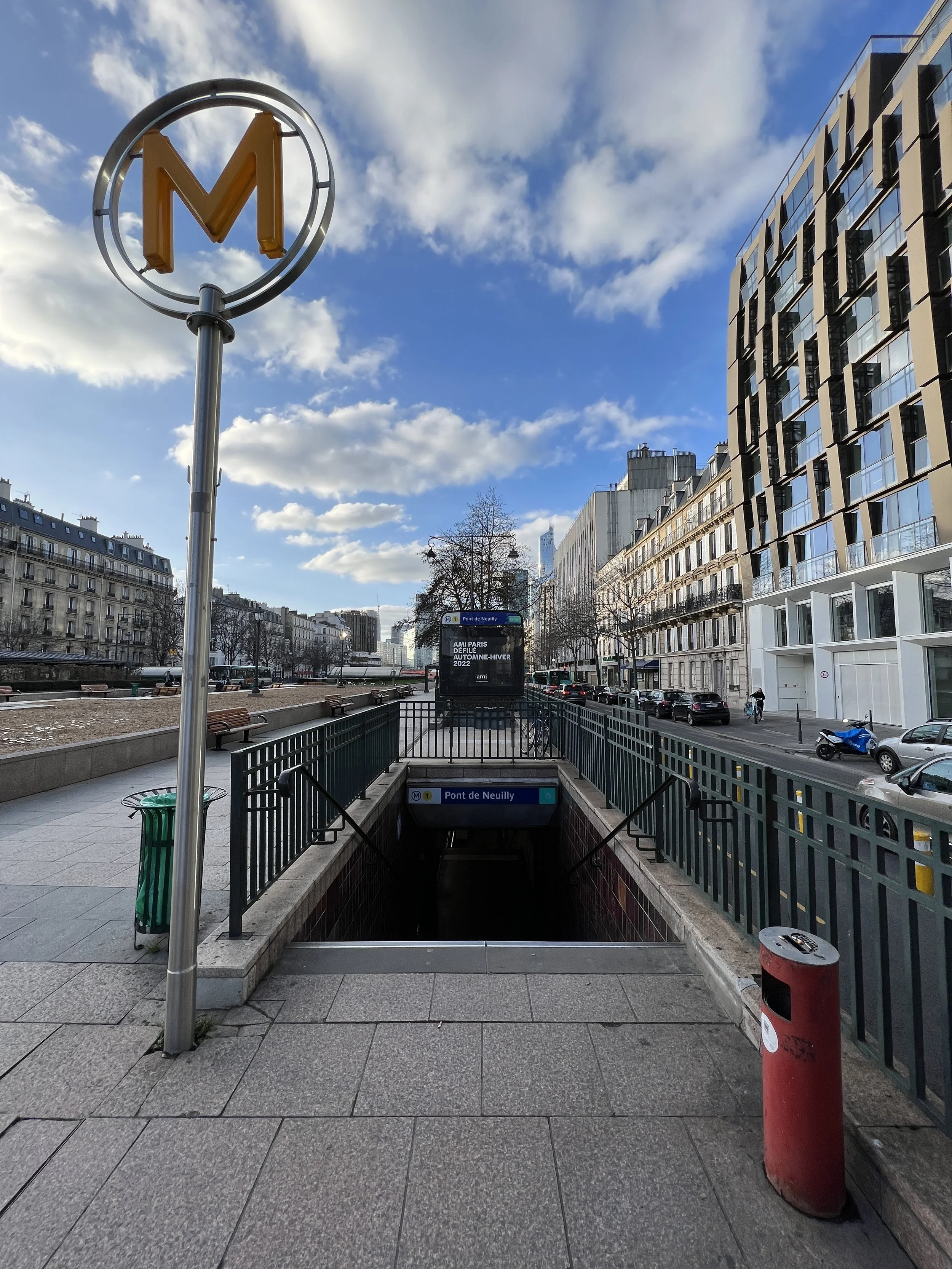
If your legs are already tired at this point, this is your exit ramp. The Pont de Neuilly metro station, right on Line 1, is an easy way to skip ahead. It was the western terminus of the whole line for over fifty years before it got extended out to La Défense. Hop on and you're delivered straight to Charles de Gaulle–Étoile, right at the foot of the Arc de Triomphe, in under fifteen minutes. No shame in it. Even seasoned walkers use this cutoff when the sun's out and the wine at lunch was a little too generous.
Wandering Through Neuilly-sur-Seine
Assuming your feet are still cooperating, the walk continues into Neuilly-sur-Seine, one of the wealthiest suburbs in France and a favorite address for diplomats, executives, and a long list of well-known French families. The mood shifts noticeably here. Wide, tree-lined avenues, grand Haussmann-style apartment buildings with wrought-iron balconies, and a general air of quiet money. The neoclassical Église Saint-Pierre and the Belle Époque city hall on Avenue Achille Peretti are both worth a glance if you veer a block or two off the main road.
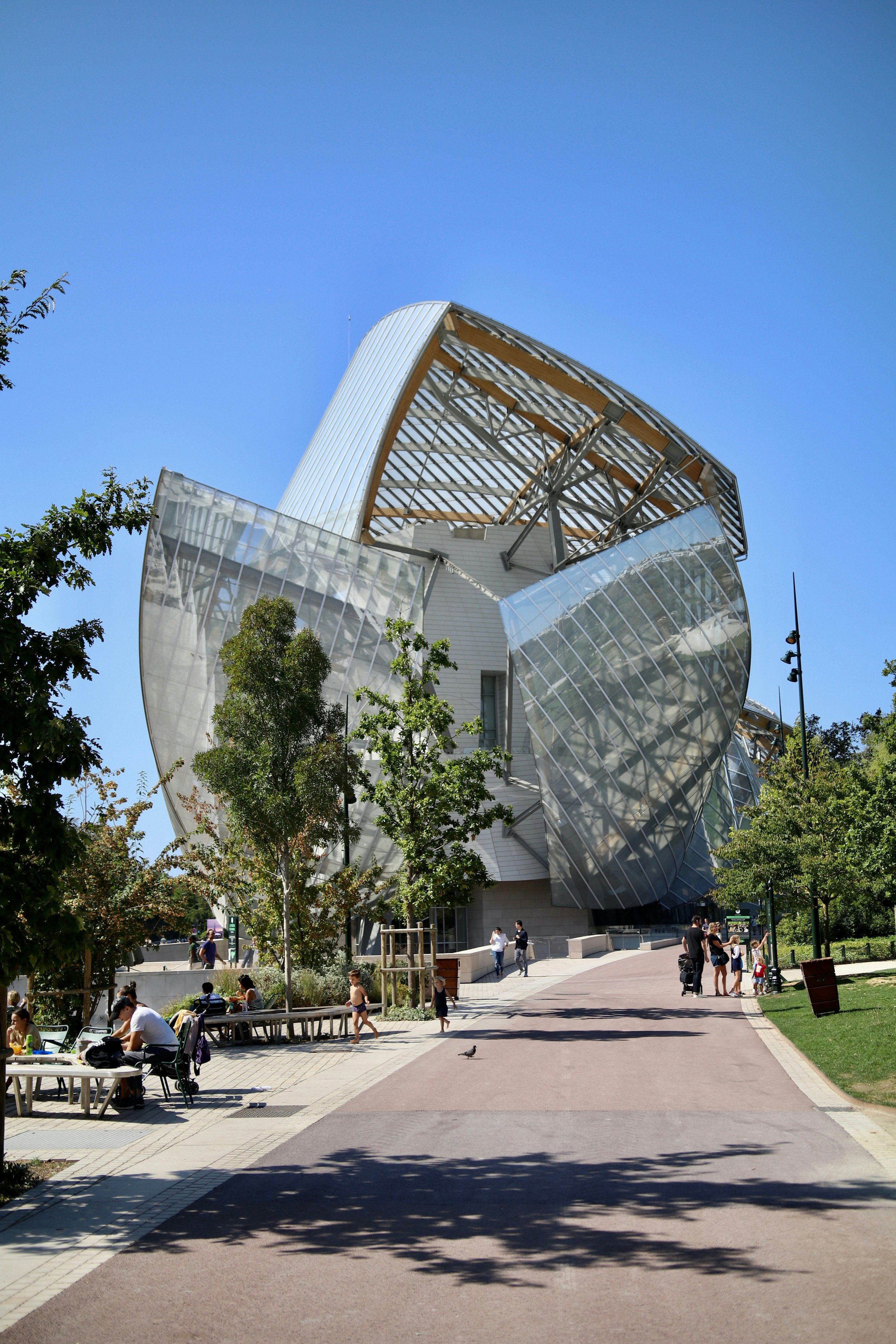
Neuilly also sits right against the Bois de Boulogne, and if the Fondation Louis Vuitton is open when you pass, its Frank Gehry-designed building, glass sails catching the light above the trees, is worth a short detour on its own. Otherwise, just enjoy the change of pace. After the towers of La Défense, Neuilly feels almost residential, like Paris caught its breath before the final stretch.
The Final Stretch: Avenue Charles-de-Gaulle to the Arc
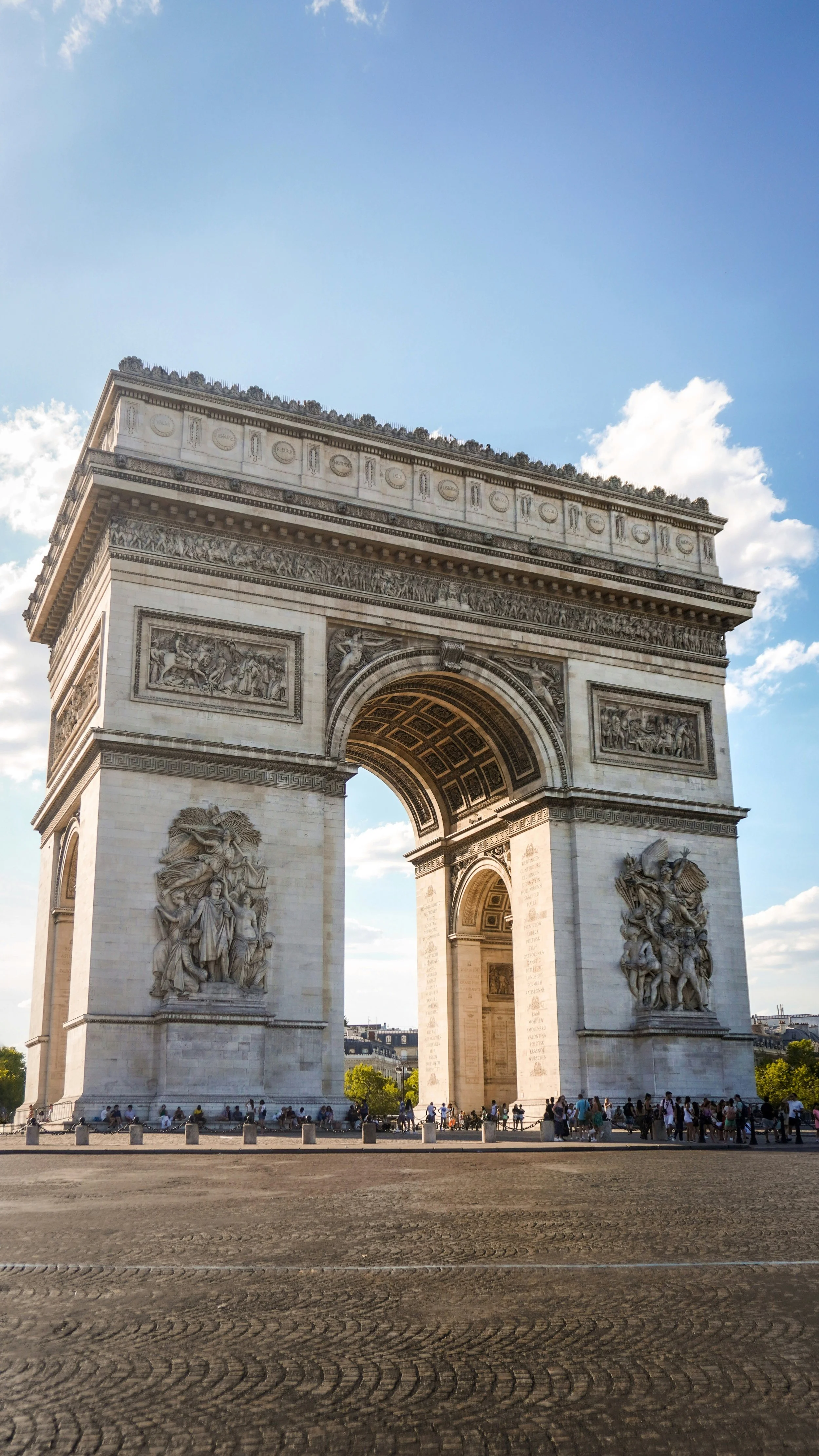
Once you cross back into Paris proper, the street name shifts and the avenue narrows a bit, but the axis holds steady. The Arc de Triomphe grows from a smudge on the horizon into an actual monument, and the traffic swirling around Place Charles-de-Gaulle-Étoile gets louder and more theatrical the closer you get. Don't try to cross the roundabout on foot at street level. There's an underground passage that gets you safely to the base of the arch, since the traffic circling it is one of the more chaotic driving experiences in the city.
Standing underneath the arch, looking back the way you came, you can trace the entire walk in reverse. Avenue de la Grande Armée runs straight out toward Neuilly, the Seine sits somewhere beyond it, and if the haze cooperates, the Grande Arche itself is still lined up perfectly on the horizon, like it never lost sight of you.
Refuel Near the Arc de Triomphe
The area around the Arc de Triomphe rewards a long walk generously. The streets fanning out from Place Charles-de-Gaulle-Étoile, especially Avenue de Wagram and the stretch of the Champs-Élysées itself, are packed with cafés and restaurants ready for a well-earned break. Everything from classic Parisian brasseries with steak-frites and a carafe of house red to quicker spots for a coffee and a croissant before you head back into the city. Grab a sidewalk table, order something simple, and watch the traffic loop endlessly around the arch. For a full rundown of dining and visiting details, the official Arc de Triomphe site is a solid resource before or after your walk.
A Few Practical Notes
Distance and time: Roughly 4 kilometers as a straight shot, though following streets rather than the exact axis pushes it closer to 5–6 kilometers. Budget 60–75 minutes at a steady pace, longer if you stop for photos or coffee.
Best time to go: Weekend mornings keep La Défense quiet, since it empties out once the office crowd clocks off on Friday.
Bailout option: Pont de Neuilly station on Line 1 sits almost exactly at the halfway mark, so there's no penalty for cutting the walk short.
Footwear: Some stretches near La Défense involve wide plazas and pedestrian bridges rather than sidewalks proper, so comfortable shoes matter more than you'd think.
It's not a walk built for hidden alleyways or secret courtyards. It's a walk built for watching Paris change character in real time. Glass towers, a quiet river crossing, a wealthy suburb, and then the roar of one of the busiest roundabouts in Europe, all lined up on a single, deliberate axis that someone planned centuries before La Défense ever existed.